Rail replacement coaches are due to receive better accessible information, ending the long standing transport tradition of placing a passenger beside a bus and asking them to infer its destination from the weather.
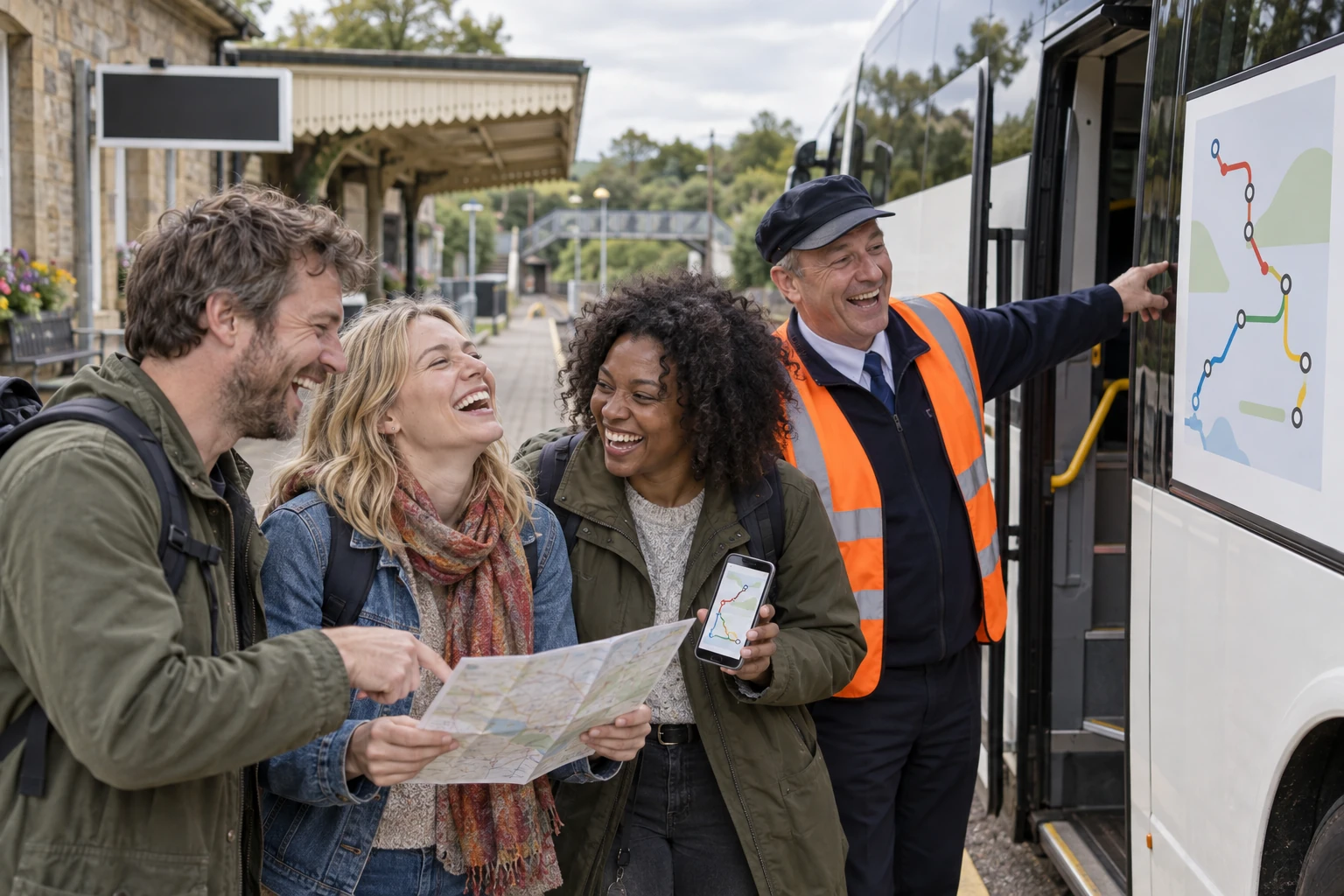
The Department for Transport has announced £800,000 for four projects developing clearer information for rail replacement journeys. The proposed technology includes audible and visible announcements, voice interaction, app and QR code access, artificial intelligence and Bluetooth based Auracast. At last, a coach may be able to explain itself before everyone boards it out of social embarrassment.
Rail replacement services have occupied the narrow space between public transport and a village fete organised by someone who has lost the list. The coach is technically present, railway staff are technically nearby and the sign communicates the route with the confidence of a ransom note.
The projects are intended to help passengers understand the route, direction and upcoming stops, particularly when information is difficult to access. This is a modest ambition, but so was knowing whether the vehicle outside Platform Three was going to Leeds or merely thinking about it. Accessibility should not mean attaching a QR code to a piece of paper already tied to the wrong bus.
Dispatcher Nora Timetable welcomed the announcement, although she warned that information must arrive before the coach. Otherwise, she said, passengers are being given a beautifully accessible way to discover they have missed it. Nora is an invented comic figure, but the institutional problem is real enough. A system can fund an animated avatar while leaving the human beings at the shelter to conduct an audition for the correct vehicle.
The technology is being developed for coach services that often lack features already found on many buses. The transport system has therefore reached the exciting stage at which one vehicle can announce the next stop while another quietly refuses to admit there is a stop at all. Four projects will now explore how to make the announcement audible, visible and available in different formats.
Work is due to be completed by March 2026. If successful, the mystery coach will still be late, but it may finally provide an accessible explanation. The next breakthrough will be getting the explanation to board the same coach as the passengers, since even the most advanced information system cannot help if it is waiting at the wrong bus shelter.
Source: Department for Transport.