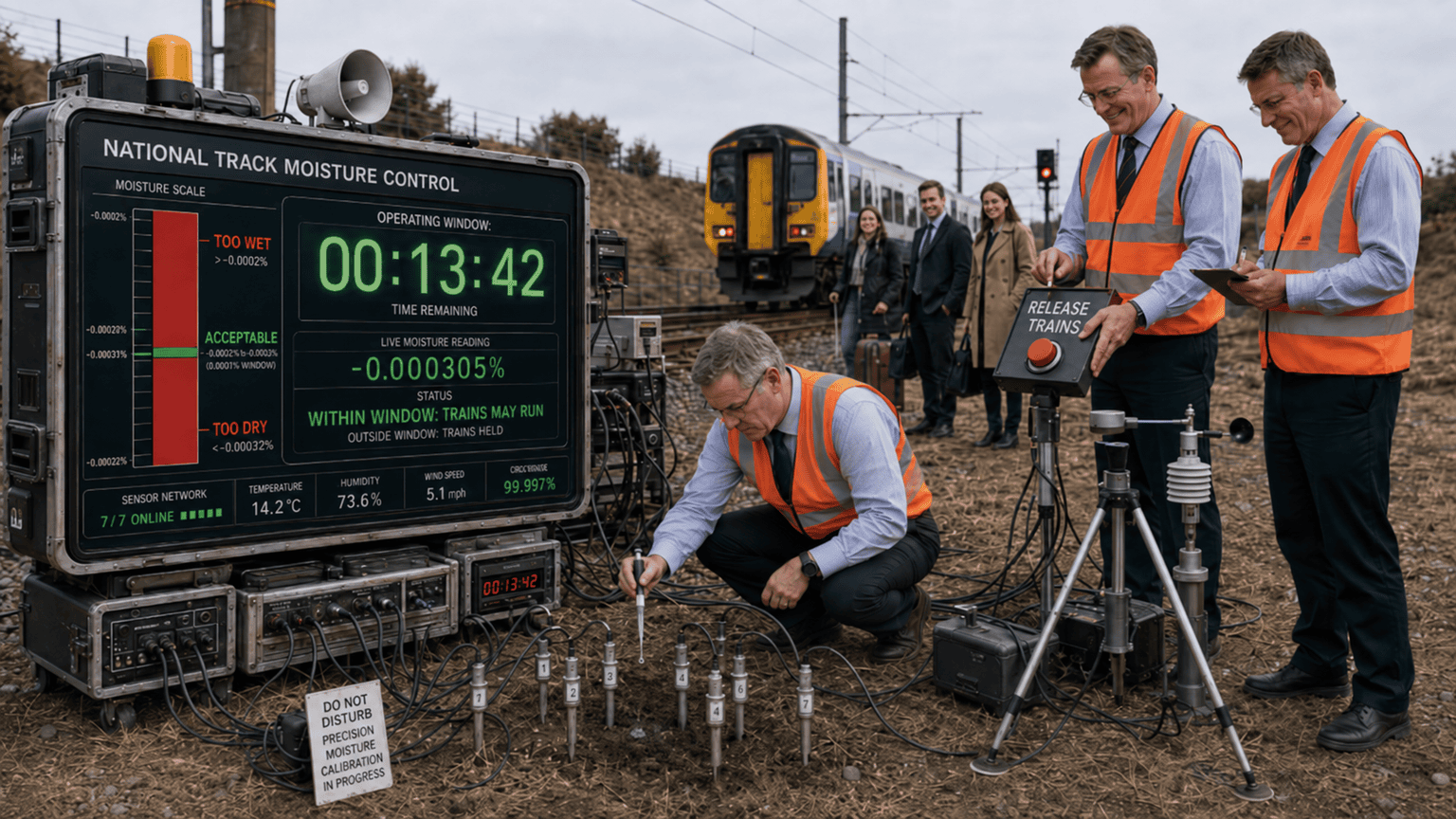
Britain’s rail industry has identified a 14-minute period each year when trains can safely operate. During it, the surrounding environment is neither too hot, cold, wet, dry nor leafy for rail travel.
The 14-minute window
The breakthrough follows disruption in Essex. Sustained heat and low rainfall caused clay beneath stretches of railway to dry out and shrink. That led to speed restrictions and amended timetables.
Scientists at the newly established Rail Moisture Directorate believe ideal railway conditions occur for approximately 14 minutes in late May. At that point, the temperature is 16.8°C, there is no direct sunlight and the ground is “quite damp, but not worryingly so”.
“For years we assumed summer would be easier because there was less ice and fewer leaves,” said Dr Martin Drizzle, Head of Acceptable Conditions. “We now understand the mistake was expecting the railway to function in weather.”
The industry will eventually send an emergency TRAVEL NOW alert when suitable ground moisture is detected. It encourages passengers to keep luggage packed between April and June.
The Directorate said services outside the window could still be affected by excessive rain, insufficient rain, heat, cold, wind and leaves. The general movement of the Earth beneath the railway may also intervene.
Officials stressed that the 14-minute estimate remains provisional. They will review it annually, weather permitting.
Passengers are advised to react quickly. This may mean leaving work, collecting children and finding a platform before conditions turn fractionally wrong again. The Directorate insists that such short notice is not inconvenient. It merely reflects the railway’s commitment to operating whenever nature briefly permits it.
By June, officials expect normal service to resume, subject to the return of autumn leaves and the correct type of cloud.
Source receipt
Network Rail — rail service changes in Essex and east London due to dried-out clay.