Rail performance data has finally forced the departure board to show its working, ending the long tradition of treating “delayed” as both a time of day and a spiritual condition.
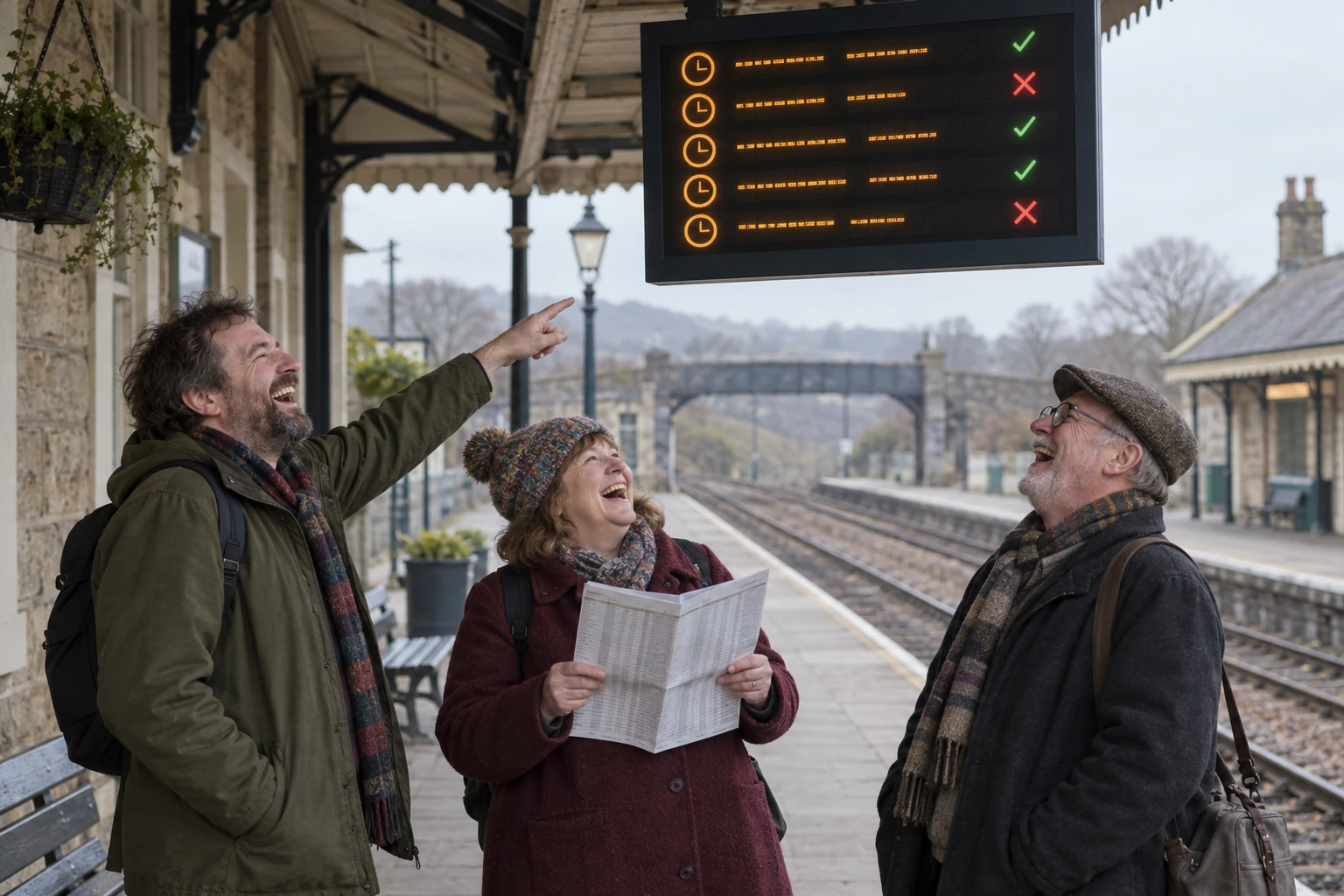
Passengers can now see punctuality and cancellation figures for more than 1,700 stations in England. The figures are broken down by operator, allowing the public to discover precisely who is failing to deliver the train they are currently not on.
Until now, reliability had to be inferred from the platform atmosphere, the depth of the sighing and whether the announcement began with “we are sorry”. The new data adds percentages to the experience, so passengers can learn that their train is not merely late. It is late with evidence, which is the sort of progress that arrives before the train does.
“Transparency builds trust,” said Percival Signalbox, Director of Information That Was Already Visible to Everyone. “Although publishing the cancellation rate may make it harder to describe a cancelled train as an isolated incident.”
The data went live on 6 March 2025, with information available through station displays where possible and online for other stations. This gives the departure board a new role in public life. It is no longer required simply to announce a destination and then watch that destination become theoretical.
The Government has linked the figures to wider rail reform and proposals for a passenger standards watchdog. The watchdog will presumably examine whether a service can be considered punctual if it arrives at the wrong station, and whether a cancellation counts as excellent performance when nobody was expecting the train to turn up anyway.
Operators and Network Rail are expected to use the information to improve reliability. Passengers remain modest in their demands. They would like a train, a platform and a believable time, preferably in that order. The industry has supplied a portal, a display and a national conversation about accountability, while the platform continues to offer the traditional passenger experience of standing still and being told that movement is imminent.
The launch was declared a new era of accountability. At one station, the departure board announced that every service was operating normally. The data appeared underneath, checked the figures and laughed so hard the next train was delayed.
Source: Department for Transport.