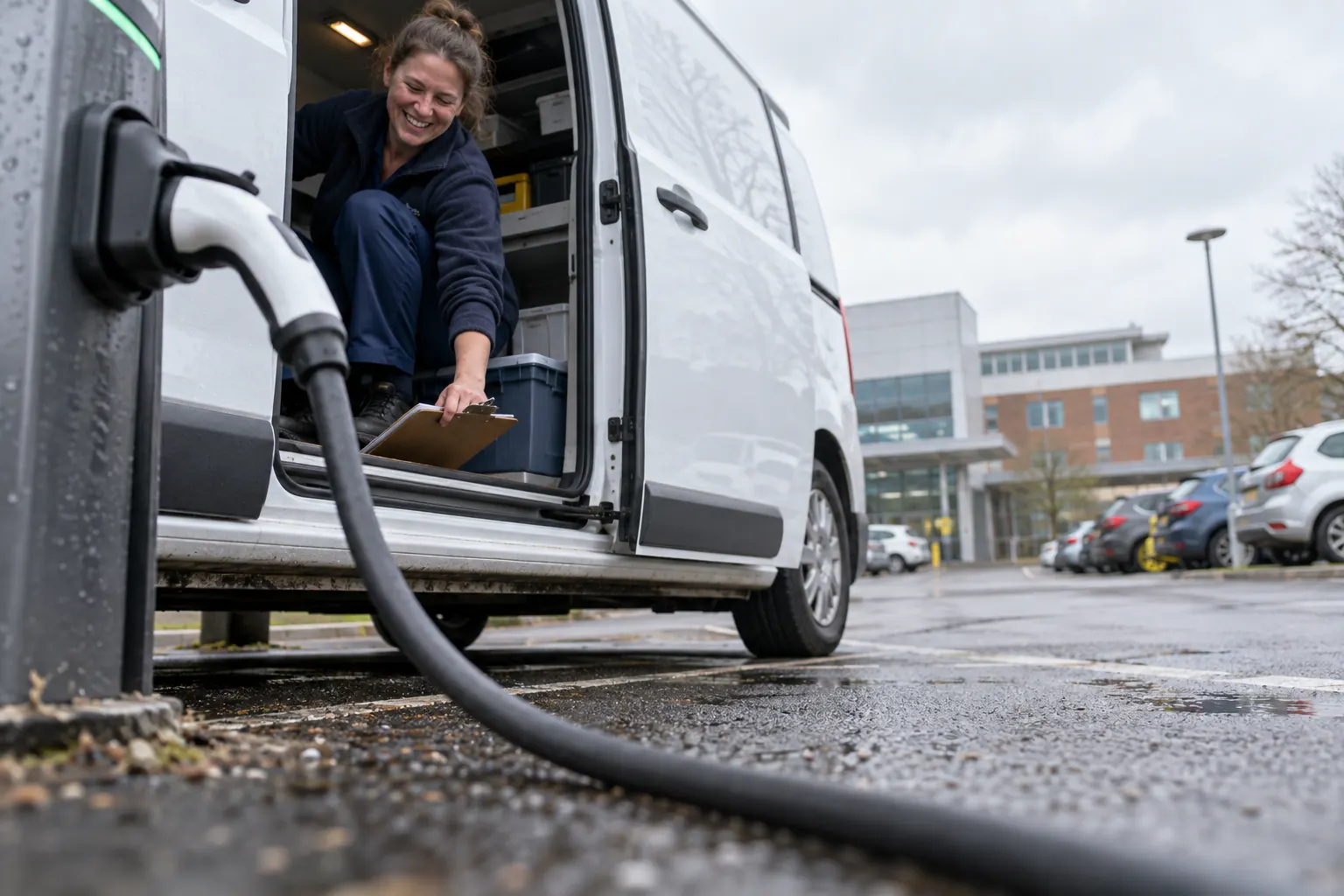
The NHS fleet is getting £4 million for hundreds of new electric chargepoints. At last, a healthcare vehicle can pull into a bay, connect itself to the future and spend several minutes not being asked to transport a patient, a parcel or a senior manager’s sense of urgency.
The funding extends the NHS Chargepoint Accelerator scheme and takes total government investment in NHS charging infrastructure to £22 million. It will help modernise part of the NHS in England’s 20,000 vehicle medical fleet, which covers 460 million miles of travel each year.
That is a formidable amount of movement. It is also a formidable amount of diesel, scheduling and institutional confidence that every journey can be completed before the next urgent journey appears on the screen. The van may be electric, but the diary will remain powered by panic.
The official argument is that electric vehicles will cut fuel costs, reduce maintenance spending and lower emissions. The savings are then expected to support frontline care. This is excellent news for the budget, although it leaves one practical question unanswered. Will a vehicle be allowed to finish charging before somebody sends it across the county to collect a form that could have been emailed?
The wider scheme is supporting more than 1,000 charging sockets, with hundreds more planned through the new funding. The ambition is admirably modern. The practical reality is that a vehicle cannot run on ambition alone, especially when its driver has spent ten minutes finding the correct bay while an app insists the charger is available in the same way that a hospital car park insists it has spaces.
New government figures put the number of public electric vehicle chargers in the UK at 116,052. The revised measure counts individual chargers rather than larger charging devices, offering a clearer estimate of how many vehicles can be plugged in at once. Britain has therefore achieved the rare administrative triumph of making progress and changing the ruler at the same time.
A quieter ambulance, a lower fuel bill and a socket that works first time would all be useful improvements. Yet the greatest benefit may be psychological. After years of being sent everywhere at speed, an NHS van can sit beside a charger, watch its battery percentage rise and enjoy a scheduled pause that nobody has yet converted into a performance indicator.
For one glorious interval, the vehicle will not be late, overloaded or travelling somewhere else. It will simply be full of electricity and quietly unavailable. In the NHS, that may be the closest thing a van can get to annual leave.
Source: Department for Transport and Department of Health and Social Care.