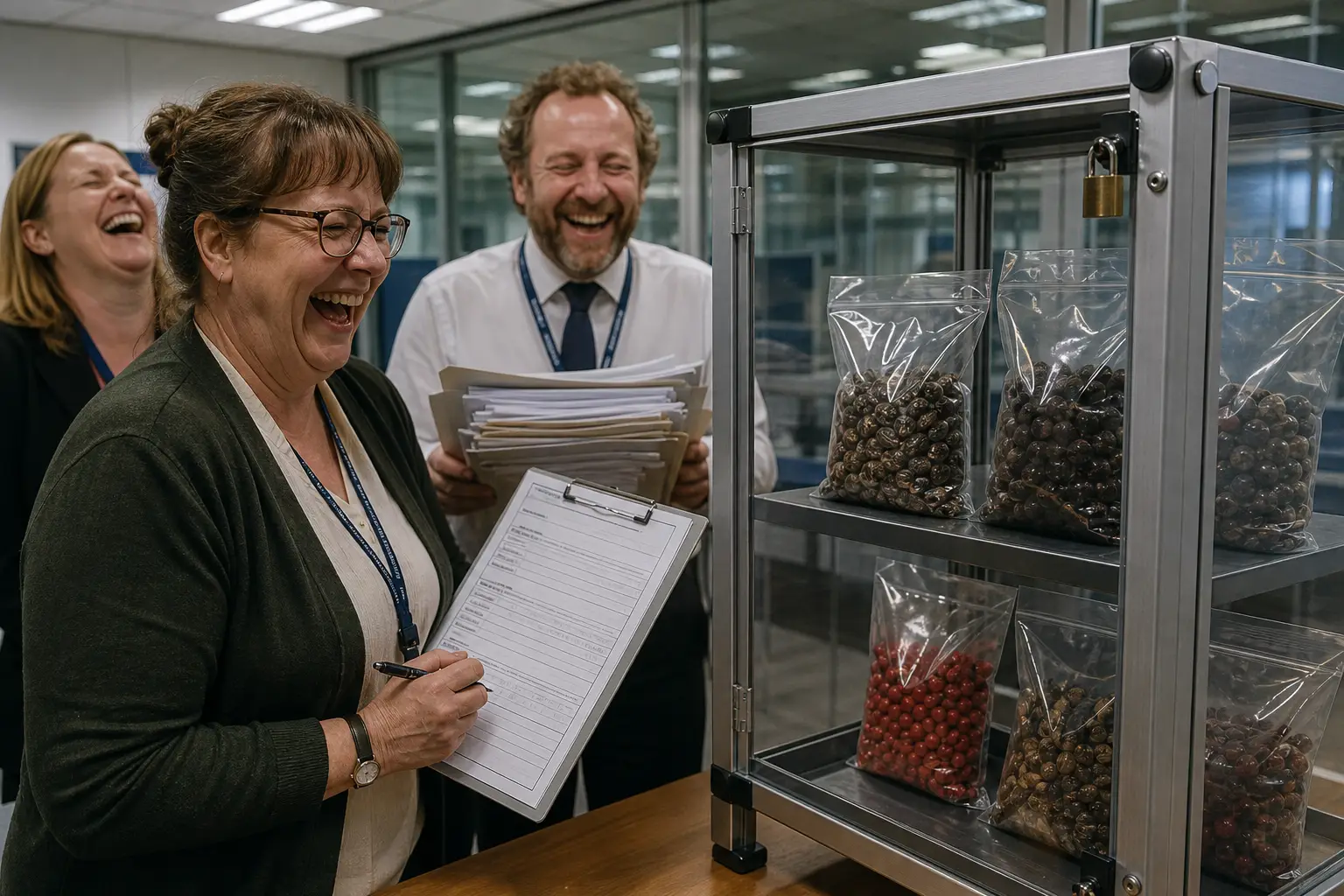
Home Office licensing officer Eileen Craddock is preparing to regulate seed trays after officials discovered that danger can arrive wearing a decorative hat.
Britain has proposed tighter controls on toxic substances used to make dangerous weapons, following recommendations from the Southport Inquiry. In the government account, police found evidence that castor beans had been bought online to make ricin, leading to a conviction under the Biological Weapons Act 1974. The awkward discovery was that the poison had rules, while its decorative delivery system did not.
At the Home Office Poison Licensing Desk, officer Eileen Craddock has been assigned the gap. “We have always regulated the poison,” she said. “The seed was apparently enjoying a separate career in decoration.”
Under the proposals, castor beans containing ricin and rosary peas containing abrin would join the list of regulated poisons. Selling them to members of the public without a valid licence would become a criminal offence. Other dangerous poisons and explosive precursors would also be harder to obtain, with shops and businesses expected to report suspicious transactions. Britain has therefore upgraded the decorative packet into a matter for compliance, which is how national security gets its stationery.
Retail compliance manager Nigel Pike welcomed the clarity. “Our staff can spot a suspicious purchase,” he said. “It is the one where somebody says it is for decoration and looks relieved when we ask for the licence.”
People with a genuine need and no safer alternative could still apply for a licence. Consultation coordinator Priya Nair is inviting views from the public, industry and business. “We want everyone affected to respond,” she said, “especially anyone who has just discovered their harmless ornament has an administrative future.”
The seed may soon need a licence. The paperwork remains gloriously unregulated.
Source: Read the real story