
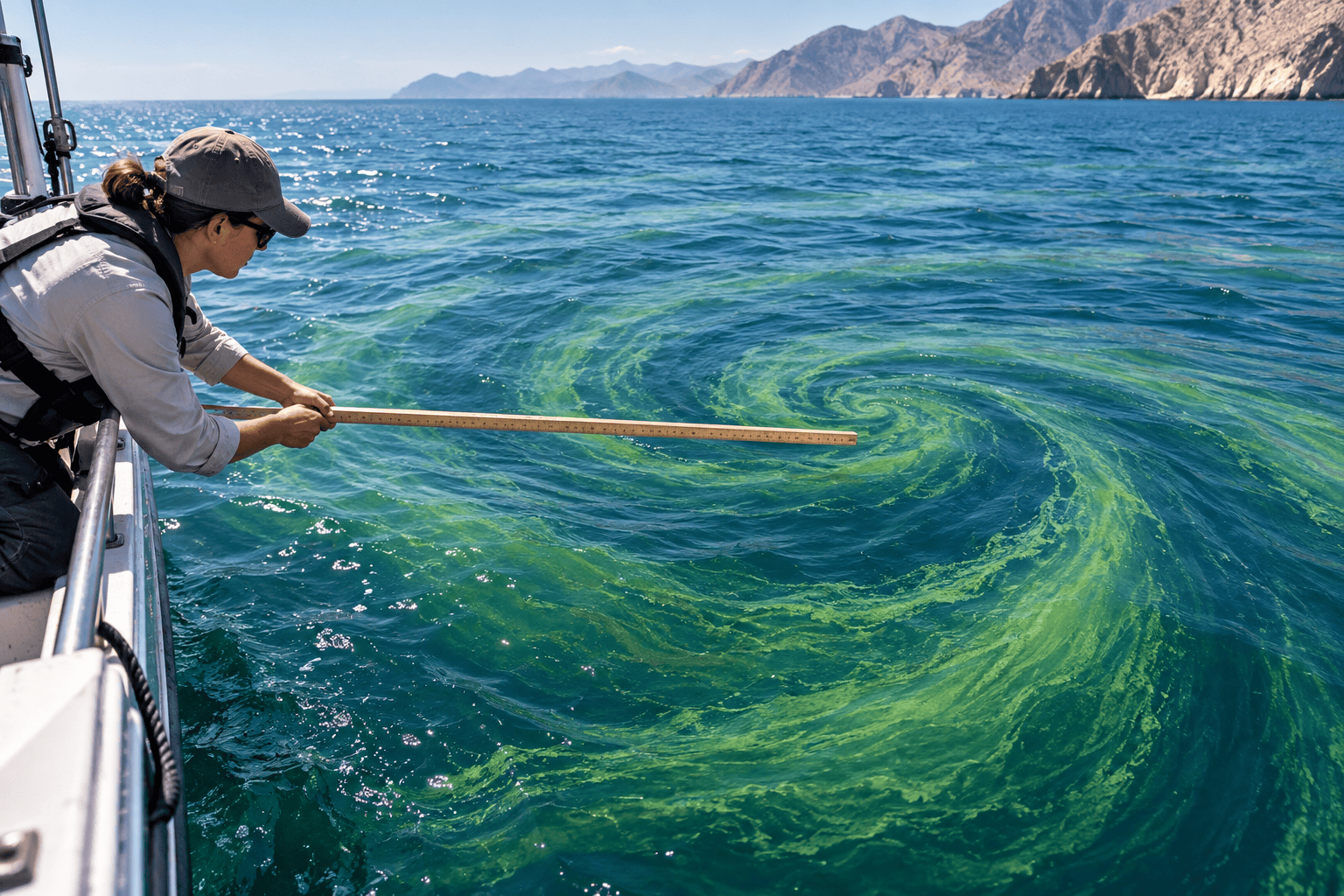
A Landsat 8 image has caught phytoplankton drawing bright swirls across the Gulf of Oman. Currents and eddies made the pattern. The Ministry of Straight Lines opened an inquiry after the sea failed to provide a route plan.
NASA Earth Observatory says currents and eddies carried the tiny organisms into vivid bands. The ministry said this merely confirmed a longstanding concern that plankton now regard the ocean as a place where rules do not apply.
The sea has declined to engage
Dr Vera Current Bun, director of Marine Neatness, said: “We do not object to photosynthesis. We object to freelancing. These organisms have moved in a spiral, ignored the designated beige and produced a satellite image with no approved logo in the corner. Frankly, they are asking to be monitored.”
Inspectors issued Form 48, Request To Appear As A Colour In A Regulated Sea. The form dissolved at once. The ministry recorded this as a refusal to cooperate, then asked whether the plankton had appointed a compliance officer or simply intended to remain microscopic. An emergency advisory also tells seagrass to remain within its lane and fish to stop gathering in unlicensed groups after dark.
Marine scientists explained that phytoplankton help support ocean life and influence the planet’s carbon cycle. The ministry accepted this contribution, provided future carbon cycles can run as a pilot in one manageable bay with sensible signage.
By late afternoon, the bloom had formed a shape resembling the ministry’s logo. Officials declared this proof that nature had responded to guidance and awarded themselves a coastal innovation prize. The sea continued to do exactly what it had been doing.
The plankton then returned to producing oxygen and ignoring emails. It remains under observation for any further evidence of making the sea look alive.
Read the real story: NASA Earth Observatory’s report on Gulf of Oman phytoplankton.