Whitehall has published a new strategy for putting science and engineering at the heart of government decision making, giving the evidence based future a leadership offer, a skills programme and, naturally, another document asking everyone to acknowledge the importance of documents.
The Government Science and Engineering Profession and the Government Office for Science published the Government Science and Engineering profession strategy 2026 on 27 April. It aims to strengthen capability and leadership across departments, building on the previous strategy published in 2021.
The plan includes a new mid career leadership offer for scientists and engineers, work on skills, recognition and reward, and continued development of programmes including the Science and Engineering Fast Stream. Around 10,000 people belong to the profession across the Civil, Public and Crown Services, supporting policy development, delivery and regulation.
This is a serious attempt to make technical expertise more useful inside government. Unfortunately, the phrase putting science at the heart of decision making has caused concern among several senior filing cabinets, which fear being asked to understand a graph before approving it.
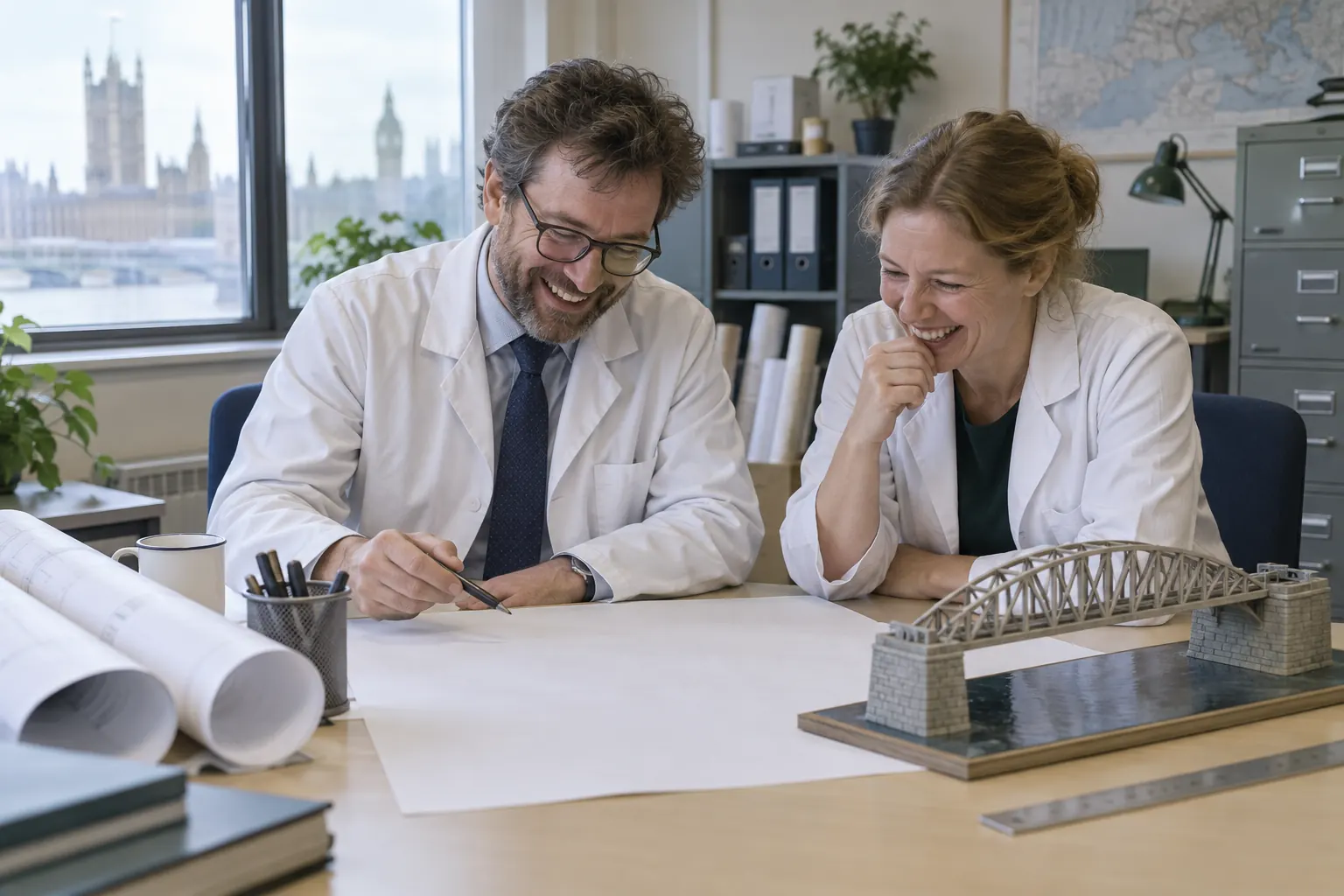
The fictional bridge model has welcomed the announcement with the calm confidence of an object that has already survived load testing. It has also noticed that institutions often answer a shortage of authority with a strategy, a shortage of time with a programme and a shortage of listening with a recognition framework.
Skills and progression matter. A department cannot acquire expertise by leaving a glossy booklet beside the photocopier and waiting for competence to seep through the carpet. Scientists need training, engineers need influence and both need enough room to say that an attractive diagram is not the same as a working system.
That is where the strategy meets the old machinery. Evidence may be invited into the room, provided it arrives politely, uses the correct template and does not object after the preferred conclusion has received a logo. The bridge model has submitted three recommendations: let scientists finish a sentence, let engineers explain the geometry and make every meeting answer one question before ordering the next meeting.
Its application is now with a clearance panel, a recognition group and a committee deciding whether a bridge can be considered mid career. By the time approval arrives, the model will have achieved what government science is meant to support: standing up without falling over, despite the paperwork.
Source: GOV.UK.