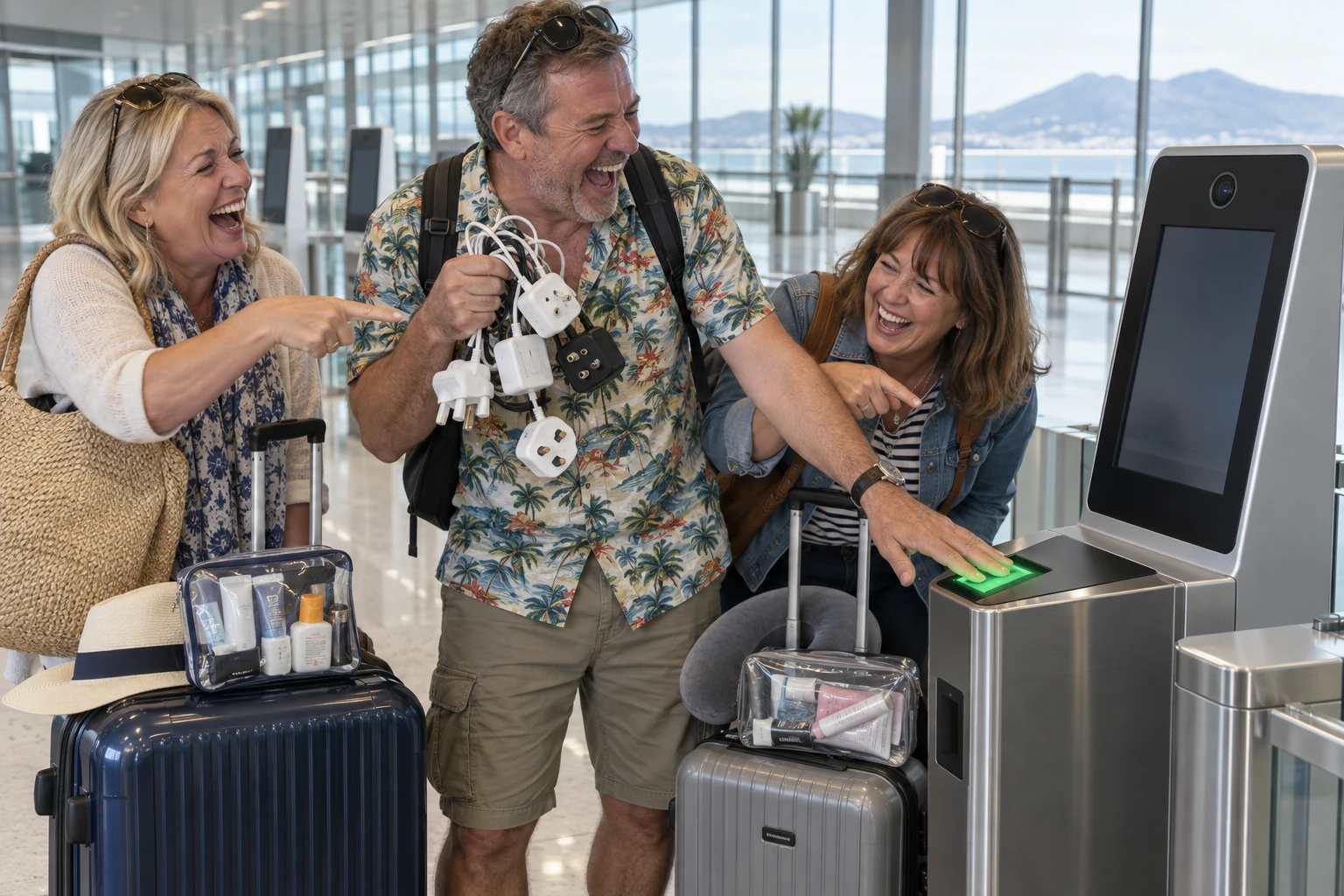
New biometric border checks are coming for British short stay visitors, giving Europe a digital record of the face produced when somebody is asked to find their passport, remove their glasses and explain why six plug adaptors were essential for a long weekend.
The European Commission has set 12 October 2025 as the start date for the Entry/Exit System. It will gradually record fingerprints, facial images and travel information from non EU nationals visiting 29 European countries for short stays. The rollout will take six months, allowing border authorities, transport operators and travellers to adjust at a pace normally associated with a committee deciding whether a queue has become a situation.
The system is intended to modernise border management, track permitted stays and make travel smoother. It will also create a valuable record of Colin from Basingstoke discovering that a machine can reject a thumb with more confidence than he has ever shown in his own holiday planning.
Beatrice, Director of Recognisable Faces, has welcomed the gradual introduction. In her view, six months should give passengers ample time to practise looking relaxed while presenting their fingers to a glass panel, provided nobody mentions the word efficiency within earshot of a family carrying three bags of snacks.
The old passport stamp merely suggested that somebody had looked at a document. The new system will collect evidence, which is a considerable promotion for the modern traveller. Colin will no longer leave behind a vague mark of administrative interest. He will leave biometric data, travel information and the quiet suspicion that his face was archived because it looked uncertain beside a vending machine.
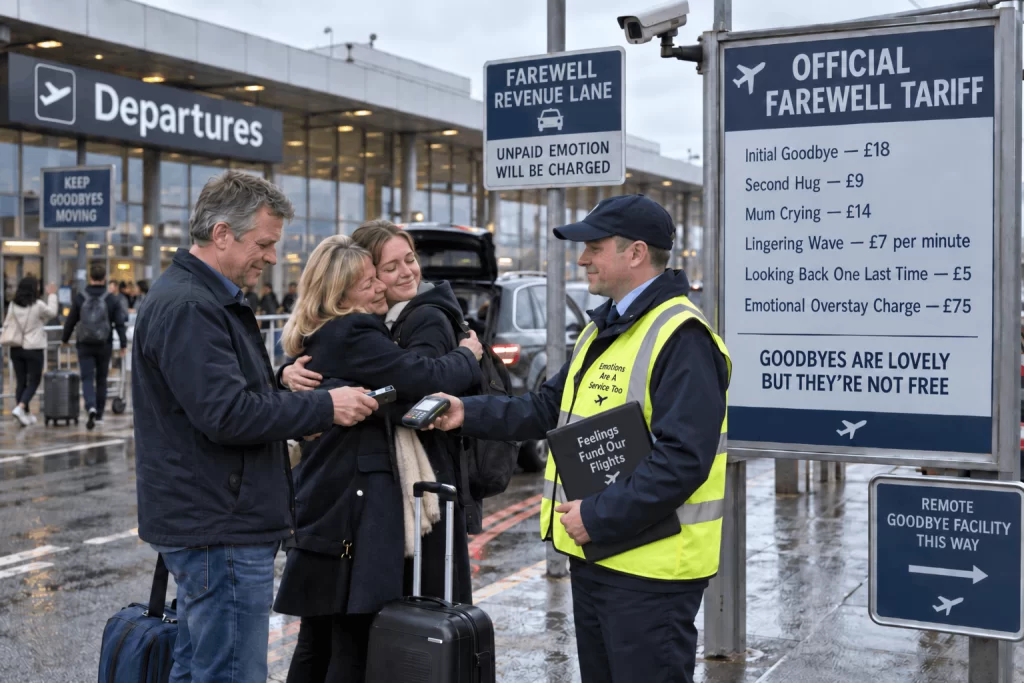
Officials say the system will improve security and make journeys smoother. This will be welcome news to anyone who believes smooth travel begins with photographing an entire family before discovering that the youngest passenger has been holding the passport upside down since Dover.
Colin has prepared by placing his passport, phone, wallet and four plug adaptors in separate transparent bags. He has practised presenting one finger at a time. The scanner accepted his thumb but rejected the expression of a man who had just paid £7.40 for a sandwich, proving that even advanced technology has standards.
The new border era will combine sophisticated European data systems with the oldest force in British travel, a family standing in the wrong lane and laughing as if this was the plan. By April 2026, Colin may be recognised at every participating crossing, while the relative who booked the tickets still insists he is the reason they are late.
Real story: European Commission, 30 July 2025, with later corroboration from Home Office, 8 September 2025.