The Active Travel Innovation Fund has offered £1 million to organisations hoping to persuade people to walk, wheel or cycle, proving that Britain’s oldest forms of transport have finally qualified for a pilot scheme. Grants of up to £100,000 should be enough to discover whether a pavement works better when described as an innovation platform.
The Active Travel Innovation Fund meets the paperwork
The competition, announced on 6 October, is open to small and medium sized businesses and non governmental organisations. Successful projects can develop new ideas, expand existing initiatives or encourage groups to make more active travel choices.
The projects will run for twelve months before an evaluation. Applicants will then provide a case study and final report explaining how the money changed the way people move around. This is an important safeguard. Without it, somebody might spend a year helping people cycle somewhere and accidentally mistake the result for a bicycle.
The Active Travel Innovation Fund also promises practical support from Active Travel England and the Government Grant Managed Service. This may include help with partnerships, stakeholders and methods for measuring success. Nobody is being asked simply to put up a sign saying “Please walk”. That would be reckless innovation, with no theory of change and absolutely no workshop.
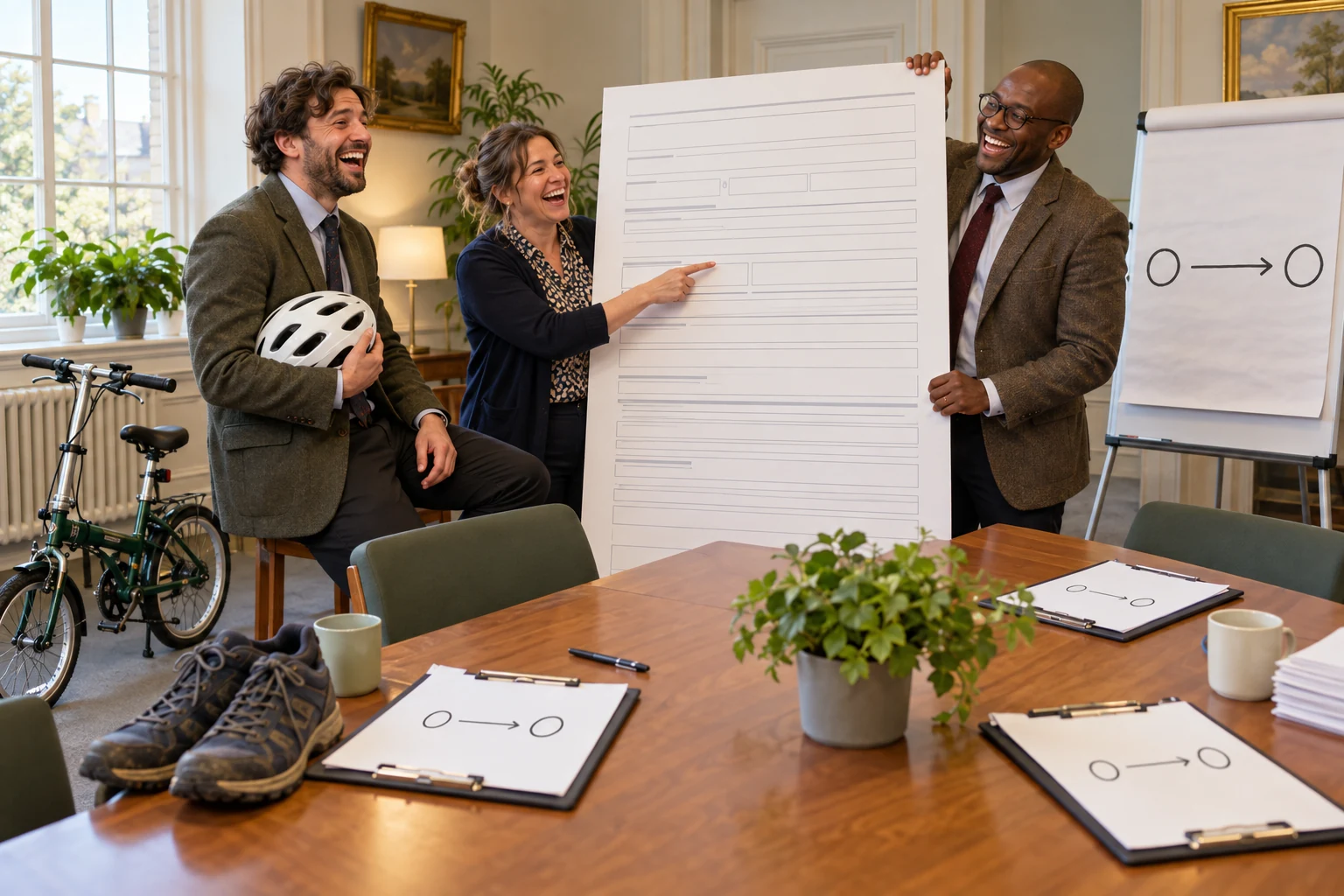
Prudence Pedal, a fictional grant assessor, placed another form beside the application. The winning project must demonstrate ambition, community engagement and a clear plan for explaining why the first plan required another plan.
Every journey ends at an evaluation meeting
The fund sits within the government’s wider Plan for Change and is intended to support projects that improve walking, wheeling and cycling. The official promise is a healthier, more sustainable and better connected transport network.
That is a sensible aim. The comic marvel is that walking now needs an innovation ecosystem, a managed service and twelve months of evidence before anyone can confirm that a person went from one place to another without a car.
By the end of the process, successful applicants may have produced a case study, a final report, a network of partners and valuable feedback. They may also have invented a new form of travel in which the destination is a spreadsheet and the only thing moving is the deadline.