A new atomic clock trial is helping Britain develop more reliable navigation, bringing the country closer to arriving precisely on time for a meeting that began with “Sorry, the train.”
The Defence Science and Technology Laboratory tested next generation atomic clock technology for defence use. The clocks are intended to support position, navigation and timing when satellite signals such as GPS are interrupted. This should help aircraft, ships and submarines find their way. It may also help locate the colleague who said they were “two minutes away” sometime during the previous government.
Modern life depends on accurate timing. Emergency services use it. Banks use it. Cash machines use it. Soon, Britain may possess enough precision to identify the exact moment a public project stopped being “on track” and became a review of the lessons learned.
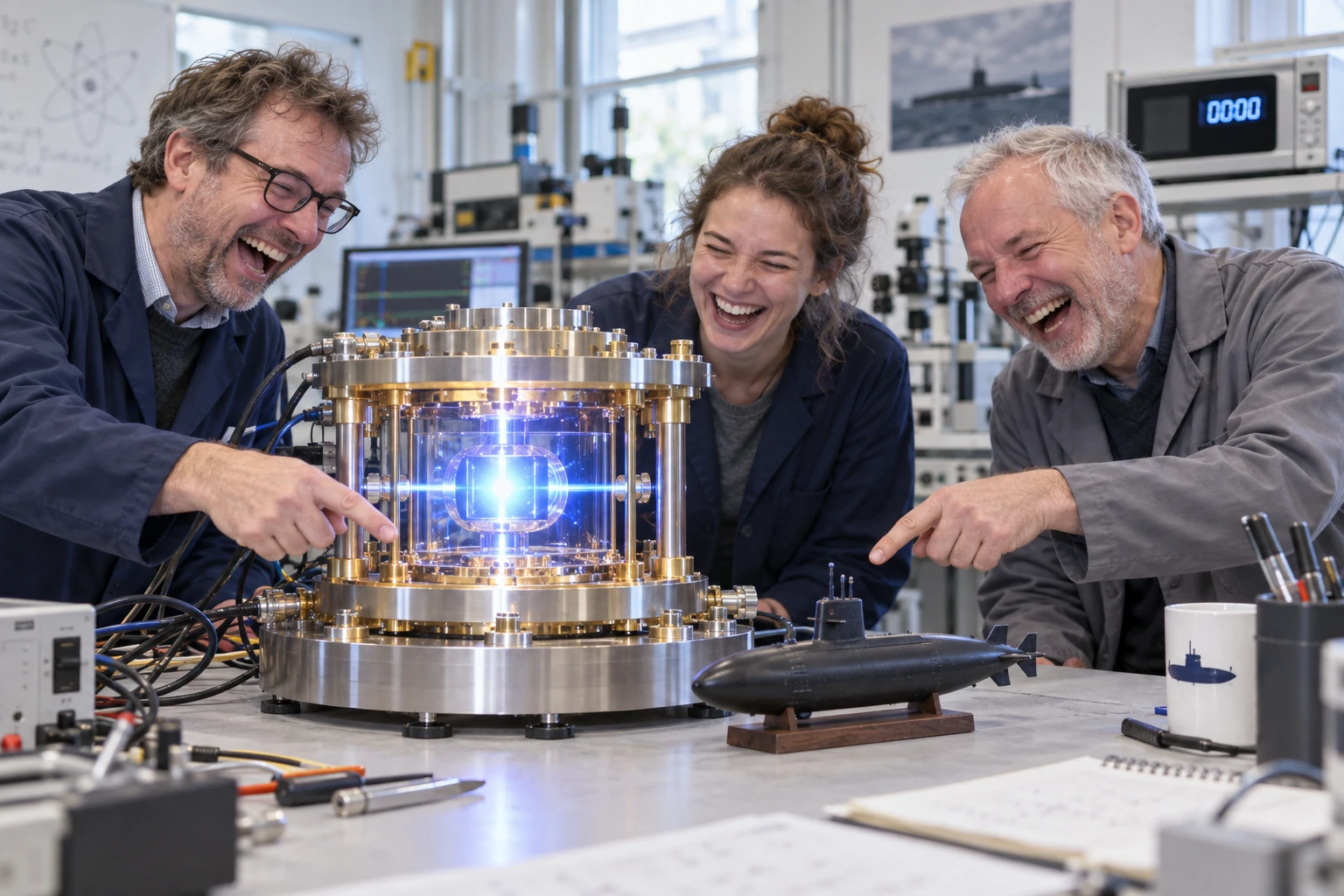
The trial allowed manufacturers to test clock components and complete devices outside ordinary laboratory conditions. Dstl said the long term testing would help establish the standards needed for difficult military environments. Dr Second Hand, a scientist with a remarkably punctual kettle, laughed at the results.
“Precision matters,” she said. “If a submarine is one second late, it cannot simply blame the bus.”
The atomic clocks use waves of light to energise atoms and produce a frequency more accurate than traditional clocks. This is a considerable improvement on the oven clock, which has spent years claiming it is five minutes fast while providing no evidence, witnesses or useful alibi.
The technology could also create opportunities for UK industry. One participating business, Far Field Exploits, used specialist testing equipment and expertise supplied through the trial. That is encouraging news for innovation, and for anyone who enjoys a machine capable of knowing the exact moment the tea went cold.
A further trial is planned for 2027, with the longer term aim of deploying quantum navigation systems, including atomic clocks, on an aircraft by 2030. Britain is therefore taking time seriously at last. The rest of the country will continue setting its watch by a microwave that has been blinking 00:00 since 2014.
Engineers will keep testing the system in the hope that precise navigation can survive interrupted satellite signals, difficult environments and the national tradition of leaving the house without checking where it is going. At last Britain may know exactly where everything is, just in time to lose the paperwork explaining it.