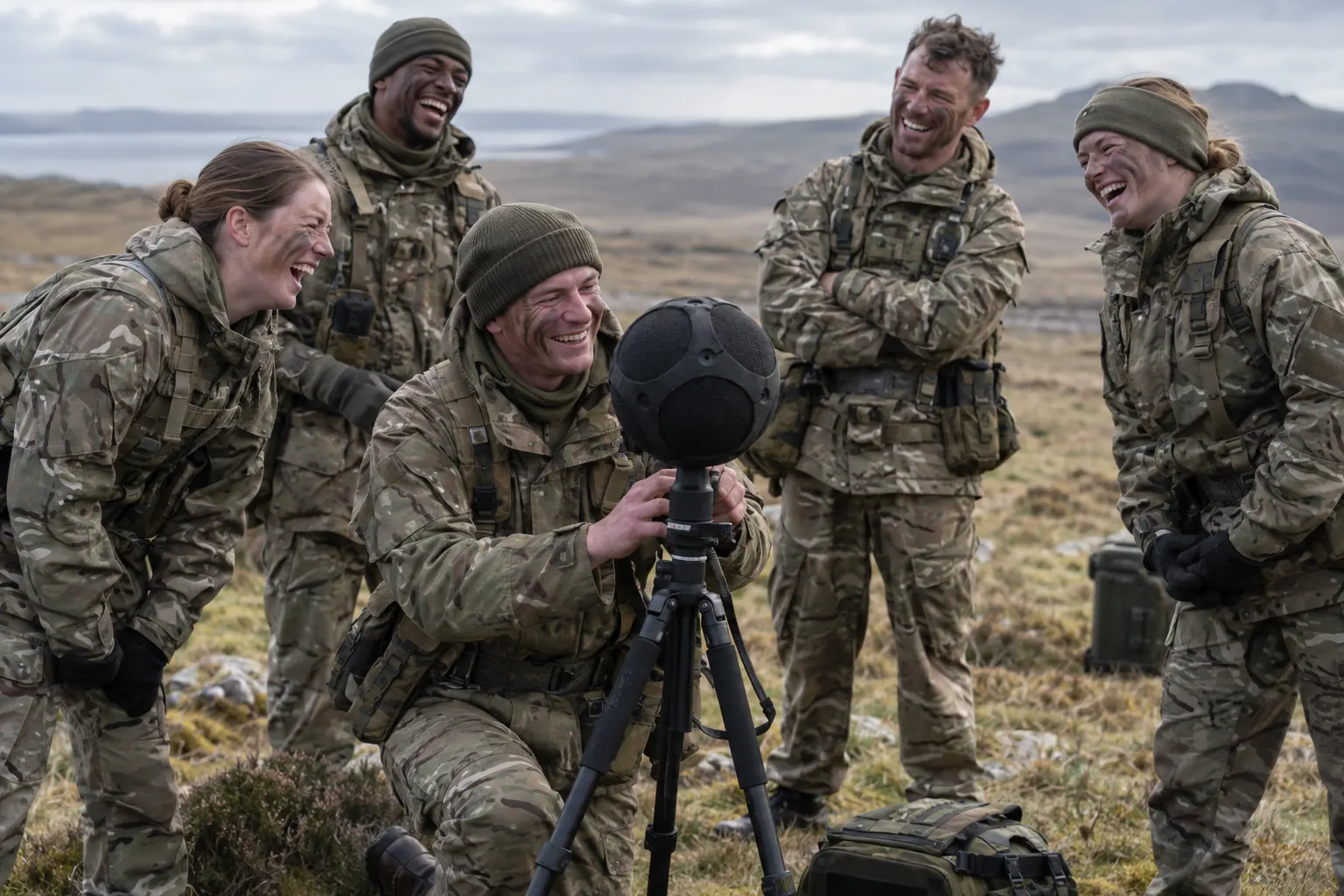
The SONUS acoustic weapon detector will reach the Army five years ahead of schedule, proving that British defence procurement can move at remarkable speed once something important agrees to weigh 70 per cent less.
The system is designed to locate hostile gunfire, mortars and explosions by detecting acoustic pressure waves. It can deploy in under three minutes, giving it enough time to identify a threat, locate it and hear somebody nearby announce that the adaptor has disappeared into the administrative undergrowth.
SONUS is lighter than its predecessor, which has delighted equipment officers who have spent decades explaining that portable is a flexible term meaning anything that can eventually be moved by a sufficiently motivated group of adults and a vehicle whose paperwork is in order.
Major Derek Echo, who has never existed but is already checking the batteries, welcomed the breakthrough. “At last we can hear what is happening,” he said. “The next objective is hearing why the printer only works when nobody needs it.”
The system will be delivered to 5th Regiment Royal Artillery, the Army’s surveillance and target acquisition regiment, over the next 12 months. Training will cover detection, deployment and the precise moment an acoustic specialist realises that the loudest noise on site is a dropped biscuit tin.
The £18.3 million contract with Leonardo UK is expected to sustain 250 jobs and involve 29 small and medium sized businesses. This gives Britain the rare national pleasure of a defence announcement containing both a delivery date and a supply chain that has not yet been described as an exciting journey towards a future opportunity.
SONUS can locate an enemy weapon without broadcasting its own electronic signature. The technology is covert, accurate and robust, making it a considerable improvement on standing in a field pointing at the loudest noise and hoping it belongs to the correct side. It is also proof that the Army can identify a sound without first forming a committee to agree whether it was technically a sound.
Procurement reforms helped fast track the system as part of the Army’s modernisation programme. Officials say this demonstrates what can happen when important equipment is prioritised. Less important equipment will continue to arrive after the meeting convened to investigate why it has not arrived, carrying a laminated apology and the original delivery estimate.
For now, Britain is celebrating a detector that arrived early. The Army has asked it to listen carefully. Somewhere, a kettle has begun its briefing, and SONUS is the first piece of military kit to recognise that tea break is not downtime. It is the only operation in Britain where the chain of command already knows who has the biscuits.
Source: Ministry of Defence.