Britain has been offered 3,500 miles of safer walking, wheeling and cycling routes, forcing the nation to confront the possibility that some journeys may contain a destination at the end rather than a second lane.
Twelve combined authority mayors have backed a national active travel network covering regions containing 20 million people. The plan will connect homes with schools, high streets, workplaces and public transport, which is an ambitious attempt to make several useful things exist in the same place at the same time.
The programme is due to begin in autumn, with work around 1,000 schools and 300 safer routes. Parents welcomed the announcement, provided every child can still be delivered directly to the classroom door in a vehicle large enough to have its own postcode and emotional support infrastructure.
Projects will include school streets, traffic calming, new crossings and pavements clear of obstructions. This means the pavement may soon be returned to its traditional purpose of allowing people to move along it, after years of service as a storage system for bins, scooters and one builder’s van displaying a hazard light as a lifestyle choice.
“Walking is an exciting zero emission transport technology,” said Commissioner Felicity, who oversees Manageable Distances. “Early trials suggest most users already possess the required equipment below their waist, although further consultation is needed before anyone is allowed to mention this near a car park.”
The network is also intended to help people reach buses, trams and trains. This radical principle, known as joining up transport, has previously been observed only in diagrams where every line arrives on time and nobody is standing in the rain beside a timetable last updated during the reign of a different government.
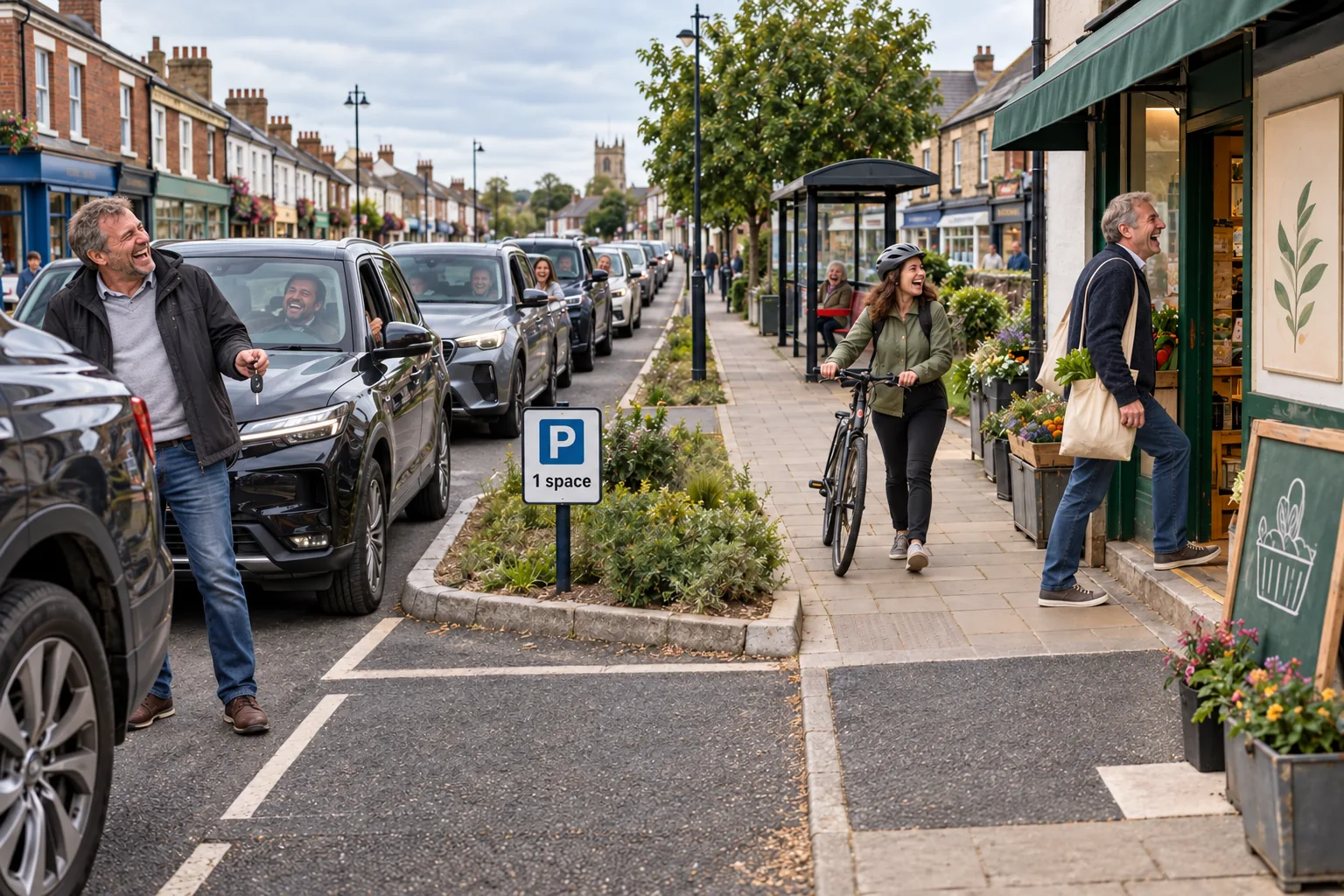
Ministers say the programme will support healthier journeys, improve air quality and ease pressure on the NHS. Critics have warned that the policy could make short trips quicker, cheaper and less stressful, leaving drivers with no obvious reason to spend twenty minutes searching for a parking space outside a shop they could have reached before the engine warmed up.
One resident walked ten minutes to the high street and arrived before a neighbour who drove. Both agreed this was alarming. A review has now been commissioned into whether the high street should be moved somewhere much less accessible, preferably behind a retail park and a bypass, so nobody can accidentally reach it without a permit.
Real story: Active Travel England.