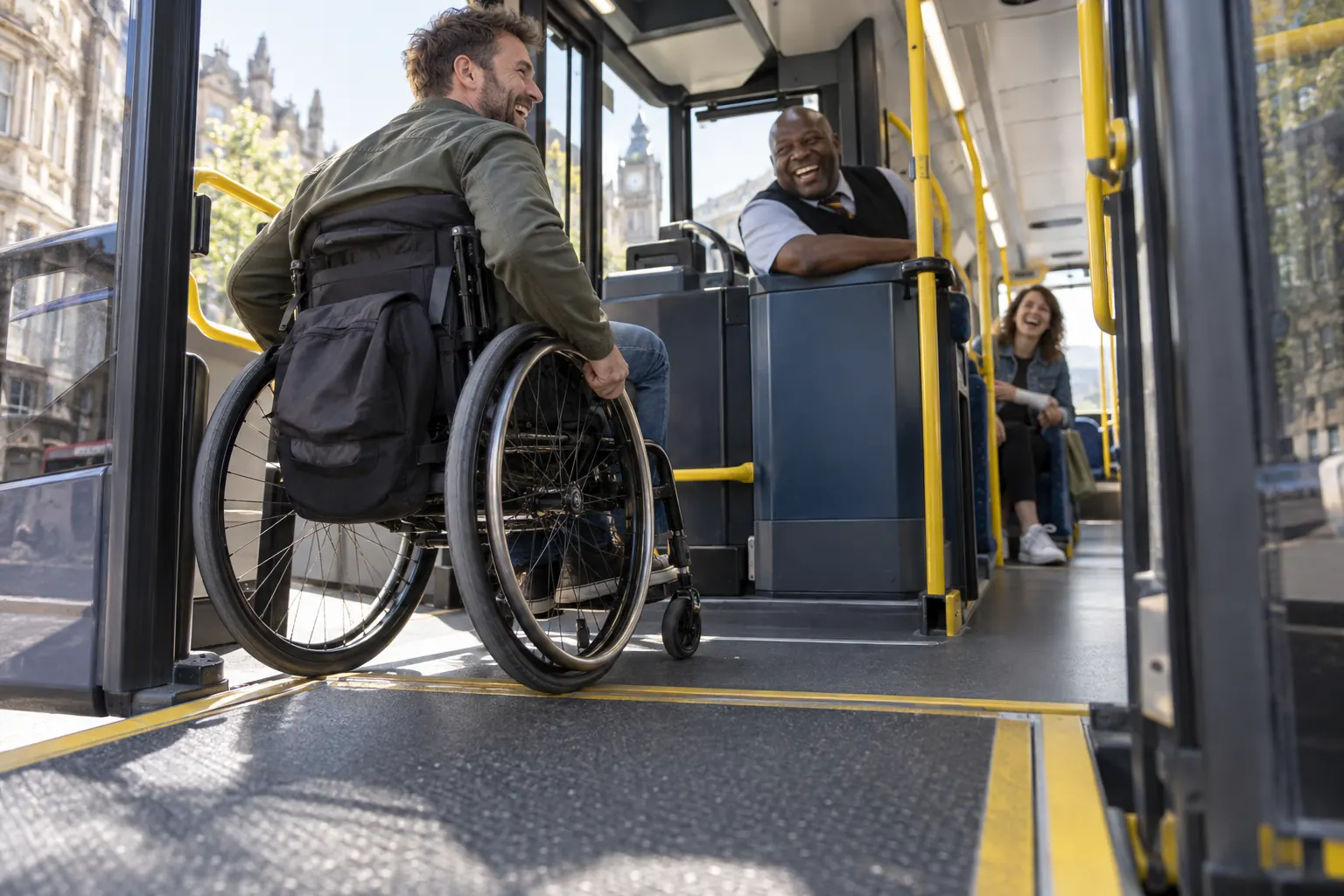
The UK is developing an Accessible Travel Charter, giving bus stops a long awaited opportunity to discover that getting there somehow is not a design standard, even when it has been printed on enough timetables.
The UK told a UN panel that disabled passengers should be able to travel confidently, easily and with dignity. This is an ambitious objective for a transport system that can regard a missing ramp as a minor detail and a puddle as a permanent local landmark.
The stated package includes measures in the Bus Services Act intended to improve accessibility, including safer and more accessible bus stations and stops. It also includes more streamlined disability training for bus drivers and frontline staff. At last, the people helping passengers might receive information about the passengers they are helping.
Somewhere, a bus stop is currently being asked to consider whether its kerb is welcoming. It has requested time to consult the kerb, the puddle and a timetable folded into an unreadable shape since a date nobody can now establish.
The charter is being developed with disabled people, operators and regulators. This is a remarkably sensible arrangement, allowing people who use the system to explain how it might work. The alternative is to let a committee design accessibility from a conference room, using a photograph of a bus and a confident sense of completion.
Accessible transport is not a decorative extra added after the last seat has been installed. It supports independent and community living, while clear information, usable spaces and trained staff can make an ordinary journey less like an expedition requiring weatherproof clothing, emergency snacks and a relative who knows three ways to telephone the council.
Better access would also help parents with buggies, travellers with luggage and anyone who has attempted a staircase while carrying a suitcase in the rain. Accessibility may therefore turn out to be one of those rare improvements that benefits people who were not invited to the meeting about it.
The Government’s stated goal is for disabled passengers to travel with confidence, ease and dignity. The bus stop has a humbler ambition: to reach the stage where a passenger can approach it without first checking whether the pavement has become a small inland sea. Once that happens, the puddle will have to find work in another department.
Source: UK Mission to the WTO, UN and other international organisations (Geneva).