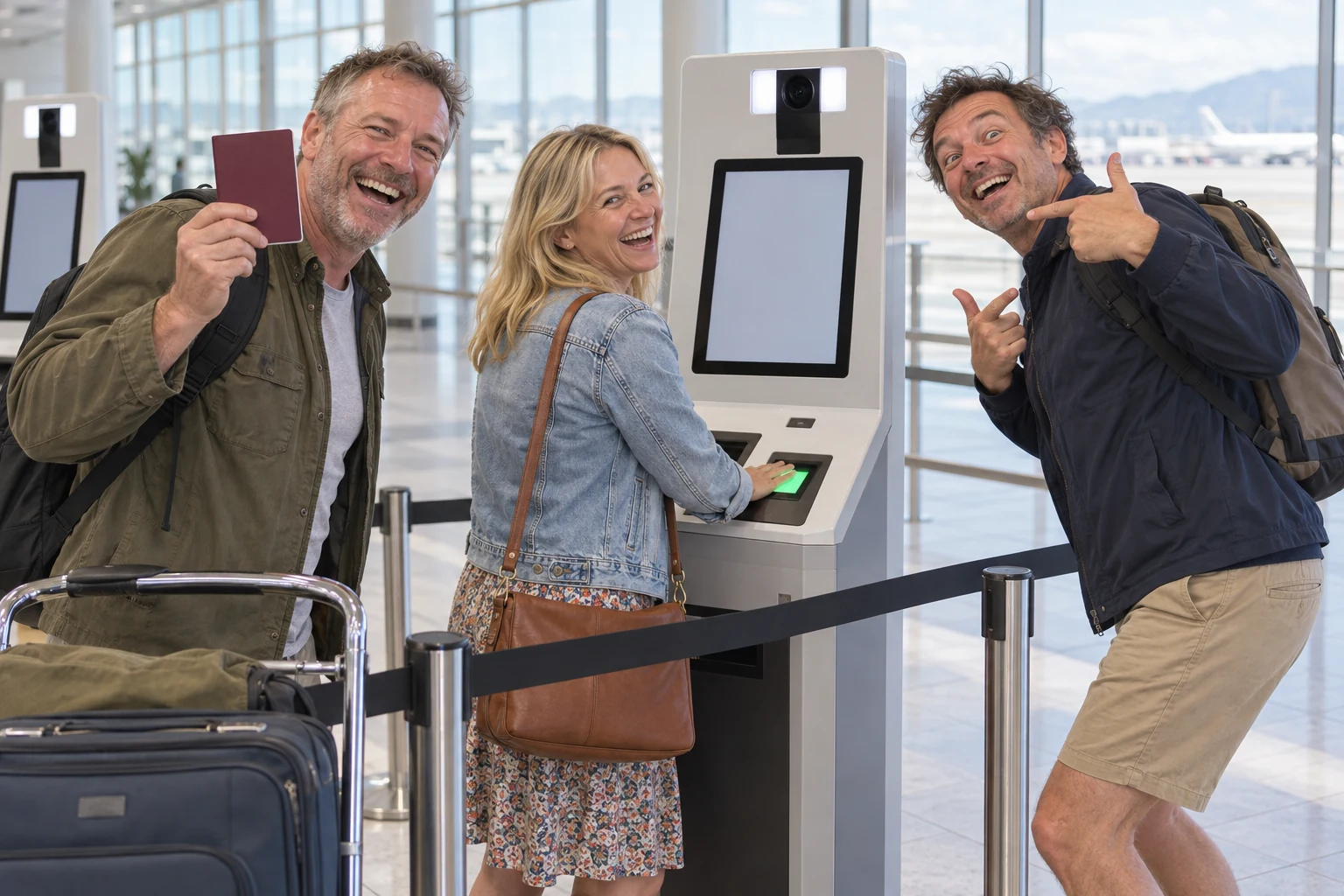
The EU Entry Exit System has arrived to make European travel feel like applying for planning permission. British visitors must register their passport, fingerprints and photograph before beginning the traditional holiday ritual of wondering whether the hotel exists. The EU Entry Exit System will arrive in phases, giving every border the chance to define quick and simple for itself.
The EU Entry Exit System welcomes you personally
From 12 October, British passport holders entering a participating country must register on their first visit. The process scans the passport, captures fingerprints and takes a photograph. Registration lasts for three years or until the passport expires.
Officials expect each check to take one or two minutes. That sounds reassuring because the modern border follows the same principle as a self checkout machine. It works quickly when nobody is using it, asking questions or travelling with a family.
The rollout runs for six months, so ports may follow different arrangements until April 2026. Travellers can discover whether their journey uses the new system, the old system or the temporary system invented by a tired member of staff with a laminated sheet.
At Dover, Folkestone and St Pancras, officials will register travellers before they leave the UK. The government has provided £10.5 million for border infrastructure and launched an awareness campaign. The public can now learn about the procedure immediately before failing to find the correct queue.
Martin Ledgerdash, Director of Calmly Managed Forward Motion, has taken charge of the sort of explanation that turns a queue into a strategic journey. His briefing promises infrastructure, reassurance and a carefully signposted route towards the other infrastructure.
A photograph for every border occasion
Children under 12 will not provide fingerprints, although officials will photograph every traveller, including babies, and create a digital record. A baby can now arrive in Europe with no luggage, no itinerary and a better border trail than most small businesses.
The checks do not apply to travel to Ireland or Cyprus. People using qualifying EU passports or Withdrawal Agreement residence documents remain exempt. Everyone else should expect a brief encounter with the state before buying an overpriced sandwich in peace.
The system replaces passport stamping and helps officials track compliance with the 90 day visa free travel rule. It is a sensible administrative aim, delivered in the familiar modern style. First make the journey digital, then photograph everyone while they wait for the printer.
Eventually, the queue will move, the photograph will pass inspection and the holiday will begin. Europe will have welcomed its visitors, recorded their faces and proved that the only thing crossing the border faster than a traveller is the promise of minimal disruption.
Source: Home Office and Department for Transport announcement.