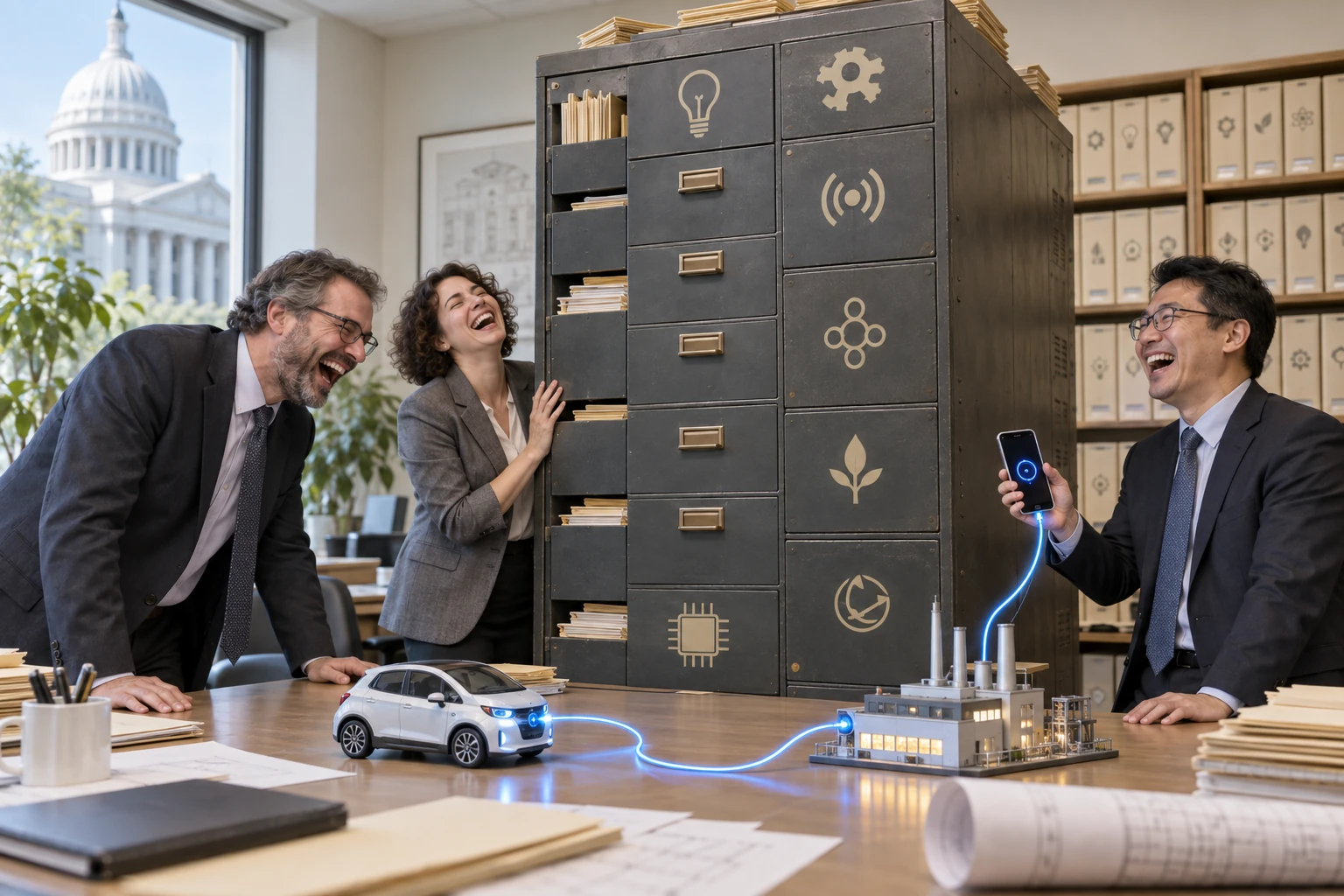
Standard essential patents let phones, electric vehicles and smart factories communicate, which is impressive because the people licensing the technology have apparently agreed to communicate through a maze.
The Intellectual Property Office is consulting on how the UK framework for standard essential patents can work more efficiently. The consultation covers transparency, licensing, dispute resolution and the information gap between patent holders and businesses trying to use the technology.
This is a sensible attempt to make an important system less expensive and less bewildering. It is also a bold admission that technology designed to help machines speak the same language has left humans negotiating in several dialects of legal fog.
Standard essential patents cover inventions needed to implement agreed technical standards, including 5G. They help devices communicate across companies and industries. Unfortunately, the paperwork surrounding them has developed the personality of a Victorian inheritance dispute in which every heir owns a slightly different version of the alphabet.
“Our devices communicate seamlessly,” said Professor Clive Handshake, Commissioner for Invisible Cables. “The humans who license the technology communicate by attaching documents to emails that begin, ‘Further to our previous correspondence.’”
The IPO is seeking views on proposals including a specialist route for determining licence rates and mandatory searchable information about patents linked to standards. It is also gathering evidence on pre action protocols, essentiality checks, remedies and alternative dispute resolution.
These measures could help smaller businesses navigate a system that currently risks making innovation feel like an expensive treasure hunt. The clues are hidden in patent portfolios, the map is available on request and the person holding the compass is legally required not to say where north is.
The consultation says one recently reported dispute cost £31.5 million. That is enough money to build a remarkable number of connected devices, or one very advanced filing cabinet capable of explaining why the last filing cabinet was essential.
Good standards should disappear into ordinary life. People should be able to pair headphones, connect a car or operate a factory without first acquiring a working knowledge of licensing negotiations. The Department of Connected Things has therefore removed one obscure diagram and replaced it with a more reassuring obscure diagram.
Responses close on 7 October. By then, the smartphone will still be talking to the car, the router and the factory system without fuss. The consultation will be asking everyone to define “without fuss” in no fewer than 2,000 words, preferably with searchable evidence and a specialist route for determining who started it.
Real story: Intellectual Property Office.