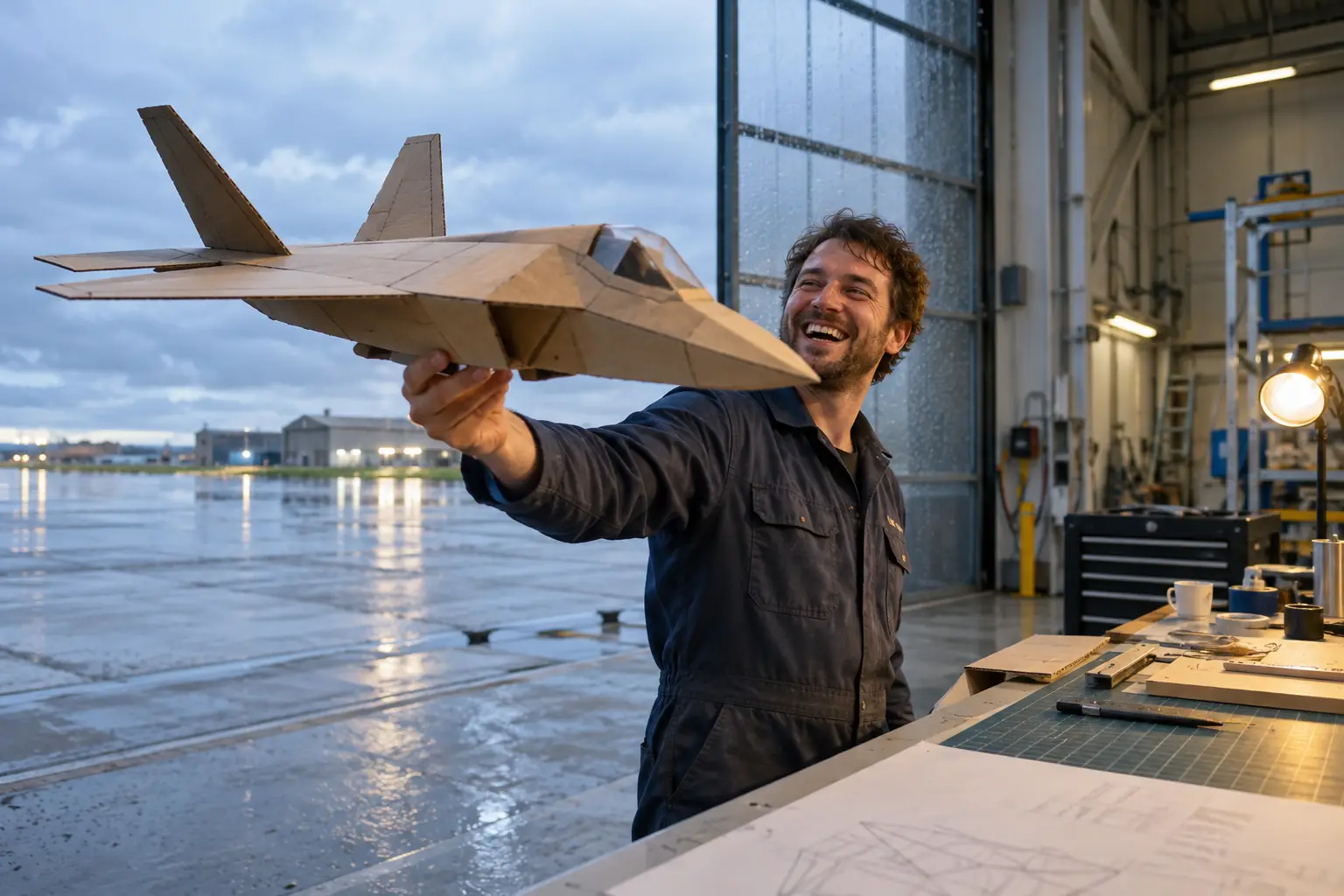
UK air combat technology has received £708 million to accelerate the future. That is reassuring, because the future has apparently been waiting in a procurement queue. The Ministry of Defence announced the contract extension on 22 July 2026. It said more than 4,500 workers and around 600 British based companies would develop advanced systems for the Royal Air Force. A cardboard jet at the Farnborough International Airshow immediately applied for a visitor badge. It listed looking aerodynamic as its main qualification.
The programme covers artificial intelligence, advanced software, digital engineering, augmented reality, additive manufacturing and robotics. It is the sort of mixture that makes a sensible person wonder whether the aircraft will fly, print a replacement wing and request a software update over the North Sea.
BAE Systems leads the work with Team Tempest partners Leonardo UK, MBDA UK and Rolls Royce. The announcement said around 90 percent of the jobs would sit outside London and the south east. About 600 companies and academic institutions would support the programme.
UK air combat technology meets the cardboard jet
The cardboard jet admired the scale of the operation. It also worried about the absence of a clearly defined role for cardboard. It submitted a proposal offering low cost prototyping, zero fuel consumption and a respectable ability to remain still in crosswinds.
It claimed to support British industry. Then it folded slightly beside the refreshments table. It had already demonstrated additive manufacturing by acquiring an extra layer of glue. The programme returned its application because it lacked an ambitious enough acronym.
The government called the investment a vote of confidence in British industry. It said the technology would strengthen defence and deterrence. The programme also forms part of the Global Combat Air Programme. The UK plans to invest £8.6 billion in that programme over four years, according to the announcement.
A very advanced piece of stationery
There is a serious point beneath the materials. Large defence programmes need specialist skills and long term investment. They also produce an alarming quantity of acronyms. The joke is not that advanced technology matters. It is that every ambitious national project eventually creates a table where someone must explain why a cardboard prototype has received a lanyard.
By closing time, the jet had secured a temporary pass and a supply chain briefing. It had also joined the queue for artificial intelligence. It was last seen asking whether Future Combat Air System included return postage. Then someone promoted it to head of paper security.
Source: GOV.UK.