The fusion supercomputers federation has arrived with a serious purpose, a polished declaration and the unmistakable air of two enormous machines being introduced at a very formal dinner. On 14 September 2026, UKAEA and Princeton Plasma Physics Laboratory said they would explore linking UKAEA’s SUNRISE system with PPPL’s STELLAR AI platform. The plain unmarked laboratory tablet nodded carefully, then asked whether the meeting included biscuits.
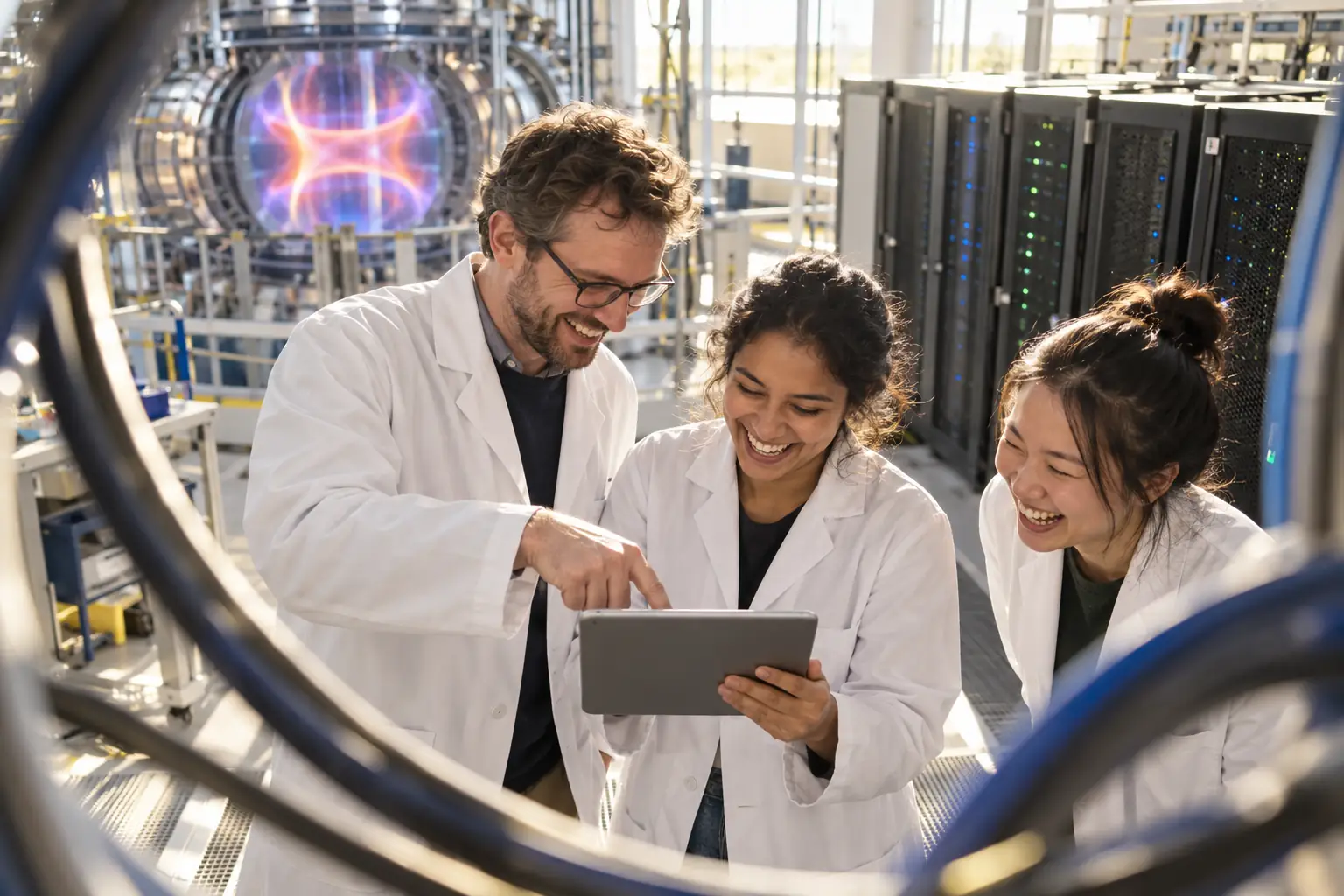
This is practical scientific news, not a miracle performed by a computer wearing a lab coat. The proposed partnership would let researchers train artificial intelligence on data from both laboratories. They would use experiments from the MAST Upgrade and NSTX U facilities. They would also investigate digital twins of the machines. The aim is to shorten the design cycle for future fusion power plants.
Fusion supercomputers federation in plain terms
One machine can learn more effectively when it receives data from another. That should help researchers test whether their models describe the underlying physics. It may also stop a computer becoming very confident about one particular machine in Oxfordshire.
The fusion supercomputers federation therefore treats international cooperation as technical common sense. Technical common sense must first attend several meetings, however. The computers will not merge into one glowing appliance. They will not settle custody of the spare cables. Instead, researchers will explore how computing jobs can move between platforms with different hardware. Even a supercomputer can discover that paperwork travels further than electricity.
A digital twin with no wardrobe
Officials also describe possible digital twins. These are detailed virtual copies of real fusion machines. Regular experimental data would support them. This sounds like a family arrangement in which the real machine provides updates while the virtual one enjoys better storage and never gets called into a meeting.
The announcement also supports training, workshops and research opportunities for future fusion and artificial intelligence specialists. This is sensible. Young scientists should study the future before somebody asks them to complete its expenses form using a system designed in the past.
Two laboratories, one large ambition
The declaration does not promise an immediate fusion power plant, a pocket sized sun or a computer that can explain why a project is running late. It sets out an intention to explore closer technical cooperation. That work builds on an earlier memorandum of understanding.
The plain unmarked laboratory tablet has filed the arrangement under “promising”, beside “requires further meetings” and “do not place near coffee”. Meanwhile, the two supercomputers are preparing to share data, models and responsibility. At last, fusion research has found a way to generate heat without starting the machine. Just schedule a committee to decide who gets the biscuit tin.
Source: GOV.UK.