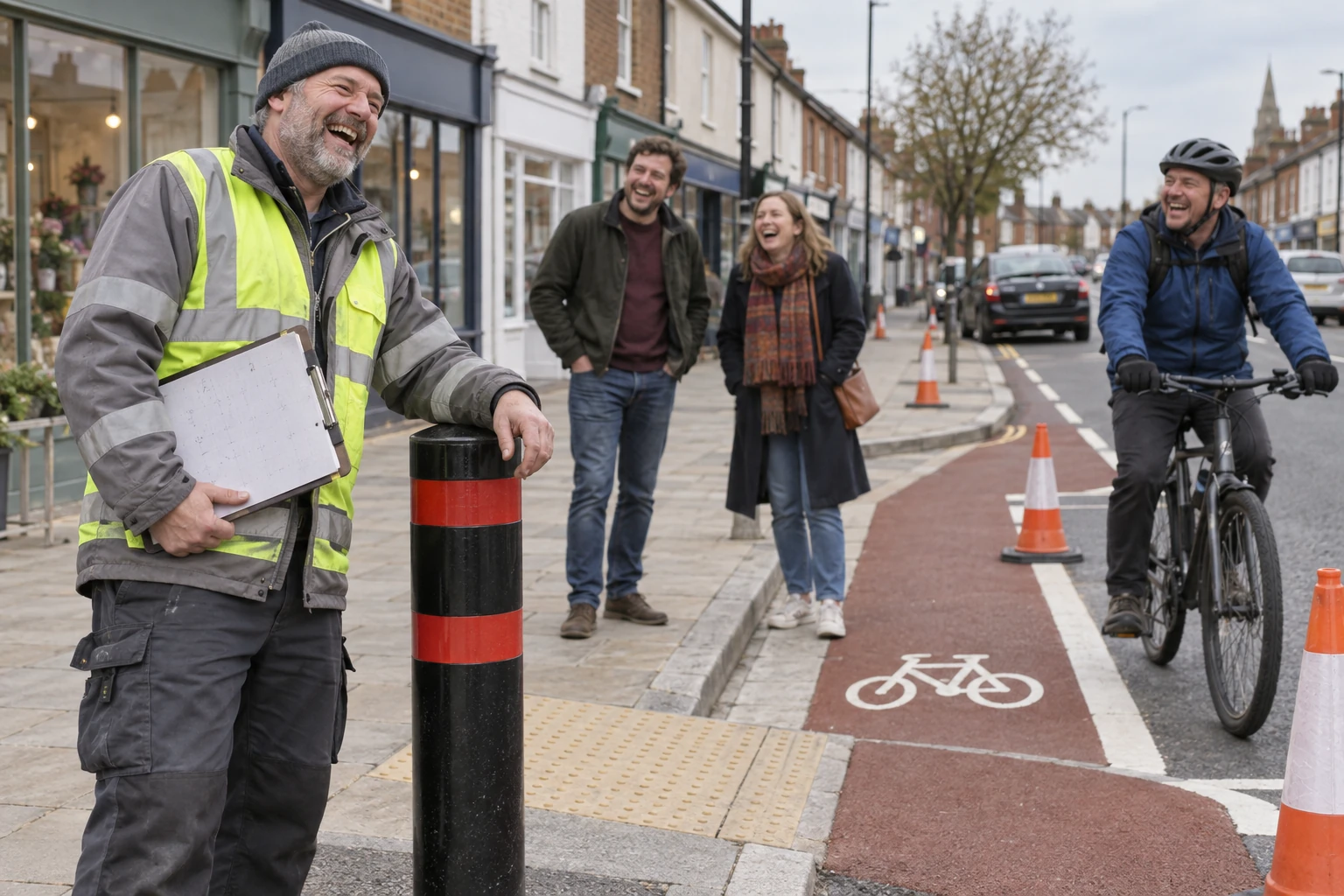
Britain’s bollards have spent years standing quietly at the edge of public life, so the £291 million walking and cycling package has caused an awkward career moment. At last, the nation is investing in routes, crossings, training and community programmes. The bollard’s contribution is being measured. It has requested a clipboard and a more senior pavement.
The package was announced in February 2025 and includes funding for 300 miles of new footpaths and cycle tracks, improved crossings and junctions, Bikeability training, National Cycle Network improvements and active travel projects in schools and communities. By January 2026, the bollards had accepted that this was not a personal attack. It was simply an attempt to make getting somewhere less like negotiating a minor border dispute.
There is a practical point beneath the ceremonial spending. A route is useful when people can find it, cross the road without entering a separate legal system and reach their destination without the instincts of a mountain goat. The announcement predicts millions of extra journeys and fewer sick days, giving the average dropped kerb an unusually ambitious performance target.
Myrtle Pedalcase, Commissioner for Sensible Movement, has prepared a draft route assessment. It recommends a clear direction, a safe crossing and a reasonable chance of understanding the signage before retirement. The assessment contains six colours, four arrows and one pastry crumb marking the town centre.
Community involvement is also part of the programme, meaning residents may be asked what they think before the road layout is finalised. This is considered revolutionary in the infrastructure sector, where consultation has traditionally meant unveiling a finished junction and asking whether anyone enjoys being surprised.
Schools are included too. Children may receive cycle training while adults learn the more advanced skill of looking at a painted lane without immediately predicting national collapse. One local authority has submitted a junction for an award after a walker, cyclist and driver used it in sequence and all remained alive. The judges called the result promising, if difficult to reproduce.
The bollard has now received its own review. It prevented several parking manoeuvres, discouraged one van and remained upright throughout. Its report praised leadership, resilience and a strong understanding of boundaries. It is applying for the transport secretary’s job, on the grounds that it has been blocking bad ideas for years. The interview panel is expected to ask whether it can stand still under pressure. The bollard has already been doing that for decades and is demanding the post.