Sport England and Good Things Foundation have been examining the digital barriers that stop people taking part in sport, proving that the nation’s next great fitness challenge may be locating the email containing the link to the form about locating the email containing the link.
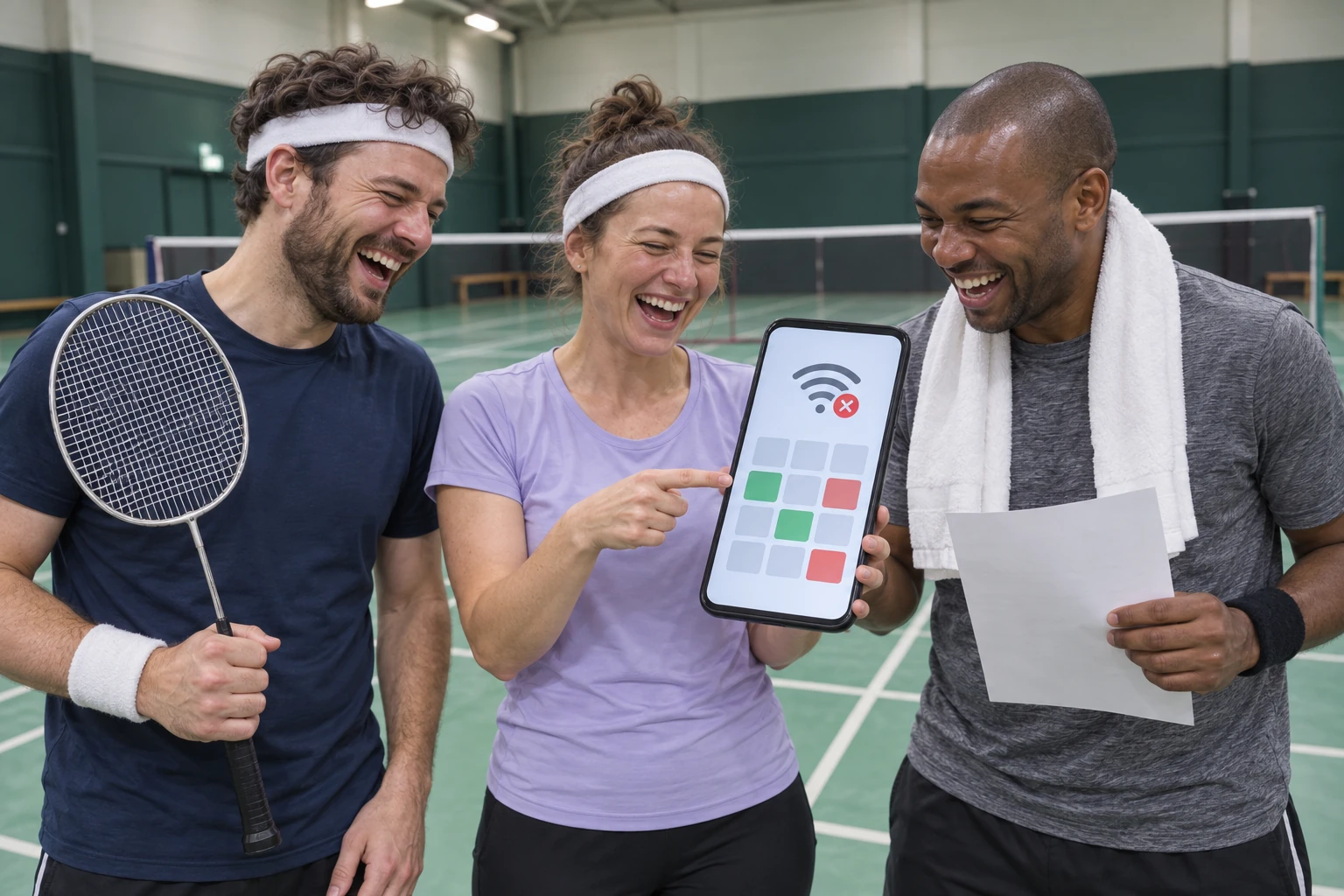
The call for evidence closed on 8 January after asking organisations to share examples of how digital exclusion affects access to sport and physical activity. It covers devices, connectivity, digital confidence, online safety and accessibility. In practical terms, a badminton court may still require a smartphone, a QR code and the concentration of a bomb disposal expert.
Anyone who has booked a court already knows the basic difficulty. The website says their email exists. It belongs to an earlier version of them who forgot a password during the Olympics and has since moved house.
The evidence will be reviewed and summarised, with findings and recommendations intended to feed into a report for Sport England in March. Dotty Lanyard from the Office for Recreational Password Resets said the process had identified a worrying obstacle. “People want exercise,” she explained. “Then a screen asks whether they are a robot. They begin to suspect it knows something.”
One running group counted six registration steps, two consent boxes and a pickleball newsletter. Its oldest runner completed the process three weeks later. By then she had joined a cryptocurrency seminar, adopted a digital fern and forgotten why she wanted to stretch.
The organisations are particularly interested in barriers affecting older adults, people experiencing poverty, disabled people and those with long term health conditions. None of these groups is improved by a system that treats a missing mobile signal as a character building exercise. It is difficult to call a service inclusive when the first requirement is already owning the equipment needed to reach it.
A gym has proposed a solution. It installed a tablet explaining why its booking tablet had stopped working. The pilot was declared accessible after a member reached the help page without being redirected to an app store, where the app demanded a newer phone and the phone demanded a quieter household.
Clerk Nigel Two Factor urged sporting bodies to retain some caution. “Simplicity creates expectations,” he said. “If parents book swimming in four minutes, they may expect a bus to appear.”
Digital tools can help people find activities, but only when people have a suitable device, data, confidence and patience. The paper alternative remains unfashionable, although a five a side captain has assembled a full team by writing names on a receipt and storing it in a biscuit tin.
The system lacks scale, security and elegance. It has, however, never asked anyone to prove they are not a traffic light before kick off. The biscuit tin is now preparing a privacy policy, which is how you know sport has finally become a serious digital service.
Source: Sport England.