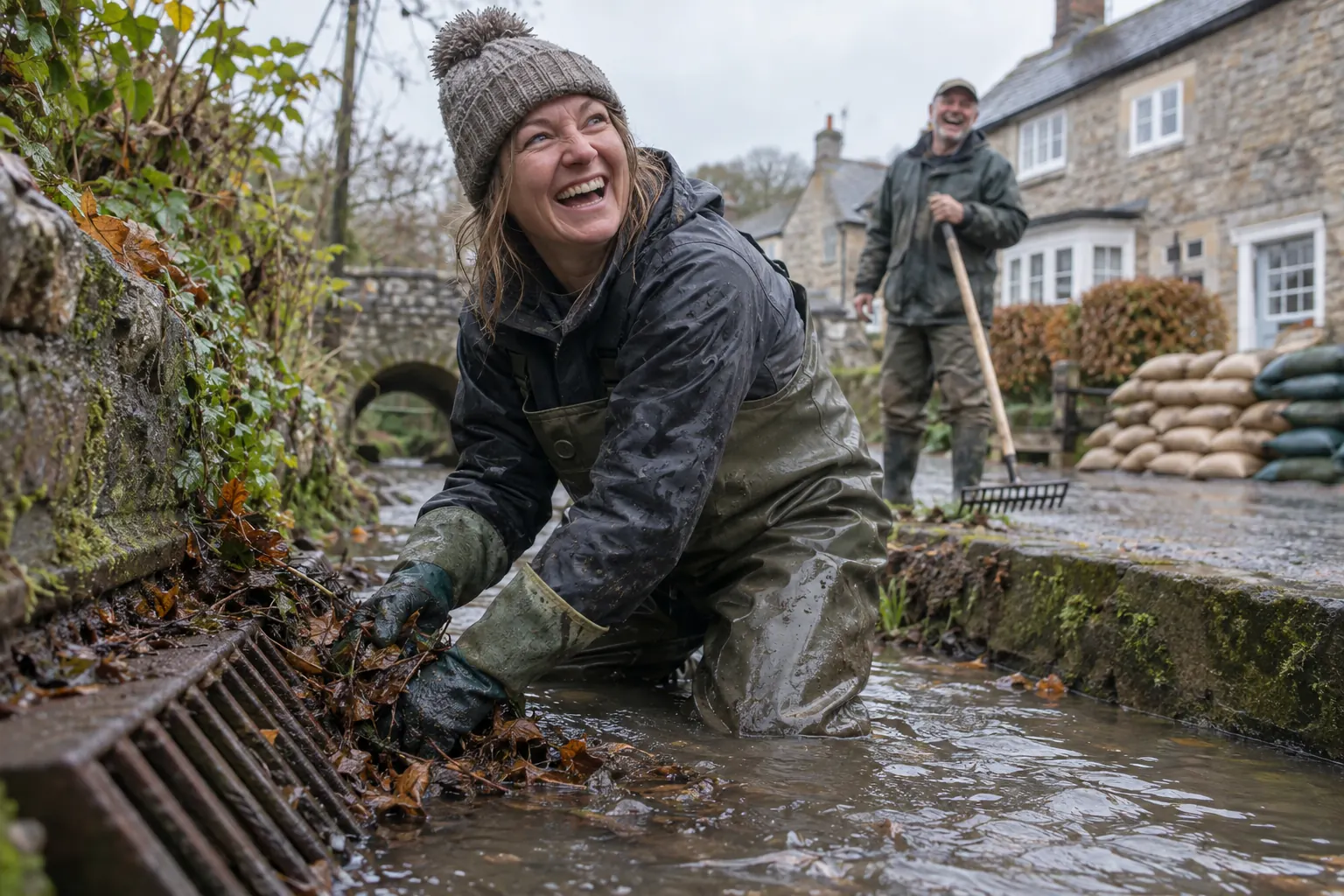
Communities have been given new guidance on maintaining local flood defences. Within minutes, every village had identified the resident who owns a very serious rake and speaks about drainage with the authority of a naval commander.
The guidance, supported by the Flood and Coastal Erosion Risk Management Research and Development Programme, is intended to help communities work with risk management authorities on drainage, watercourses and local flood defence assets. It also gives Britain a splendid new reason to treat a blocked grate as a matter of civic destiny.
CIRIA has published three free guides. One helps community groups organise maintenance work. Another helps authorities work with those groups. The third explains how the approach fits existing policies and regulations. It is practical, sensible material, which means the parish noticeboard has immediately begun behaving like the headquarters of a small but extremely damp ministry.
Local groups can bring useful knowledge to the job. They know which drain vanishes beneath the road, which bank collapses whenever it rains and which patch of mud has been described as temporary since 2019. They also know who can bring gloves, tea and a clipboard that has survived three administrations.
That knowledge still needs to connect with proper advice, safe working and the relevant authorities. A resident in wellies may recognise that the ditch is full of leaves, but this does not make them responsible for the entire river system. Unfortunately, the village committee has already voted to hear evidence from the person who once found a wet sock near a sluice.
Its first meeting will decide who may touch the culvert, whether the rake requires its own risk assessment and why the neighbour who keeps saying “it has always been like that” has become technical adviser. Nobody knows who appointed the chair. Everyone agrees it was probably the person with the largest folder.
The guidance recognises that communities and authorities can work together to reduce flood risk. Britain has interpreted this as permission to create a rota, laminate a map and establish a reporting line for garden tools. The grate will be cleared shortly after the committee agrees the wording of its mission statement.
By then, the serious rake will have acquired a badge, a deputy and an opinion on procurement. The culvert may be safer, the paperwork will be immaculate and the village will finally have achieved what every public body dreams of: an implement that cannot be blamed because it is still awaiting approval from its own subcommittee.
Source: Flood and Coastal Erosion Risk Management Research and Development Programme.