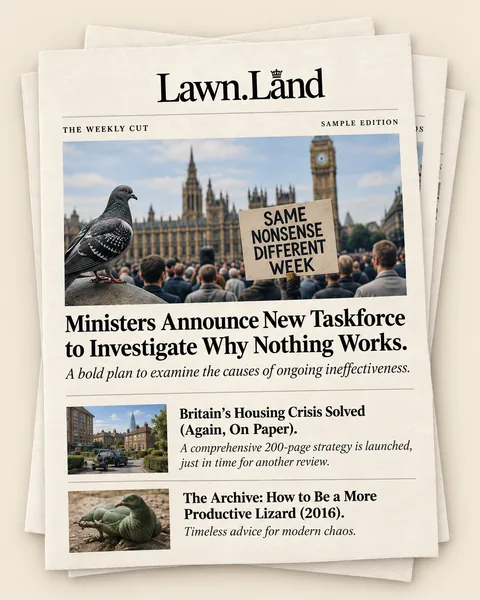
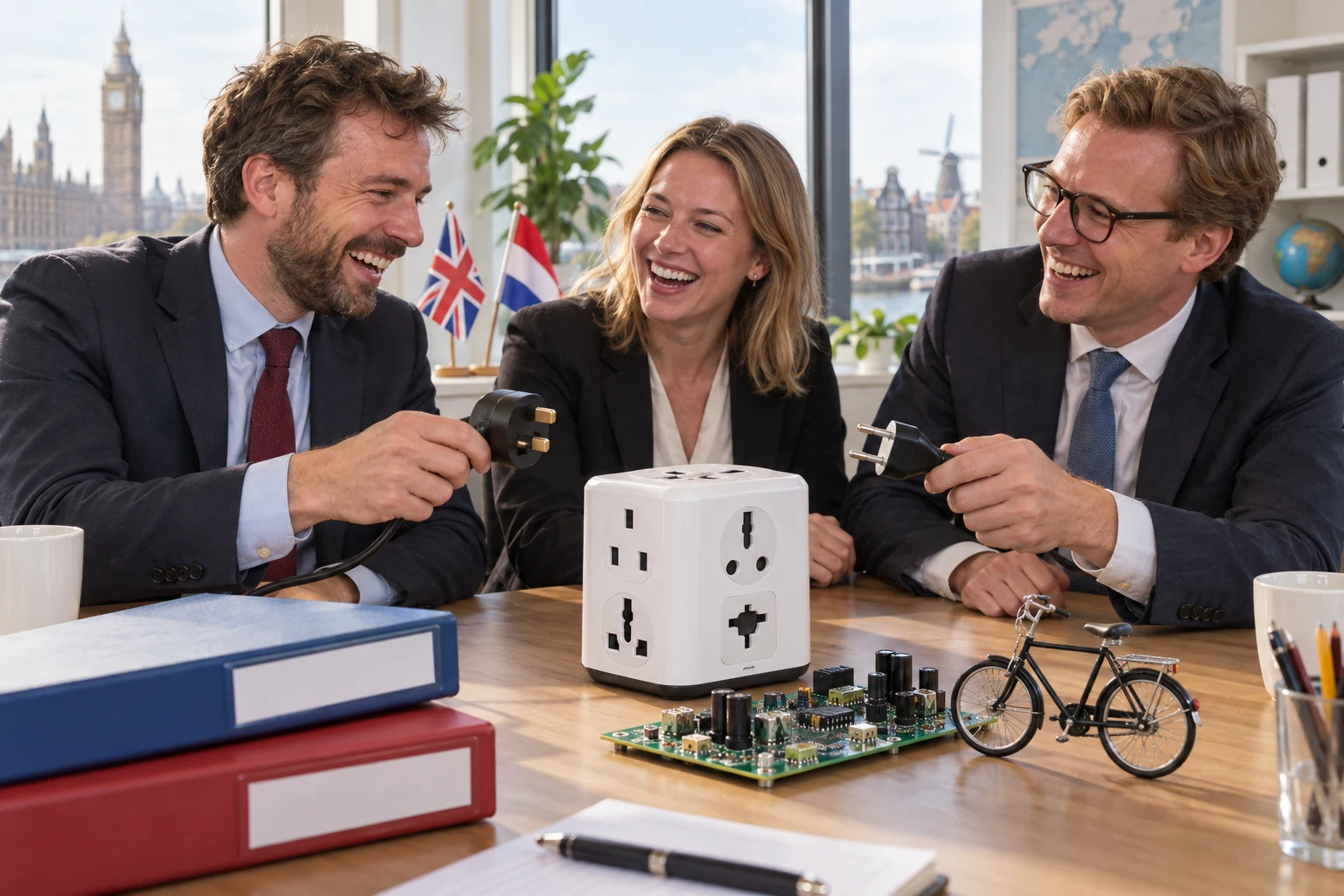
A UK Netherlands innovation partnership could accelerate work on artificial intelligence, quantum technology and semiconductors. It has no signed deal or branded launch event. That makes it unusually honest.
Keir Starmer and Dutch Prime Minister Dick Schoof agreed in February to pursue a new innovation partnership and identified the three technologies as areas for future cooperation. By October, the proposal remained admirably free of the usual evidence that somebody had already ordered four hundred lanyards.
UK Netherlands innovation partnership stays theoretical
The Bureau of International Plug Sockets welcomed the announcement, particularly the commitment to move quickly towards something that might eventually be agreed. Its fictional spokesperson, Arlo Van Doodle, praised the proposal for its excellent partnership momentum, a phrase created after the ordinary word hope was judged insufficiently fundable.
Artificial intelligence can identify the right meeting. Quantum technology can ensure the meeting is both happening and not happening until somebody observes the minutes. Semiconductors can make the equipment small enough to vanish during the reception.
Van Doodle said Britain brought queue management and historic confidence, while the Netherlands contributed precision, cycling infrastructure and an impressive ability to locate a functioning socket. Neither country has yet been asked for a delivery timetable, presumably because delivery timetables are protected in their natural habitat.
Three technologies, one enormous adaptor
Fictional Director of Applied Handshakes Belinda Kettle urged engineers, researchers and companies to begin talking. She warned everyone not to call the arrangement an ecosystem until at least one pond had been inspected.
The future needs an adaptor
The Downing Street readout also described a wider aim to strengthen cooperation with European partners. Ministers can call the proposal urgent when they need a future. They can call it exploratory when journalists ask for results.
A UK Netherlands innovation partnership could produce research and better technology. It could remove meetings about arranging the next meeting. Both nations have made a first joint breakthrough. They agree that the future needs more innovation. They have left the future to plug itself in.