Wales is looking for a new traffic commissioner after Victoria Davies announced she will leave the role on 1 March, giving the nation a rare chance to appoint someone who can regulate buses, coaches and goods vehicles without treating a timetable as experimental fiction.
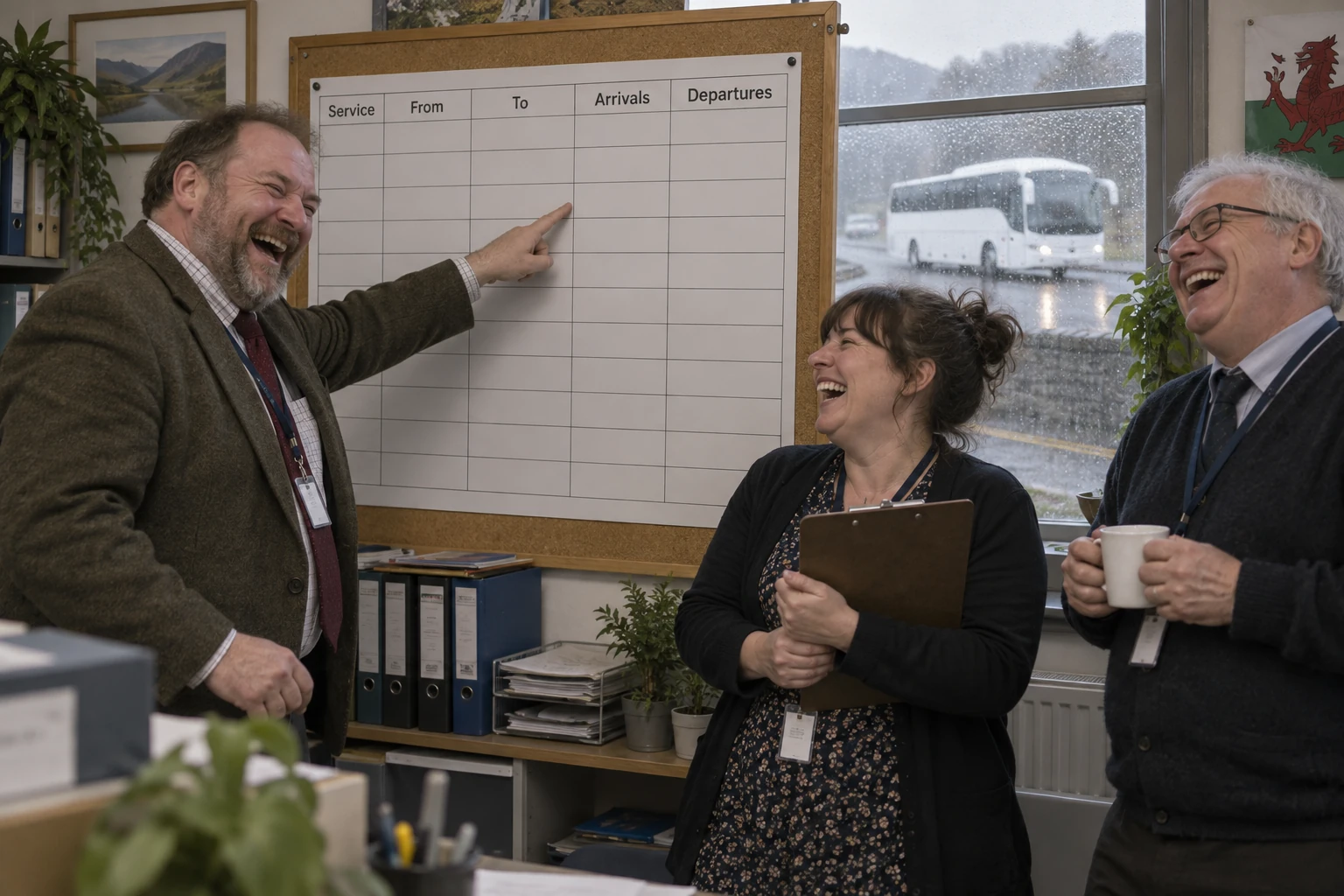
Davies has served as Traffic Commissioner for Wales for six years. The job involves licensing and regulating operators, registering local bus services and examining safety concerns. It also requires the emotional discipline to look at a service advertised for 10:14 and accept that the number may be more of a creative suggestion.
The recruitment process will now begin. Candidates will presumably be tested on judgment, patience and the ability to remain calm when an operator describes a missing bus as an unexpected service innovation. A coat suitable for Welsh weather may not be essential, but it should probably earn a respectable score.
Traffic commissioners can call operators to public inquiry when there are concerns about vehicle or driver safety. This is a serious responsibility. It is also the only official process where a folder labelled “final paperwork” can inspire immediate suspicion that six more folders are waiting nearby, each claiming to be the final one.
Inspector Pippa Roundabout, who has never been late because she refuses to acknowledge delay, welcomed the appointment process. “A timetable is a promise,” she said. “It is not a short story in which the protagonist may arrive during the final act.”
The commissioner also deals with professional drivers at conduct hearings. Nigel, keeper of the interview biscuits, believes the practical examination should involve boarding a coach, locating the seat belt and explaining why the onboard Wi Fi needs terms and conditions longer than the journey to Cardiff.
Reliable passenger and goods transport matters to anyone who needs to travel, deliver something or discover that the replacement service is standing behind a hedge. Regulation exists to keep operators safe and accountable. The successful candidate will inherit a tribunal, a mountain of files and at least one electronic sign confidently announcing that the next service is “due”.
That word has done remarkable work in public transport. It can mean arriving shortly, arriving eventually or remaining a theoretical possibility while everyone involved maintains professional eye contact with the timetable. The new commissioner may regulate the roads, but the sign will continue operating under complete independence.