More than 60 officials, tourism representatives, industry leaders and investors gathered in New Delhi to discuss sustainable tourism, proving that the fastest way to protect a destination is to fill a conference room and ask the destination to remain calm outside.
UNESCO and India’s Ministry of Tourism organised the Strategic Conclave on World Heritage and Sustainable Tourism on 21 August. UNESCO’s report says the meeting examined investment, accessibility, visitor experience, inclusive tourism and the preservation of World Heritage sites.
This is a serious problem with a familiar institutional solution. Heritage must remain economically useful without becoming a decorative backdrop for unlimited visitors, private investment and an app that asks local people to rate the authenticity of their own homes.
Delegates discussed public private partnerships and the prospect of directing money generated at heritage sites back into their upkeep. This was welcomed by the Rapporteur for Ethical Minibars, Saskia, who said she had reduced her environmental impact by taking only one connecting flight and refusing the second regional cheese board.
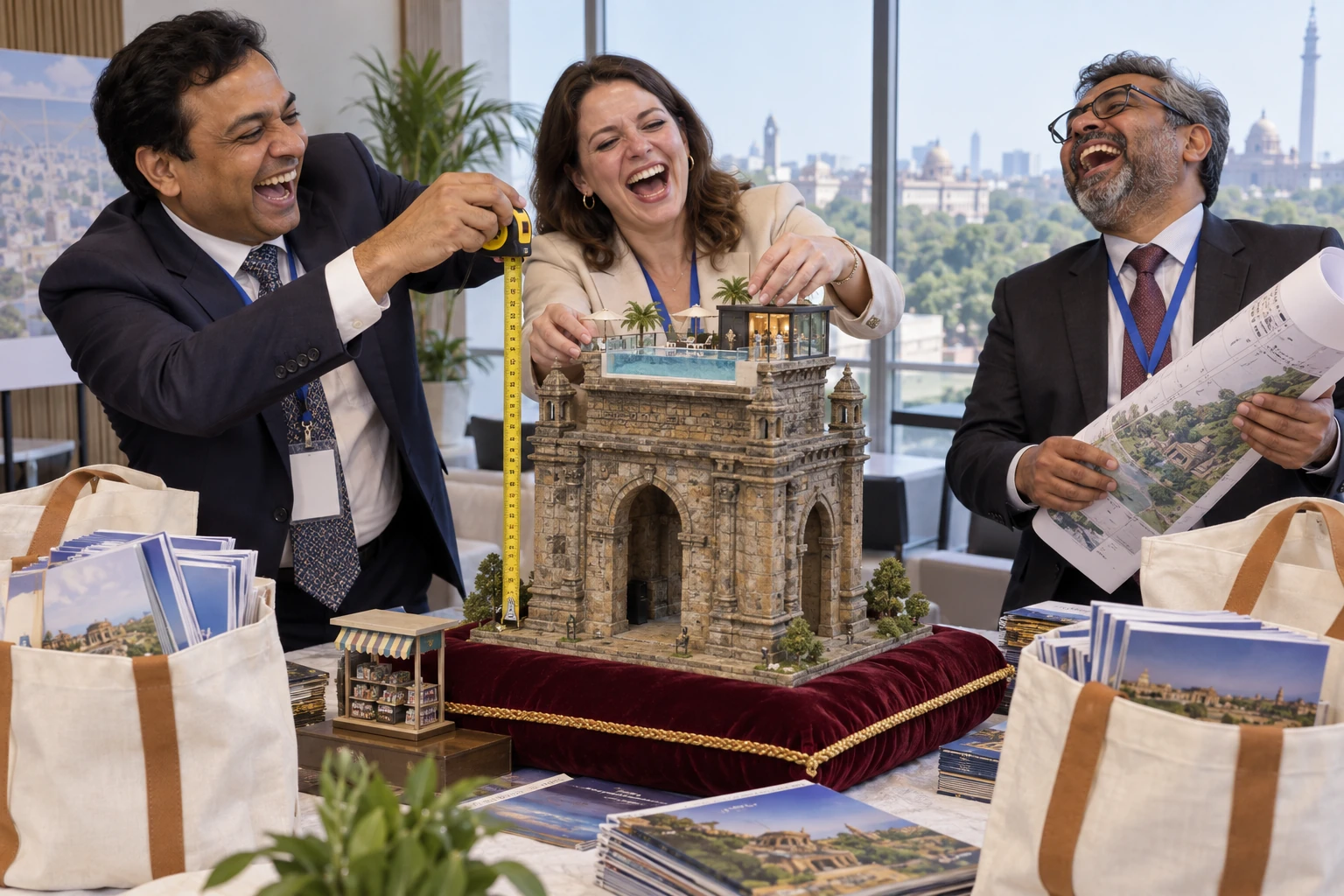
The conclave also considered community led tourism, better infrastructure and ways to make ancient sites more accessible without damaging their character. Investors remained interested in a model where the character was preserved, provided it could accommodate a gift shop, a premium viewing terrace and a loyalty scheme.
The meeting promoted five converging forces: tradition, talent, trade, technology and tourism. The sixth force was apparently conference stationery, which arrived in a reusable bag containing enough glossy material to preserve a small woodland from ever being mistaken for a heritage site.
The delegates left with plans for investment, skills, accessibility and better visitor management. The monuments stayed exactly where they were, displaying the rarest sustainable resource of all: an immovable refusal to become an experience package. At last, something at the summit declined to scale.
Real story: UNESCO.