Digital barriers to sport have reached the point where Bramblewick Active must complete an online endurance event before it can invite anyone to go for a walk.
The fictional local club wanted to organise a gentle Saturday stroll. It needed a booking platform, an account, a password with the emotional complexity of a tax return and a verification code sent to the same phone displaying the booking platform.
Digital barriers to sport need their own obstacle course
Volunteer secretary Moira Puddifoot began by creating an event. The form asked whether the activity was indoor, outdoor, hybrid, streamed or digitally enabled. Nobody could define the last category, but everyone feared it might affect the grant.
“We only need to tell people where to meet,” said Puddifoot, an invented organiser with a rare gift for finding the wrong button. “The system has asked us to upload a safeguarding document, accept cookies and prove that the walk is not a bot.”
Sport England and Good Things Foundation opened a call for evidence on digital barriers to sport and physical activity. It ran from 24 November 2025 until 8 January 2026. The call sought examples of action already taken or planned across the sector. By 14 January, it had closed. The evidence was due for review and summary in a report expected in March. No results or recommendations had appeared.
When digital barriers to sport become the activity
The institutions studying the problem therefore face a modest challenge. They must understand why people struggle to access activity while making the invitation depend on suitable equipment, reliable connectivity, digital confidence and the ability to tell a genuine login screen from a phishing expedition.
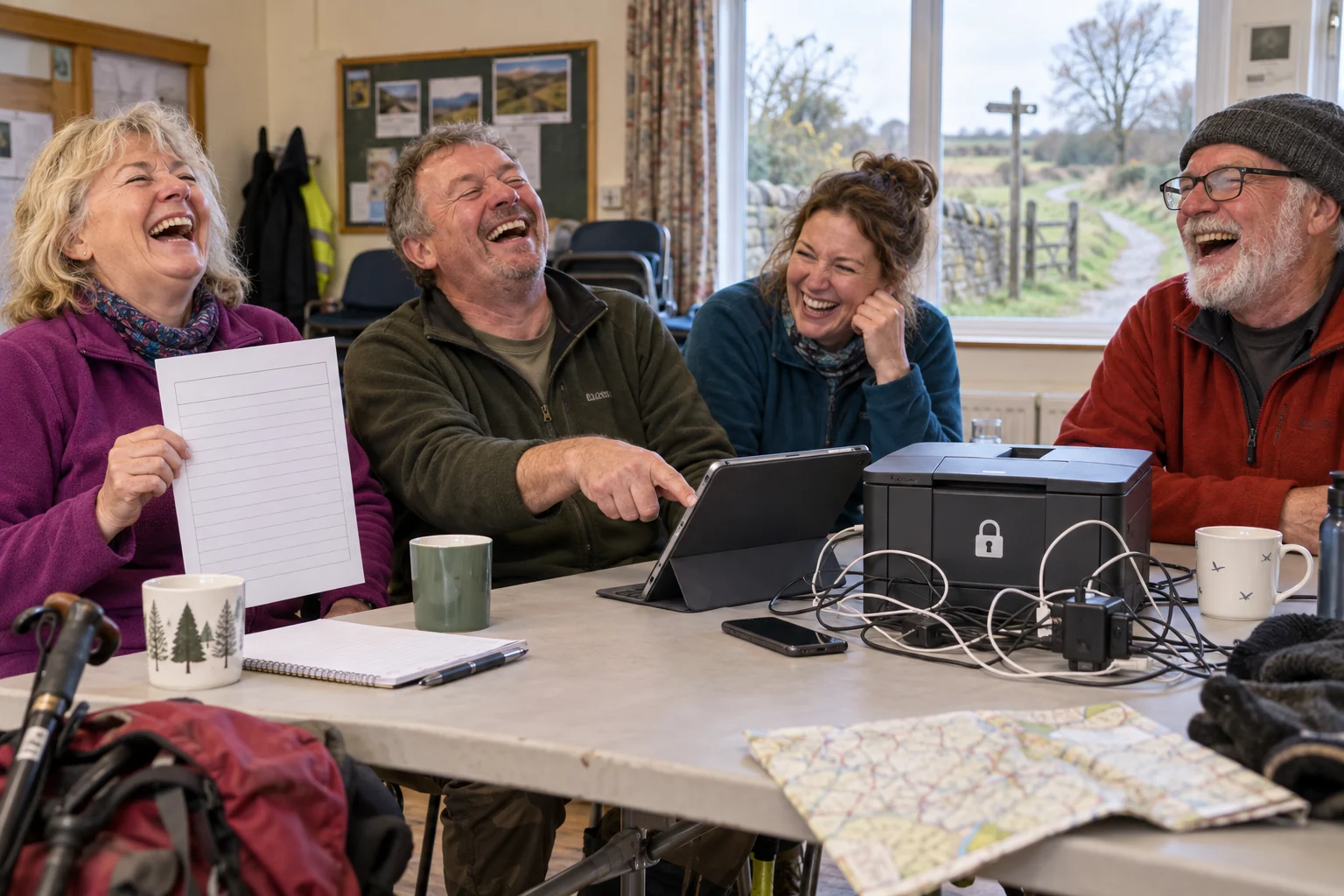
At Bramblewick Active, the committee created a paper sign up sheet. The sheet became a PDF. The PDF went through a portal. The portal demanded a password reset. Then the printer refused to release page one until somebody installed an app. The printer was the only participant to complete the process without asking for support.
Gareth Loginson, the club’s invented digital inclusion lead, announced that every barrier had vanished while standing behind a locked tablet. Members now needed a device, data, an email address, two passwords, a compatible browser and the stamina to abandon their afternoon.
The walk eventually went ahead after somebody left a note on the village hall door. Forty people arrived, including three who had spent the morning proving online that they were not trying to attend. Bramblewick has now applied for funding to make future walks easier to find. The application is online, naturally, and its first question asks whether Bramblewick can access the application.
Source: Sport England.