The Russian shadow fleet has suffered a devastating discovery: Britain can identify an enormous oil tanker even when it is registered to a postbox, insured by a mystery and wearing the maritime equivalent of a novelty moustache.
On 12 September, the UK announced 100 sanctions aimed at Russian oil revenues, military supply networks and ships carrying Russian oil. The list covers 70 ships plus 30 entities and individuals. The fleet is understood to be reviewing its arithmetic before attempting a more convincing disappearance.
Its camouflage system is impressively bureaucratic. Ownership changes, flags multiply and paperwork develops the sudden moral confidence of a company that has never heard of its own cargo. One tanker now belongs to a postbox that insists it has never visited the Baltic and considers questions about oil deeply intrusive.
Admiral Sergei, Commodore of Plausible Cargo, declared the vessels practically invisible. The 280 metre silhouette, he suggested, could be any offshore hat. This was received warmly by everyone except the water, which had been displaced by 150,000 tonnes of ship.
The same sanctions target suppliers of electronics, chemicals and explosives that the UK says support the manufacture of missiles and other weapons systems. Front companies are therefore facing the difficult task of explaining why their ordinary trading empire keeps requesting parts for equipment that is astonishingly bad at being ordinary.
The announcement came as Foreign Secretary Yvette Cooper travelled to Kyiv, after Russian strikes and a reported violation of NATO airspace over Poland. The policy is to make aggression more expensive. The fleet would prefer the bill to go to a different address, ideally one belonging to a postbox with diplomatic immunity.
The sanctions aim to make the disguises, transactions and supply chains harder to maintain. This is inconvenient for vessels claiming to be privately owned, diplomatically protected and passionately devoted to birdwatching, sometimes within the same paragraph.
The Office of Commercial Camouflage has now advised front companies to stop ordering missile electronics under the name Totally Ordinary Tractor Birthday. Its replacement suggestion is Surprisingly Aerodynamic Farm Equipment, which should fool everyone unless anyone checks what it does.
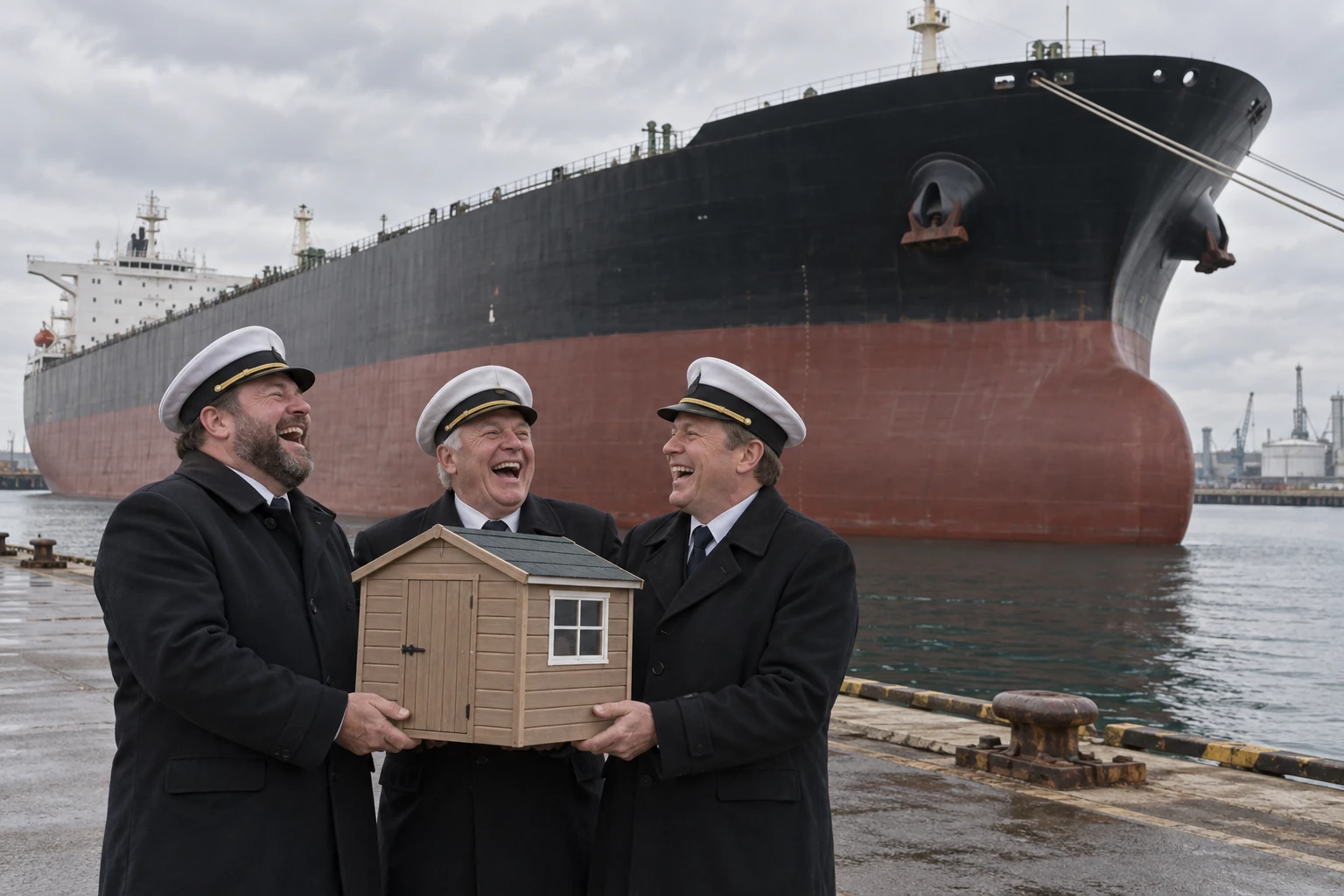
One tanker switched off its transponder and painted SHED on the side. Satellites remained suspicious. The shed had the unfortunate habit of occupying a commercial harbour and making the sea level look nervous.
The fleet has retreated into the shadows, where it hopes to become impossible to identify. Sadly, the shadows require deep water, maritime insurance and a shipping manifest that keeps writing oil tanker in a very recognisable hand.
Real story: Foreign, Commonwealth and Development Office.