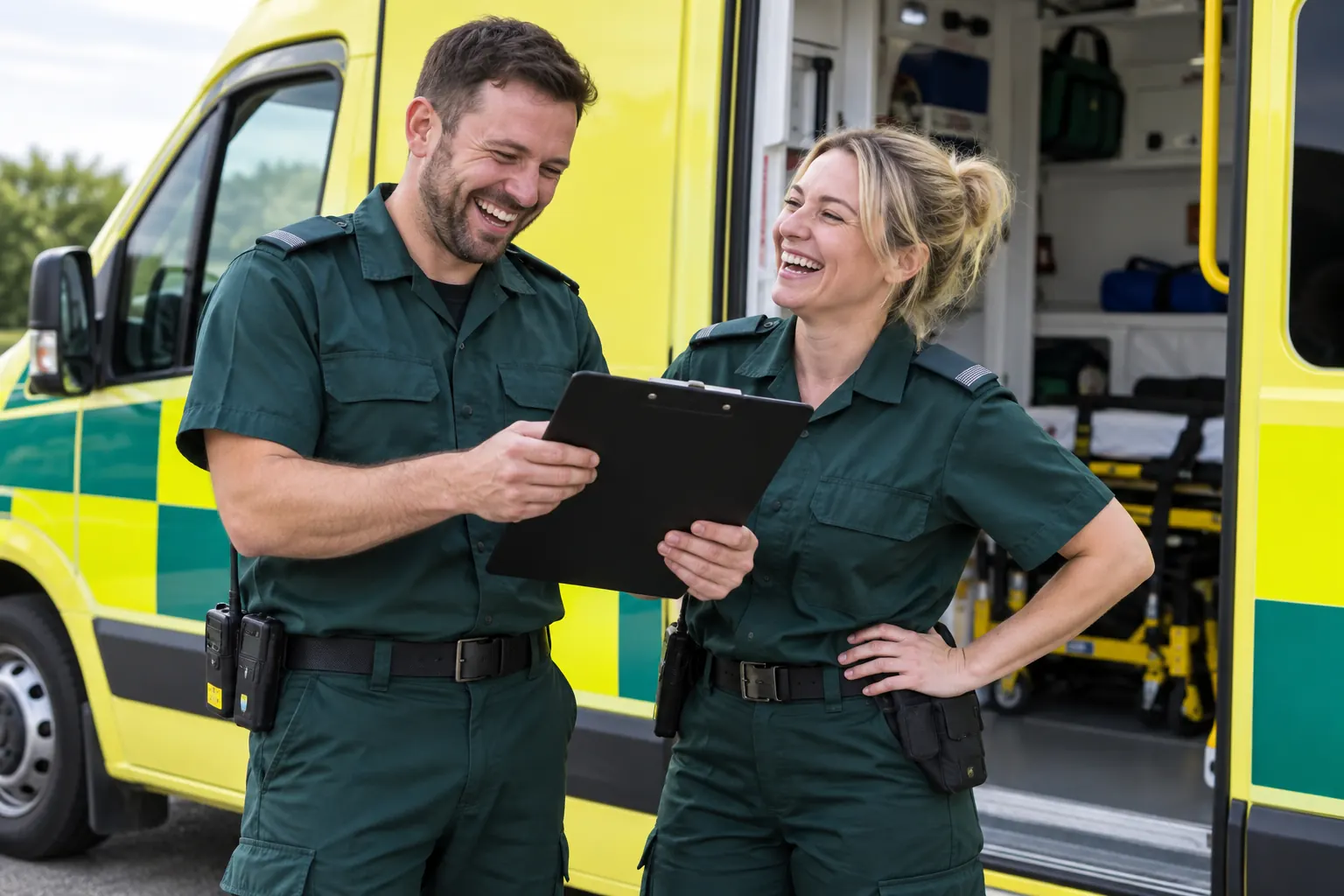
England has received a record 1,141 new or replacement double crewed ambulances, proving that somewhere in government a spreadsheet has finally been allowed to leave the depot and experience fresh air.
The Department of Health and Social Care said the vehicles reached NHS ambulance trusts in England between April 2025 and March 2026, the highest annual total since records began. Most replace older ambulances, while the remainder add capacity. It is a substantial fleet update, although the word record has arrived wearing a ceremonial sash and requesting a small brass band.
The announcement presents modern vehicles as more reliable, better equipped and less likely to need repairs. That should help keep crews on the road and support urgent care. It is the sort of useful improvement that rarely gets a dramatic soundtrack because its main achievement is making sure the ambulance is available when somebody needs it.
Still, the official language has treated 1,141 deliveries as a national morale boost, which is understandable. After years of asking public services to perform miracles with ageing equipment and a form in triplicate, replacing the equipment can look revolutionary. The next stage may be replacing the form, but officials have discovered that it contains several smaller forms and must be handled by a committee.
Most of the vehicles are replacements, so the fleet has not suddenly multiplied by 1,141. It has mostly received the automotive equivalent of a new pair of shoes. This is good news for reliability, but it limits the more excitable interpretation of boost. A service can be strengthened without discovering an entire hidden ambulance army behind the stationery cupboard.
The Government also connected the delivery with wider improvements in urgent and emergency care, including quicker Category 2 response times and lower A and E waiting times. Those claims form part of the announcement’s wider case for investment. The new ambulances are not expected to solve every delay in the health service, although the national statement has gently placed a stethoscope on the whole problem.
There is nothing comic about paramedics needing safe, modern vehicles. The comedy lies in the ceremonial astonishment that replacing worn equipment counts as a historic event, followed by the quiet hope that nobody asks what happened to the old fleet.
The new ambulances are ready for work. The checklist has declared the delivery a triumph, laminated the declaration and requested 1,142 new clipboards so the achievement can be recorded in a manner worthy of history.
Source: GOV.UK.