England’s pubs are being offered business rates relief, licensing changes and community funding, allowing the nation’s most dependable civic institutions to remain open long enough for somebody to blame the council directly over a packet of crisps.
The package includes a 15% cut to new business rates bills from April, followed by a two year real terms freeze and a review of how pubs are valued. The average pub is expected to save an additional £1,650 in 2026/27. This should cover several vital community services, including crisps, a broken fruit machine and one man explaining inflation entirely from memory.
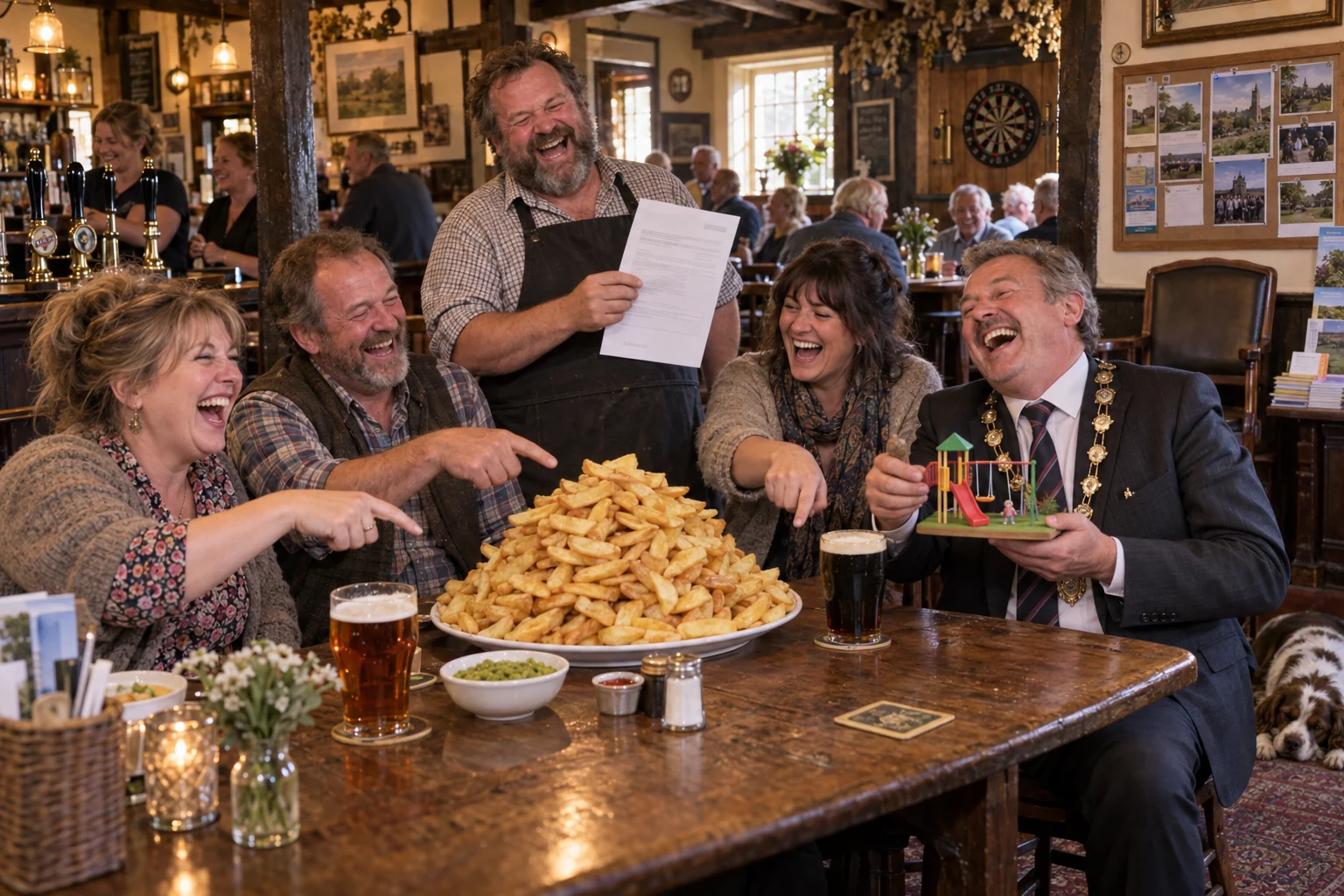
There is also £10 million for the Hospitality Support Fund over three years. More than 1,000 pubs could use it to provide community cafés, village shops and play areas. Britain has discovered a modern public service model: one building, three functions and a noticeboard that knows who is having an affair before the people involved do.
At the fictional Ministry of Toasted Sandwiches, officials praised the scheme’s flexibility. A building that can host breakfast, childcare and an argument about parking is clearly delivering joined up services more efficiently than most departments, although the pub still expects payment before the second round.
“Pubs hold communities together,” said Doris Halfpint, Chair of the Committee for Chairs. “They are where people meet, settle arguments and pretend they came in only to check the darts score.”
That community role is now helping justify support for an industry that has lost nearly 7,000 pubs since 2010. The government also plans to consult on changes making it easier for pubs to add rooms or expand their main areas. At last, a national strategy for the desperate shortage of places where a village meeting can happen somewhere with chips.
There are licensing changes too. Pubs in England and Wales will be able to open later for certain late stage home nation matches at this summer’s men’s World Cup. The policy should boost takings and hospitality jobs, while giving local economists another chance to calculate the value of a goal in pints.
The rates relief applies to England, while Scotland, Wales and Northern Ireland decide separately whether to match it. The United Kingdom can therefore preserve its traditional unity by agreeing that every pub is essential, provided nobody agrees which government should fill in the form.
The village meeting has not been saved. It has been upgraded to a public service, relocated to the bar and given a gravy budget large enough to make the council jealous.
Source: HM Treasury.