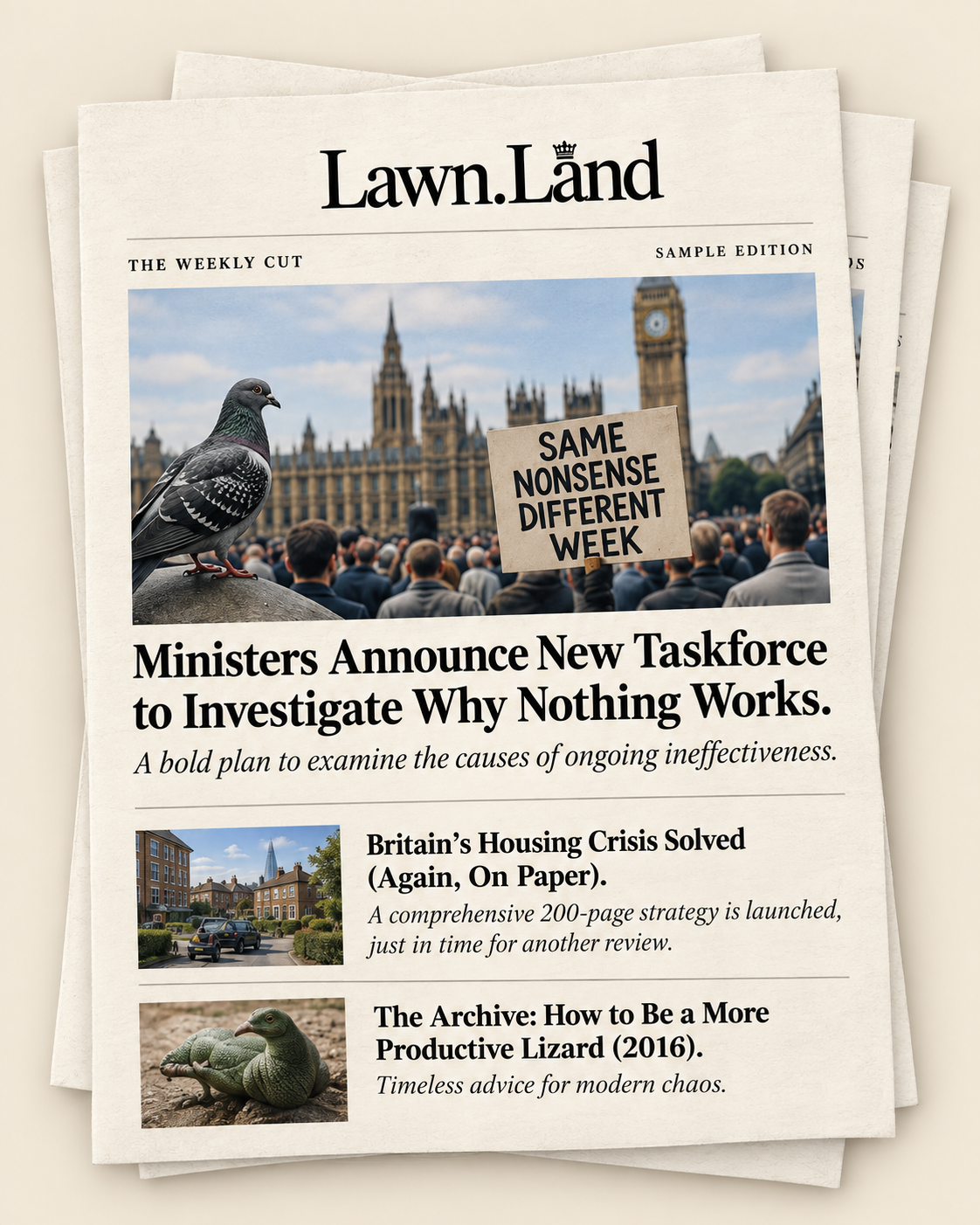
Political peerages have confirmed that Britain remains a strict meritocracy, provided merit includes being known to someone who can submit a citation on embossed paper.
Political peerages widen the velvet rope
The latest nominees will receive life peerages. This allows them to serve the nation until retirement, death or the discovery that the dining room has stopped doing the good crumble.
Algernon Merit-Badge, Registrar of Noble Surprises, said: “The process rewards experience, integrity and the rare ability to read the phrase for life without asking whether there is a probation period.”
Each citation lists decades of achievement across public service, finance, education and regulation. Ordinary applicants may submit their own record, although the portal currently offers only the options acquaintance, donor and forgot password.
Meanwhile, the House of Lords insists that expertise matters. This is why the chamber contains people who understand every industry except the one producing enough chairs for all of them.
New peers will choose titles linked to meaningful places. The village concerned will then discover it has become grammatically attached to a person it last saw buying a sandwich in 1987.
Finally, the appointments will refresh public confidence. Nothing says democratic renewal like announcing that several people have won the constitutional version of an airport lounge card with no expiry date.
Read the real story: the official political peerages announcement.
The appointments are said to bring fresh voices to Parliament. Most arrive fresh from the same carefully ventilated rooms in which previous voices have spent decades agreeing that Britain must change, preferably without altering the seating plan.