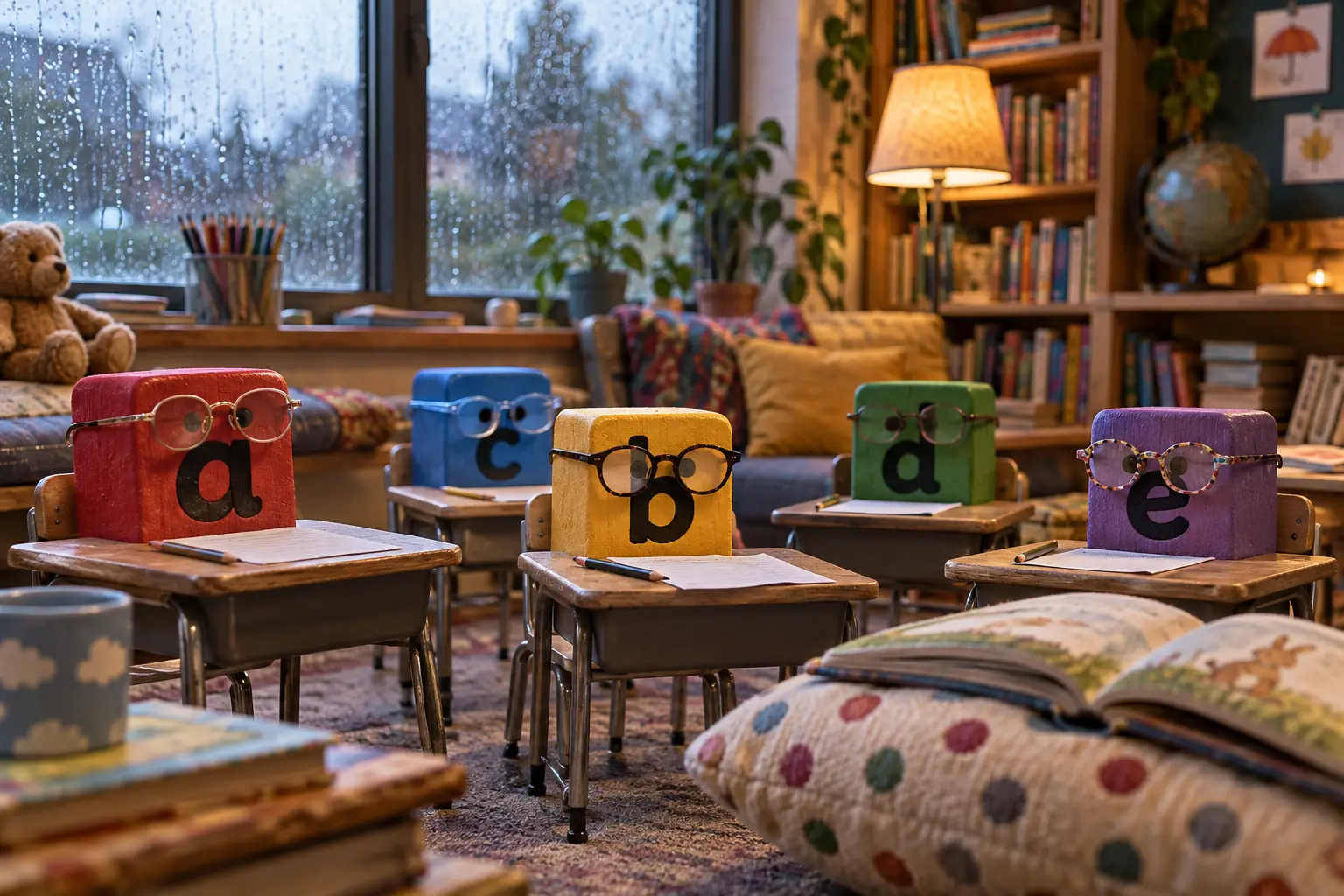
The Standards and Testing Agency has released modified materials for the 2026 phonics screening check, allowing schools to adapt resources to individual pupils. The letter blocks welcomed this practical decision, then demanded equal billing for every character and a formal inquiry into why Q is always expected to sit next to U.
Published on 22 June, the guidance offers practice sheets and pupil materials with colour images, black and white images, or no images. It is a sensible attempt to make the check fit the child, rather than requiring every child to fit the same worksheet like a sock applying for public office.
The letter blocks have responded to the range of options with the confidence of a committee that has just discovered representation. Colour is being treated as a bold reform. Black and white has attracted traditionalists who believe visual restraint is what happens when administration keeps its emotions in a filing cabinet. The no image version has been welcomed by letters who feel pictures are an unnecessary distraction from their own importance.
Schools can modify the materials to meet individual needs and their own approach to teaching phonics. In other words, the official system has recognised that children are not identical filing cabinets with shoes. This has caused some alarm among documents that had spent years preparing a universal solution for an imaginary average pupil.
Braille versions can be ordered through the national curriculum assessments helpline. The helpline has therefore been entrusted with helping schools obtain accessible materials, while the letter blocks have been instructed not to form an orderly queue around the telephone or attempt to press every number at once.
The useful point is not the opportunity for stationery to develop political opinions. It is that assessment materials need to be accessible and adaptable. A pupil should not face an unnecessary obstacle because a document was designed for a theoretical child who has never existed outside a guidance meeting.
The blocks are already preparing their next submission. They want every sound represented fairly, every worksheet checked twice and the letter X removed from all forms until it explains what it has been doing with the marking scheme. The alphabet has finally discovered inclusion and is demanding the meeting minutes in braille.
Source: GOV.UK.