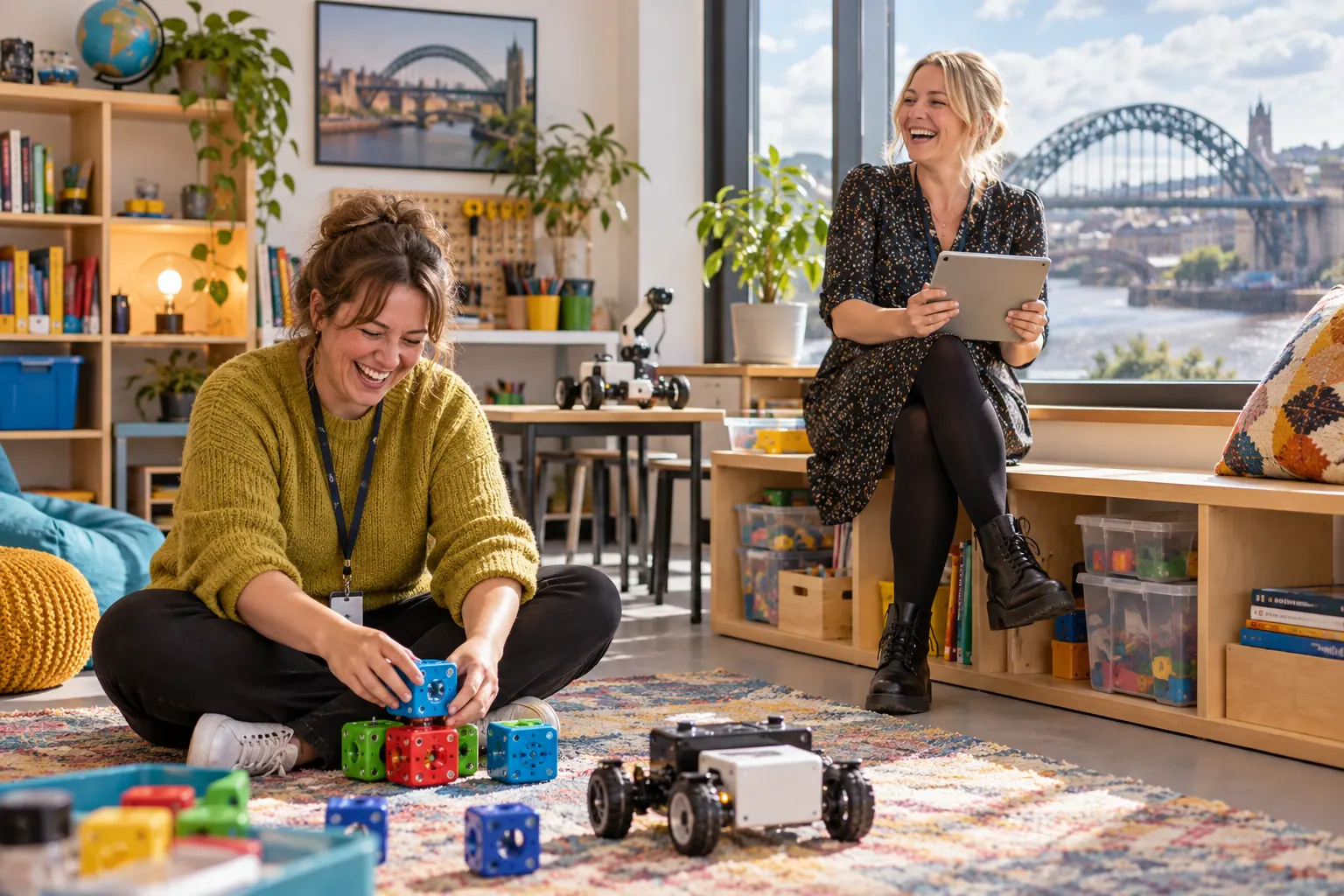
The North East is preparing 30,000 primary school children for artificial intelligence, while 1,000 teachers are being supported in the delicate art of explaining why the machine has begun completing their sentences. The £750,000 TechFirst investment was announced on 12 May as part of the region’s AI Growth Zone. The robot blocks have formed an orderly queue for lesson one and are already insisting that previous experience should count.
The plan includes discovery days, digital skills and contact between schools and local businesses. This is practical work, which is precisely why it arrives wrapped in the grand language of regional transformation. Before anyone can become the genius behind tomorrow’s algorithm, somebody still has to fund a classroom, brief a teacher and make sure the equipment works when a child presses the interesting button.
The mayor and government have also agreed a target for 80,000 local students to benefit from training by 2029. The number has marched into the announcement wearing a hard hat and carrying a development plan. It sounds enormous, which is useful for a press release, but it will eventually require actual students, actual sessions and somebody willing to explain that a career in technology may involve fewer laser beams than advertised.
The wider package includes 150 local work placements and proposals to help businesses adopt new technology. The release also states that QTS and Blackstone have committed £10 billion to a data centre. The future is therefore arriving in two familiar forms: a vast private investment and a long list of people who must learn how to make the promised benefits reach ordinary communities.
There is a further effort to widen access for women in technology through mentoring, leadership support and a planned hackathon. This gives the North East the formidable task of making advanced computing sound futuristic, inclusive and properly timetabled. Somewhere, a spreadsheet is being asked to demonstrate ambition while retaining a responsible approach to room bookings.
The robot blocks have drafted their own training plan. First, announce a revolutionary system. Second, build an expensive system to operate it. Third, teach everyone how to use the expensive system. Finally, appoint one block to chair the review because it has been sitting nearest the paperwork.
That is the useful contradiction. AI is being sold as the technology of tomorrow, but its immediate delivery depends on schools, teachers, placements, mentoring and the unglamorous labour of administration. The blocks have been told this is progress. They have requested a biscuit, a timetable and confirmation that the review chair is not also marking the homework.
Source: GOV.UK.