The online product safety campaign is asking shoppers to check the seller before buying, because a bargain kettle should boil water rather than develop a complicated personal philosophy.
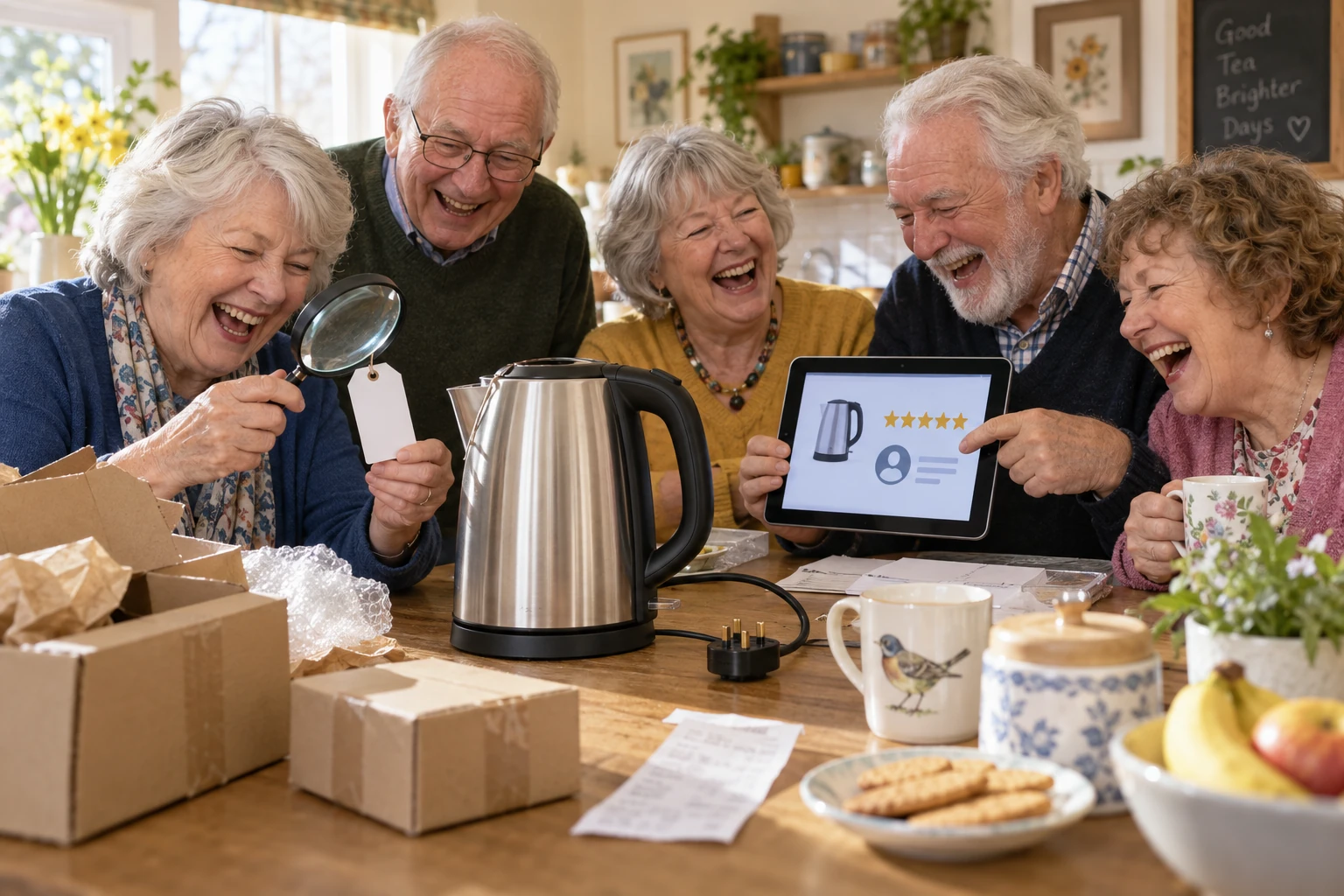
New resources from the Office for Product Safety and Standards are aimed at older people who shop online. The advice is simple enough: pause before buying, check the seller’s details, read the product information and inspect the reviews. A five star assessment from “Definitely Real Human” should not be the final word on a toaster.
OPSS warns that even familiar online marketplaces can list unsafe products. Shoppers are encouraged to look for UKCA or CE marks and read verified purchase reviews that mention safety. Britain has therefore turned buying a lamp into a short detective drama, complete with clues, suspects and free delivery.
Brenda Basket, who once ordered a three legged chair, laughed at the guidance. “I love a bargain,” she said. “But I now accept that a plug should have more evidence than a man selling it from a profile picture of a yacht.”
The campaign’s first phase targeted people aged 16 to 25 before Christmas. Its second phase is aimed at older shoppers, presumably after officials realised that unsafe products do not check the customer’s birth certificate before arriving in a cheerful cardboard box.
The guidance asks people to perform a few checks before handing over their money. This may stop a quiet Tuesday becoming an argument with a rechargeable whisk, although the whisk will still have the advantage of being sold by a profile with 4.9 stars and the moral confidence of a minor celebrity.
There is something wonderfully modest about the scheme. It does not promise to abolish dangerous goods, dishonest listings or the ancient human desire to buy a six piece kitchen set for £3.17. It asks shoppers to notice that the photograph shows a different product, the description was written by a haunted thesaurus and the seller’s address is simply “warehouse”.
So check the seller, read the details, look for the right marks and treat reviews as evidence rather than a séance. The safest kettle is the one that boils water, switches off and leaves its philosophical development to the person who bought it. If it also claims to have a personality, check whether that personality has a returns address.