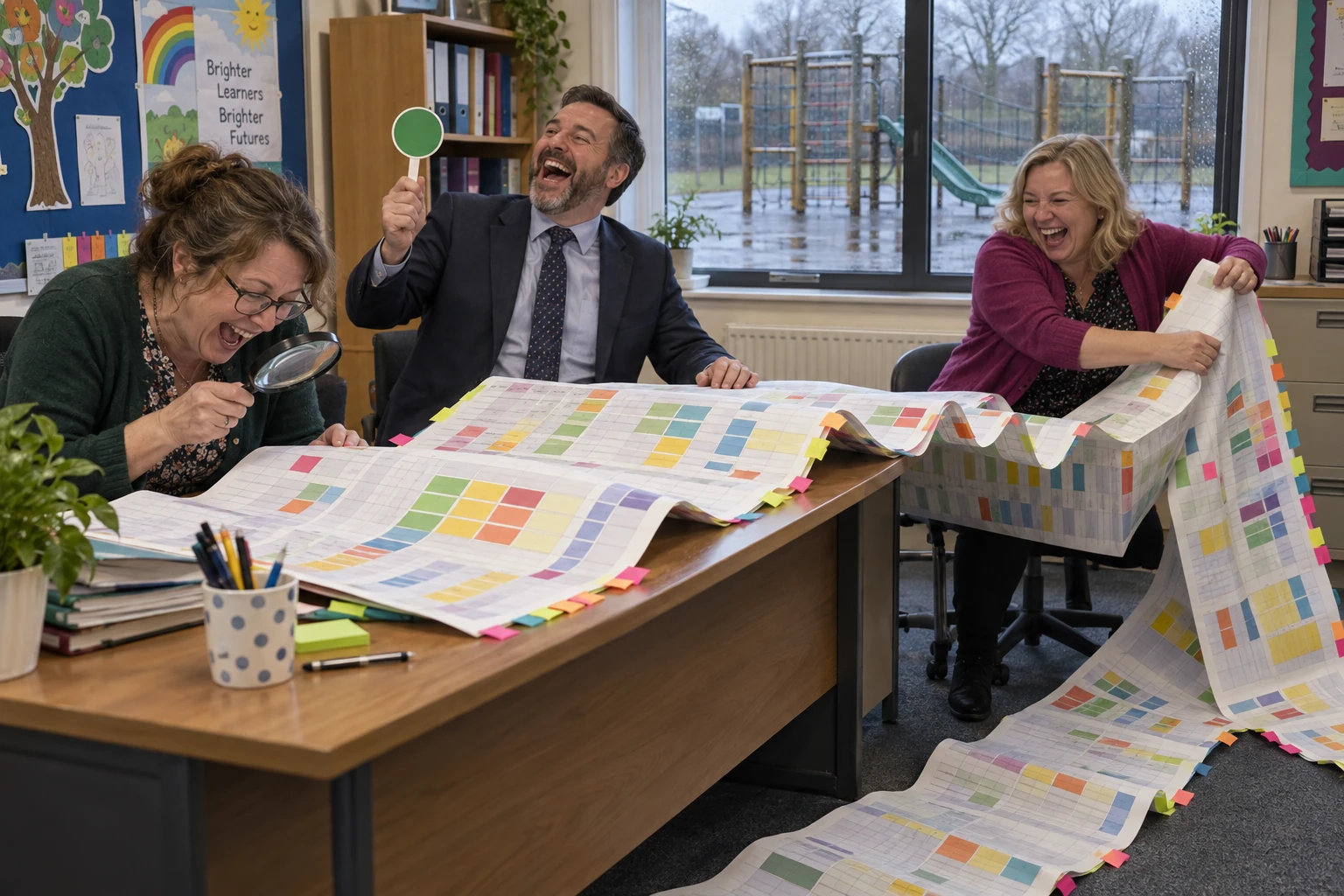
Ofsted has confirmed new school report cards to provide a fuller picture, allowing parents to experience uncertainty across several beautifully separated categories instead of one efficient word.
The new report cards will cover areas including attendance, behaviour and inclusion. The government is also introducing online school profiles intended to give families a one stop source of information about local schools. At last, choosing a school can become a data exercise rather than the traditional method of asking whether anyone you know has seen a child emerge from it smiling.
The school profile is being presented as a way to help parents make informed choices. This means the playground question “Is it good?” may now develop into a forty minute comparative analysis beside a wet climbing frame, while one parent quietly opens a spreadsheet and another searches for the bus timetable.
“Clarity empowers families,” said Hermione, Inspector of Nuanced Colours. “This school is excellent for attendance, promising for attainment and emotionally amber near the bins.”
The reforms also include a planned benchmarking platform for headteachers, allowing schools to compare their performance with similar schools by measures such as size and deprivation. It is a bold attempt to give every headteacher the calm, restorative pleasure of discovering that another school has achieved better results with fewer resources and a much more photogenic library.
Meanwhile, RISE improvement teams are nearly doubling their reach to 377 schools, with almost 100,000 additional pupils due to benefit. The programme is aimed at schools that have received consecutive poor Ofsted judgements, combining support with the kind of accountability that arrives carrying both a toolkit and a clipboard.
Officials say support should sit alongside consequences. Schools can therefore receive practical assistance and a formal explanation of why the assistance was necessary, preferably in a document large enough to require its own improvement plan and a smaller document explaining the larger one.
The first parent studied the attendance figures, compared the attainment data, assessed the inclusion information and checked the leadership section. Then came the only measure no dashboard could explain: whether Olivia from nursery still bites.
The school received its complete picture. It immediately requested the version where everyone had kept their eyes open, which officials promised to deliver in seventeen tabs by the end of the next consultation.
Real story: Department for Education.