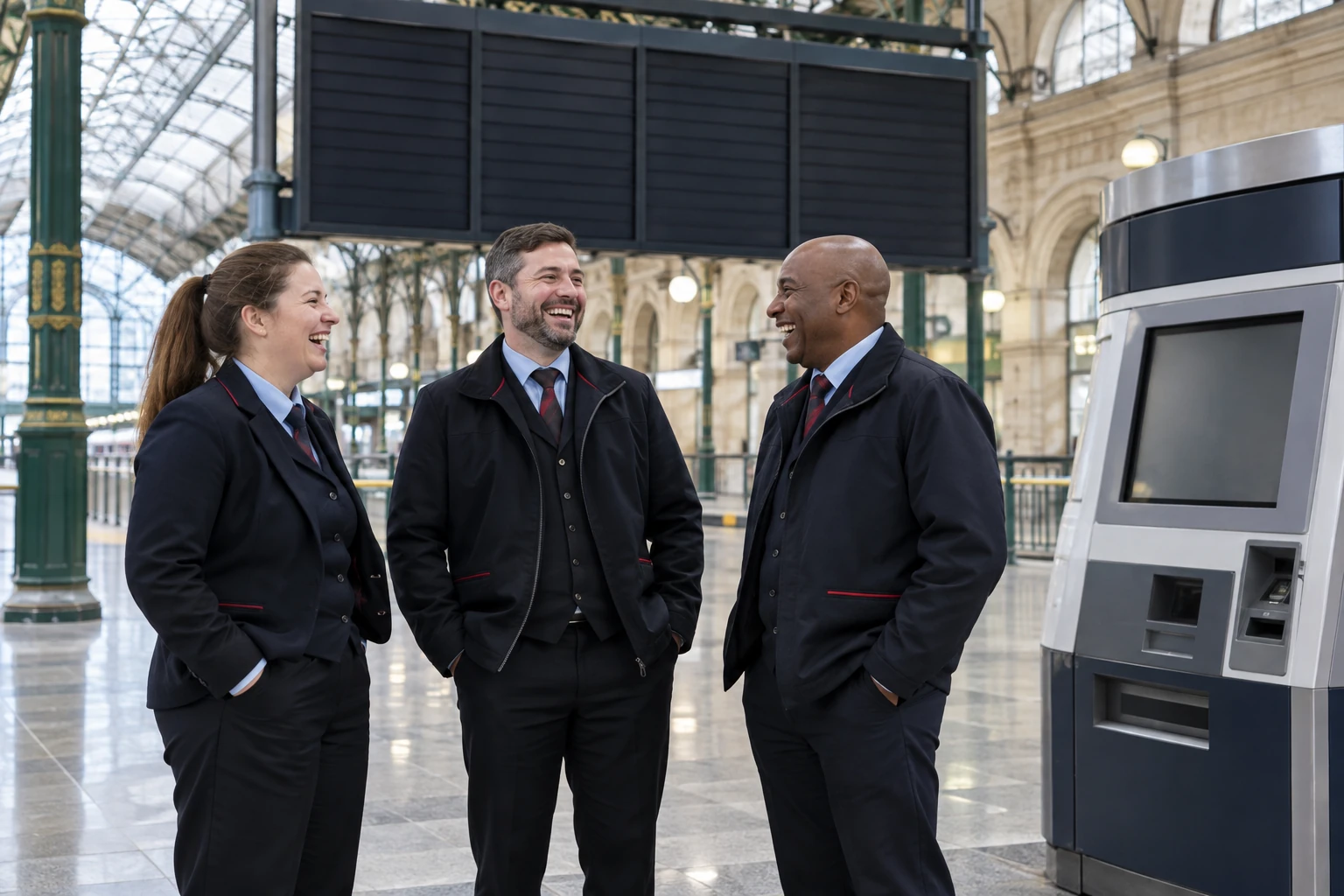
The rail fare freeze announced on 23 November 2025 promises to stop regulated ticket prices rising. Commuters can now watch transport policy remain still while the railway administration continues moving in mysterious circles.
The announcement says regulated rail fares will stay frozen for the first time in 30 years. The freeze covers season tickets, peak returns for commuters and off peak returns between major cities.
More than a billion passenger journeys across England should benefit. That is a substantial audience for a policy whose main instruction is simply not to add anything.
Rail fare freeze meets the paperwork machine
At the fictional Department of Regulated Wandering, administrator Mildred Orbit welcomed the rail fare freeze by placing a ticket in a display case labelled “historic restraint”. She then called a meeting to decide whether the case needed a surcharge.
Officials describe the measure as support for household budgets and economic growth. The average passenger can therefore stare at a fare table and wonder whether the savings will arrive as money, a feeling or a leaflet explaining why neither is possible.
Some commuters on expensive routes could save more than £300 a year. A typical flexi season traveller between Milton Keynes and London could save £315. The comparable figures are £173 between Woking and London and £57 between Bradford and Leeds.
At the Department of Regulated Wandering, Mildred has placed those figures on a motivational poster. It says “please retain until reviewed”. The poster now awaits approval from a subcommittee that is considering whether the word “please” creates a financial liability.
Chief Timetable Compliance Officer Colin Baseline says the freeze proves that the railway can deliver certainty. He also warns that certainty depends on ticketing systems, administrative interpretation and a platform capable of hosting every relevant form.
What the rail fare freeze promises next
The wider plan includes Great British Railways, a publicly owned company intended to manage tracks and trains. It also promises digital ticketing, tap in and tap out services and improved WiFi.
Passengers may eventually travel more easily. First, they must identify which app, ticket, gate and public consultation has jurisdiction over the journey. The rail fare freeze has stopped prices moving, but it has not yet restrained the paperwork.
For now, the railway has achieved an operational miracle. Prices are standing still. Passengers are counting the savings. The forms are travelling in every direction at once.
Somewhere, a ticket machine has just requested a fare freeze for its own processing fee.
Source: UK Government.