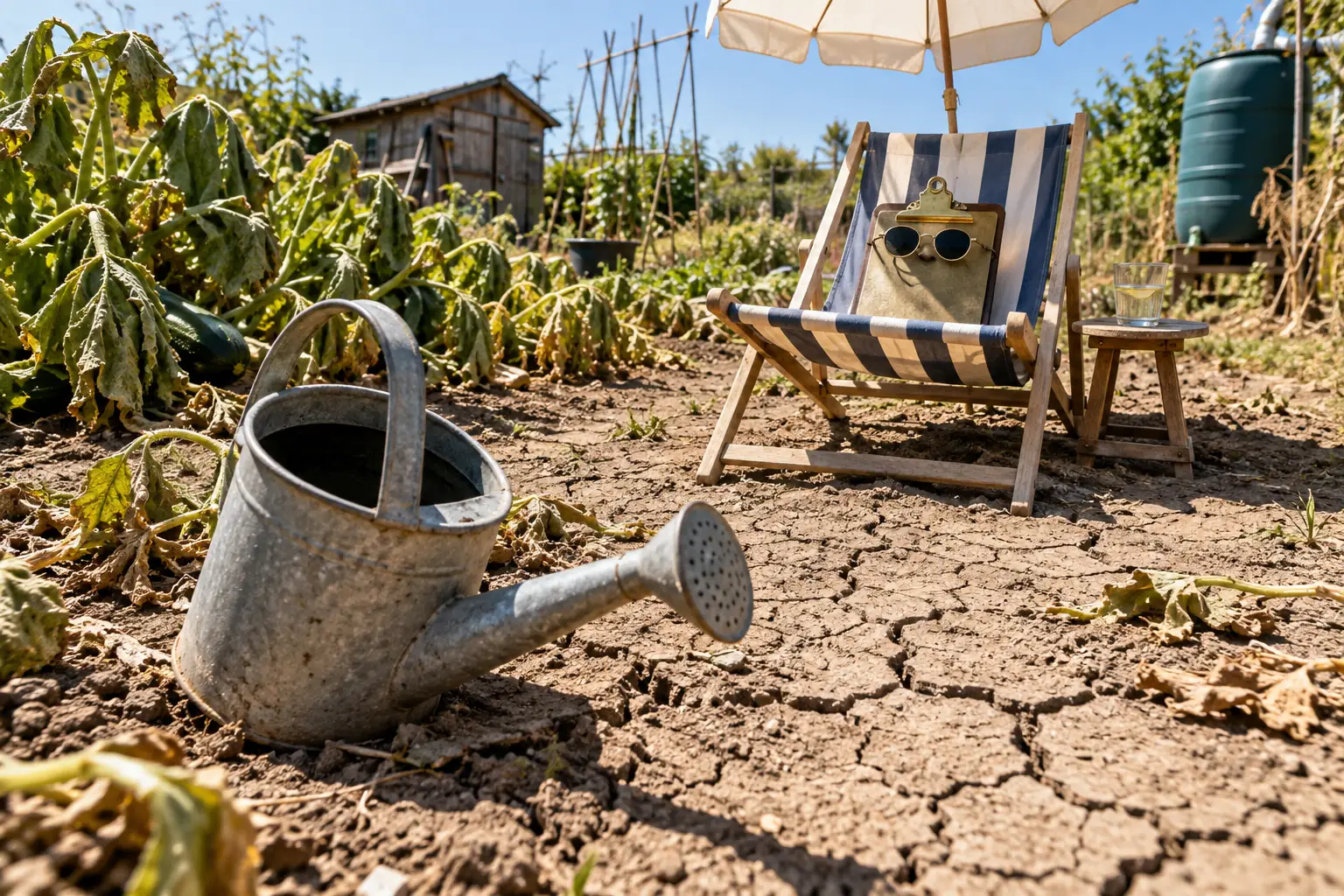
The National Drought Group response has arrived after a third heatwave. England has dry rivers, restricted hosepipes and the awkward discovery that a watering can has entered middle management.
On 21 July 2026, the Environment Agency reported twelve consecutive days above 30C. July rainfall remained very low, while demand for water rose sharply. Seven water companies had implemented or announced temporary use bans affecting 23 million customers.
The National Drought Group response is therefore less a triumph than an attempt to stop summer becoming an administrative emergency with leaves.
National Drought Group response meets the spreadsheet
The official update described eight areas in prolonged dry weather. Rivers ran below normal levels, reservoirs held less water and wildfires damaged land and wildlife. Ponds and wetlands dried out. Farmers started harvesting early.
The watering can heard the phrase communication across sectors and created a colour coded spreadsheet. A fictional filing clerk then required each puddle to prove that it had been useful before allowing it to evaporate.
Officials are monitoring conditions, repairing leaks, moving water and checking compliance. They are also advising people to use less water. These measures make sense, although they lack the glamour of announcing that a reservoir has entered a new era of stakeholder engagement.
Somewhere in the paperwork, a bucket became a distributed temporary storage solution. It immediately demanded a lanyard.
A dry run in public administration
The National Drought Group response exposes the British hope that a worsening physical problem becomes reassuring once it has a meeting structure. Rivers are low. The countryside is tinder dry. Hosepipes now carry personal responsibility for the national water balance.
Restrictions and practical advice matter when demand rises and habitats face pressure. The sharper joke lies in the belief that a neat action plan can make an inconvenient reality look like a completed form.
The watering can has joined the communications workstream. It will brief the public at dawn, once somebody explains why the leaks were invited to the meeting but not held accountable.
Source: GOV.UK.