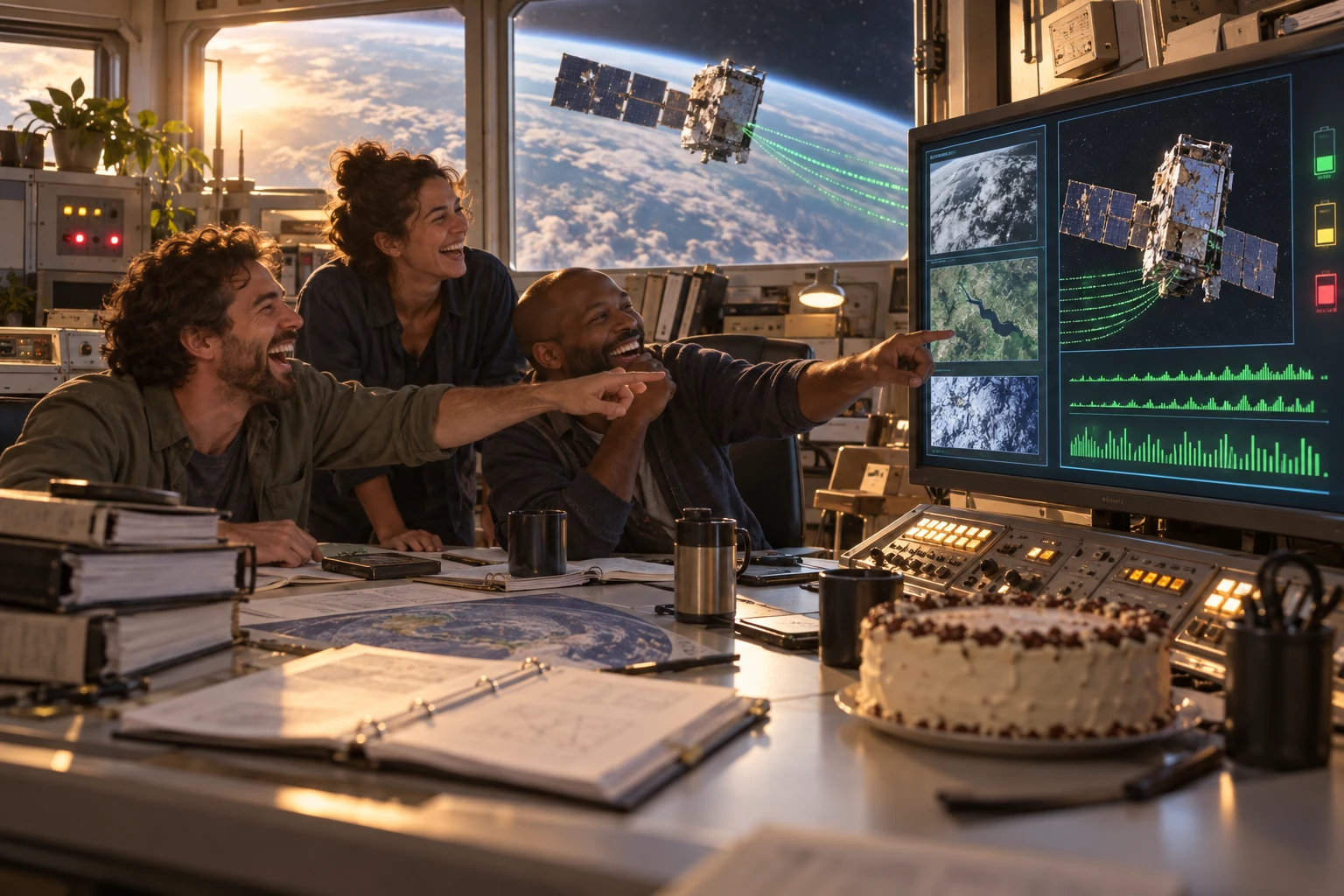
NASA’s Terra satellite has been orbiting Earth since 1999, and four of its five instruments were still producing science data in 2025. Terra has reached that delicate stage of working life where everyone is discussing retirement, while the machine continues turning up, doing the job and making the replacement plan look embarrassingly theoretical.
Terra has faced power limitations caused by orbital changes and damage affecting its solar arrays. The mission team responded by reducing demands, placing equipment into safe mode and eventually shutting down MOPITT, the carbon monoxide monitor that spent 25 years observing pollution, fires and industrial emissions. It was a dignified end, apart from the part where the machine was still useful.
ASTER resumed some imaging, while MISR, MODIS and one CERES instrument continued producing data. This is the grim professionalism of an employee who has noticed that the office is being reorganised but still has deadlines. The instruments are not staging a rebellion. They are simply refusing to let a spreadsheet decide when science has become inconvenient.
At the Orbital Department of Lasting Quite Well, mission custodian Penny Apogee described Terra’s retirement as an evolving conversation. This is the institutional phrase for a machine that is visibly exhausted but keeps replying to emails because nobody has worked out who inherits the inbox.
“We have reduced the workload and stopped asking one instrument to measure carbon monoxide,” Apogee said. “The others may retire whenever they like, provided they finish the climate record, monitor the atmosphere and prepare a clear handover for the next generation.”
Chief Engineer of Suspiciously Reliable Things Gus Launch said Terra had demonstrated the resilience usually associated with office printers and people who were promised a quiet Friday. The satellite has survived more than a quarter century in orbit. It is no longer ageing. It is accumulating institutional knowledge, which means management will soon ask it to train its successor.
Terra’s fictional retirement webinar remains a useful model of modern organisational planning. The old equipment keeps producing results while the humans hold a meeting about replacing it. By the time the agenda reaches the question of whether the mission still has value, the satellite has measured another season, supplied another record and quietly exposed the meeting as the least productive object in orbit.
The machine has now created the worst possible precedent for every ageing public service: proof that maintenance works. NASA may eventually discover the one instrument Terra cannot operate, a committee capable of accepting that the job is finished.
Real story: NASA.