Seventy five museums in England are sharing £20 million to protect opening hours, jobs and the public’s right to stand beside a small object while wondering why it has survived longer than the council.
The Museum Renewal Fund is part of the government’s wider Arts Everywhere Fund, because even a Victorian spoon must now demonstrate its contribution to economic growth before being allowed back into a display case.
The money will support access to collections, education programmes and the staff who stop a child licking the medieval buckle. It will also help keep local museums open, which is useful because heritage is difficult to experience when the building is shut for lack of staff and the website says the situation is under review.
The Department of Carefully Printed Labels welcomed the announcement. It declared museums to be vital engines of regional prosperity, although its preferred measure of success remained the number of visitors who correctly identified a ceramic object as not for handling.
‘Museums connect people with place,’ said Edith Plinth, Chief Curator of Objects With A Past. ‘They also connect a six year old with an emergency desire to touch the thing marked “do not touch”, which is a more reliable form of public engagement than most consultation exercises.’
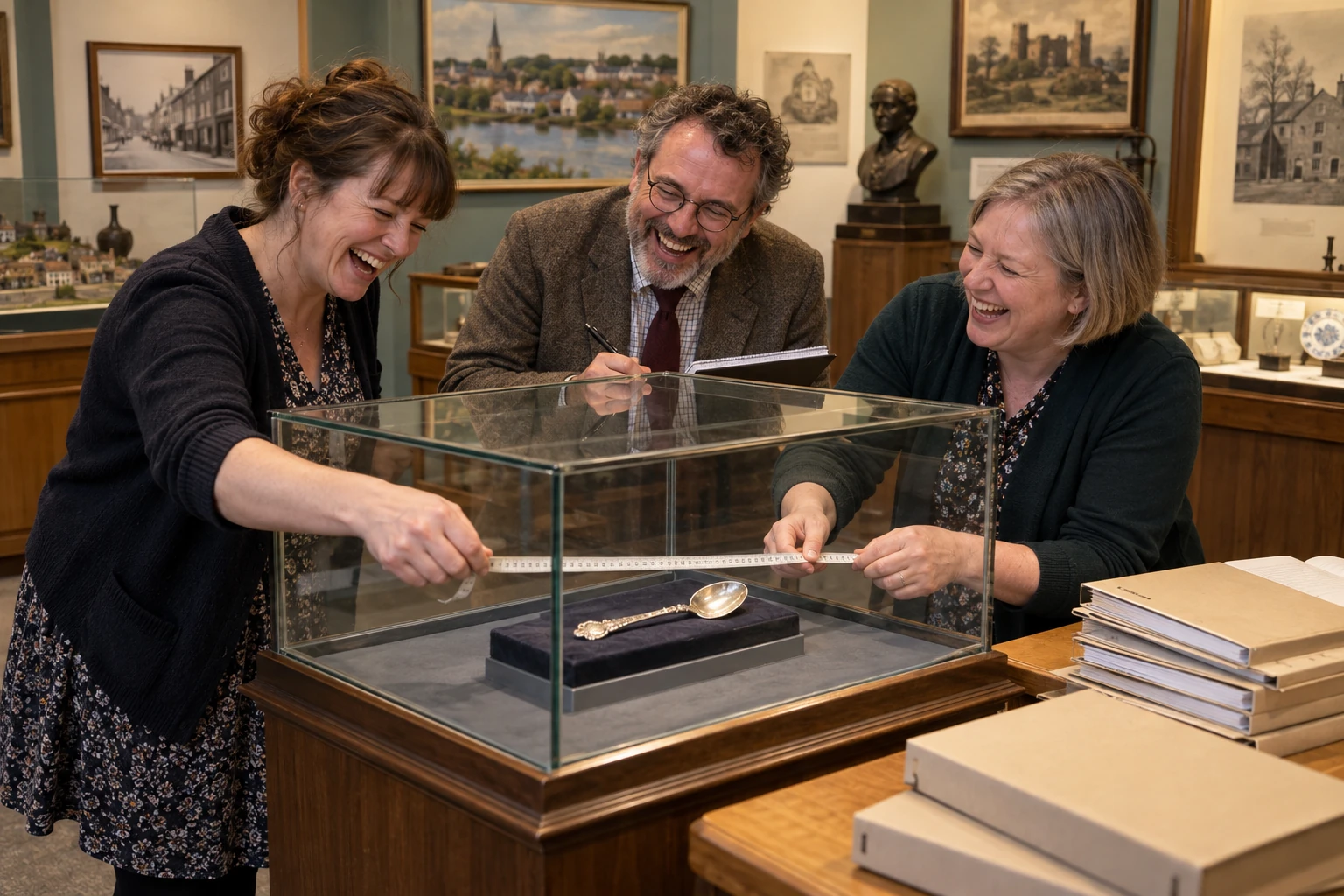
The official announcement says museums can help regions attract tourists and employers. This is encouraging news for the spoon, which has spent 135 years waiting for its first inward investment deal. It is now only one strategy document away from becoming a national asset.
Seventy five organisations will share the fund, with grants supporting opening hours, community programming and public access. The practical work is modest and essential. The language around it is enormous, placing every roof repair inside a national strategy and asking each display case to produce a theory of change before visitors are admitted.
The Office of Historic Display Cases has prepared a celebration. A ribbon will be cut beside the spoon, followed by a panel discussion on whether its visitor journey can be made more inclusive without moving it three inches to the left. The spoon will then be invited to identify its stakeholders.
Museums do not need to turn every artefact into a growth sector. They need staff, roofs, working galleries and enough money to keep telling local stories. The spoon has no objection to prosperity. It would simply prefer not to submit a business plan before being recognised as cutlery.
By the end of the ceremony, the spoon had received a new label: “Victorian, approximately 1890, used for tea, currently central to Britain’s cultural strategy.” It was the first object in the case to be promoted without being given a pay rise, though it was immediately asked to lead the next round of redundancies.
Real story: Department for Culture, Media and Sport.