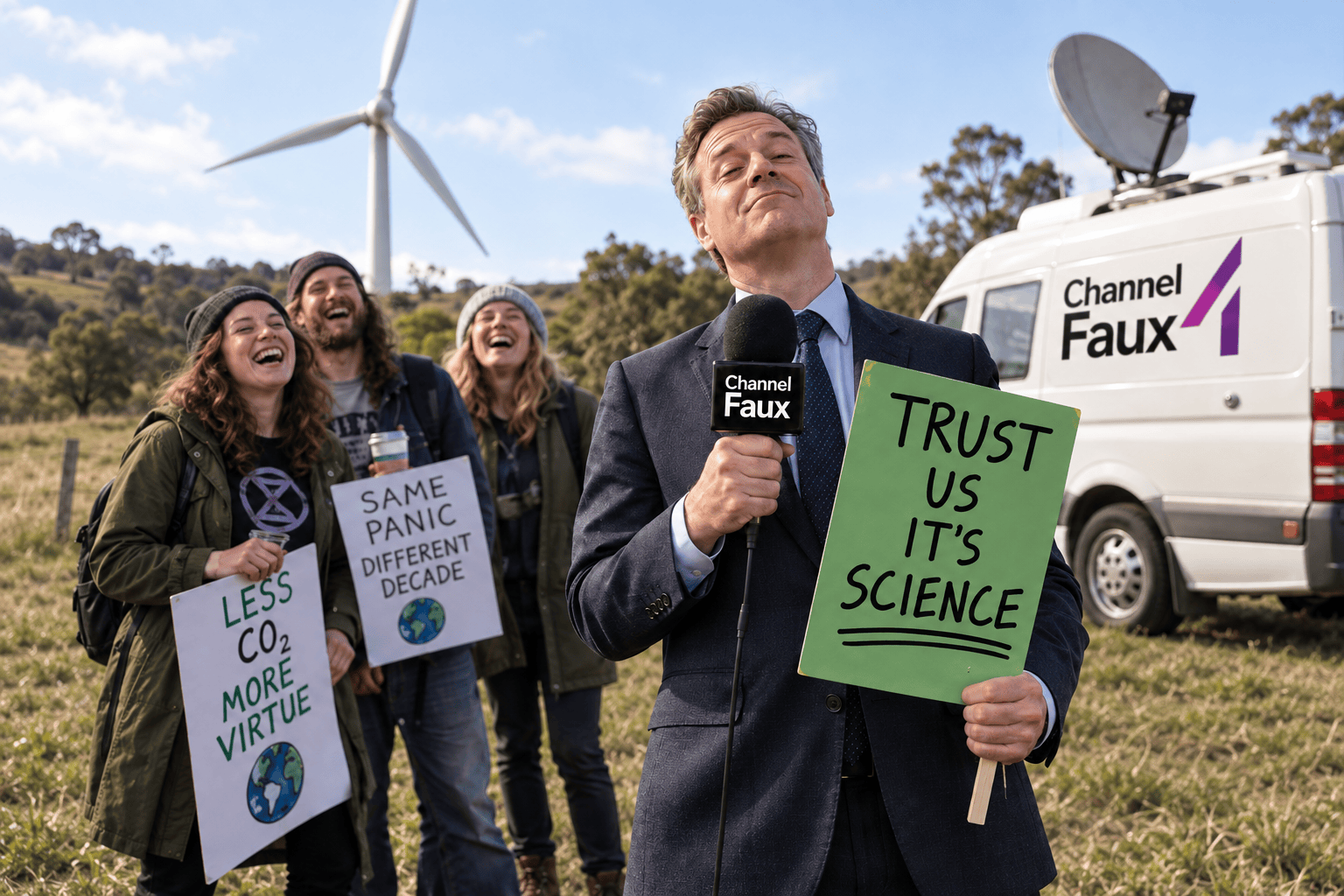
At Channel Faux, “follow the money” is an instruction for reporters, not directions to the accounts department.
The broadcaster spent a year sending pretend millionaires to meet politicians, exposing the scandal of rich people buying access in a programme that stopped every twelve minutes to sell them access to you. “We wanted to establish how money opens doors,” a spokesperson explained. “Obviously, we could have asked our chief executive, but that wouldn’t have filled an hour.”
The investigation centred on footage of party leader Neville Barrage saying thank you at lunch. Producers replayed this in black and white in case anyone mistook it for manners. The exchange formed part of what producers described as a troubling pattern of behaviour, including replying to emails and shaking hands with people who had been introduced to him.
Lawnland media analyst Piers Grantworthy said the material presented a considerable challenge for an hour long documentary. “They’ve got a lunch, two emails and a handshake. Fortunately, the composer has found another twenty minutes of wrongdoing.” He added that the bread roll Barrage accepted during the meal had received more scrutiny than the broadcaster’s last three annual reports.
Channel Faux explains the difference
Questions about overseas foundations linked to the investigators received a less forensic response. Channel Faux said these financial relationships were entirely different from the ones it had spent a year trying to arrange. “Their wealthy foreigners have agendas. Ours have mission statements,” the spokesperson explained. “Theirs want political change. Ours want measurable outcomes. You can tell the difference because ours arrive in a PDF.”
The broadcaster rejected accusations of a double standard, explaining that accountability had to be understood in its proper context. When other organisations got something wrong, it revealed a rotten culture. When Channel Faux got something wrong, it revealed a need to review its processes, preferably internally and without anyone making a television programme about it.
Producers also confirmed that the documentary had passed strict impartiality checks, with everyone in the commissioning meeting independently agreeing with everyone else. The broadcaster dismissed suggestions that dramatic editing had exaggerated the findings. “We let the evidence speak for itself,” the spokesperson said. “Then we turn it down so you can hear the narrator.”
Asked again who funded the investigators, Channel Faux said it would not dignify the question with an answer. Next week, it investigates why people with nothing to hide refuse to answer questions.