Britain has found more than £30 million for museums and libraries, allowing cultural treasures to remain available to the public rather than being quietly relocated beneath the nearest bucket.
The money will come through the Museum Estate and Development Fund and the Libraries Improvement Fund. It is intended for maintenance, repairs and upgrades, which is less glamorous than announcing a new cultural quarter but considerably more useful when the lift has stopped working between the ground floor and the local history of 1847.
Museums can seek a share of £25 million for infrastructure projects and urgent maintenance backlogs. Libraries can compete for £5.5 million to improve physical and digital facilities. One institution may need to protect a priceless collection from water damage, while the other may need to ensure its public computers do not take three minutes to remember what a keyboard is. This is how access to culture meets the ancient British tradition of making visitors queue beside a broken radiator.
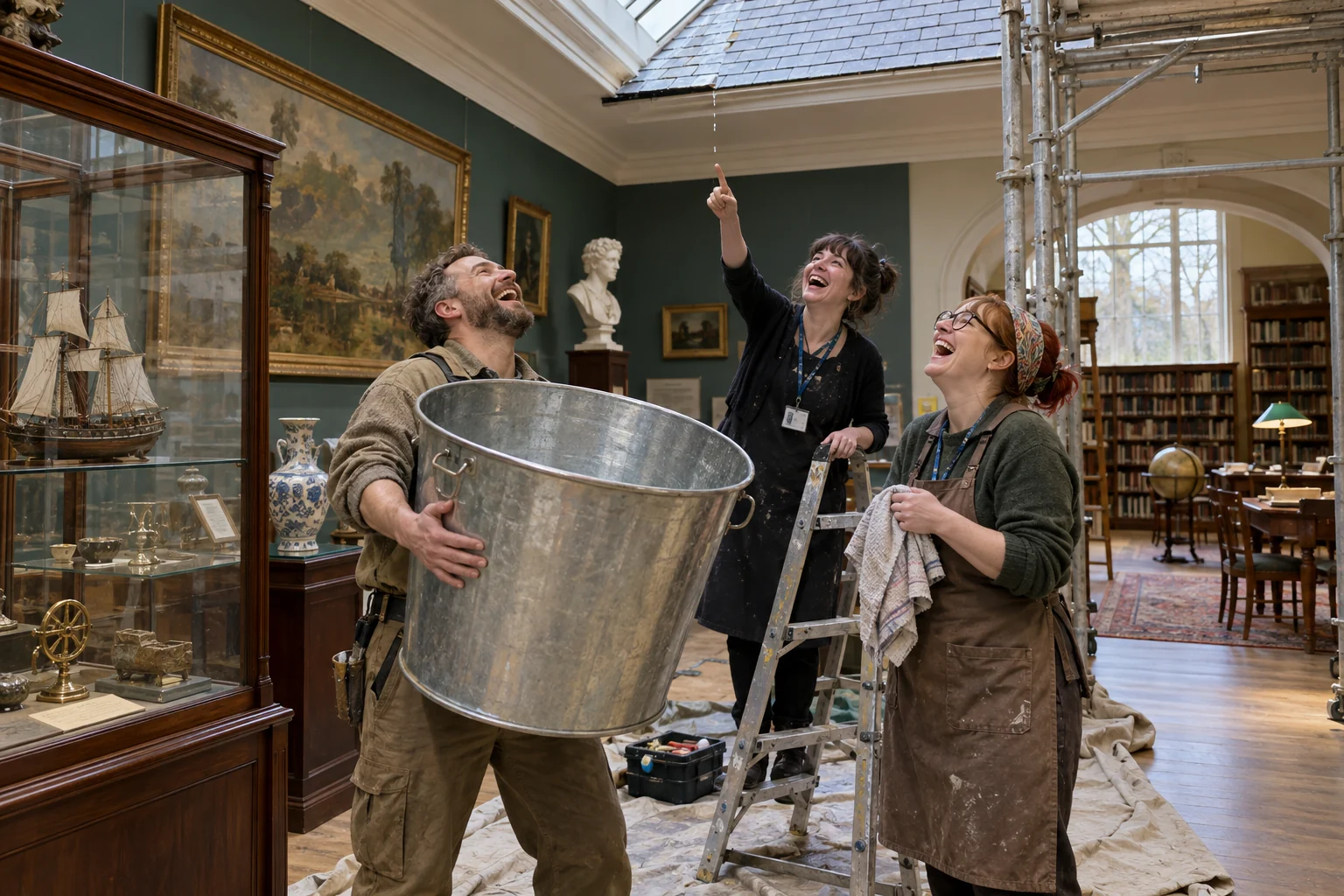
Doris Dewpoint, Curator of Objects Which Must Not Get Damp, greeted the announcement with the cautious enthusiasm of someone who has seen a grant application described as straightforward. Her view is that a museum should tell the story of a town, not allow its roof to add an unreliable sequel. It is a distinction the ceiling may not have considered.
The funding can support tired buildings, accessibility improvements, workshops, exhibitions and specialist equipment. In theory, visitors may encounter a warm library, a working lift and a gallery where the collection is protected by something more advanced than a staff member standing beneath the leak with an expression of hereditary disappointment.
Expressions of interest for the Libraries Improvement Fund opened on 6 May 2025, followed by the museum fund on 12 May. Organisations had time to identify priority work, gather estimates and explain to contractors that heritage ceiling is not an invitation to turn a repair into a five year emotional journey involving scaffolding, paperwork and one heroic invoice.
The Government says the investment will improve access to arts and culture and help secure these institutions for future generations. That is the grand promise. The immediate target is more modest: letting the next generation read a book without balancing it on a radiator while a portrait watches the ceiling deteriorate.
Britain has therefore funded the most ambitious exhibition in the national collection: a public building that remains warm, accessible and dry. Admission is free, but visitors may still be asked to admire the commemorative plaque thanking the roof for finally doing its job.
Real story: Department for Culture, Media and Sport.