A vast ministerial reshuffle has successfully moved government into government, using black cars, ceremonial verbs and a label maker with Cabinet clearance.
Downing Street announced appointments on 5 September, including David Lammy as Deputy Prime Minister and Justice Secretary, Yvette Cooper as Foreign Secretary, Shabana Mahmood as Home Secretary and Peter Kyle as Business Secretary. Angela Rayner and Lucy Powell left the Government.
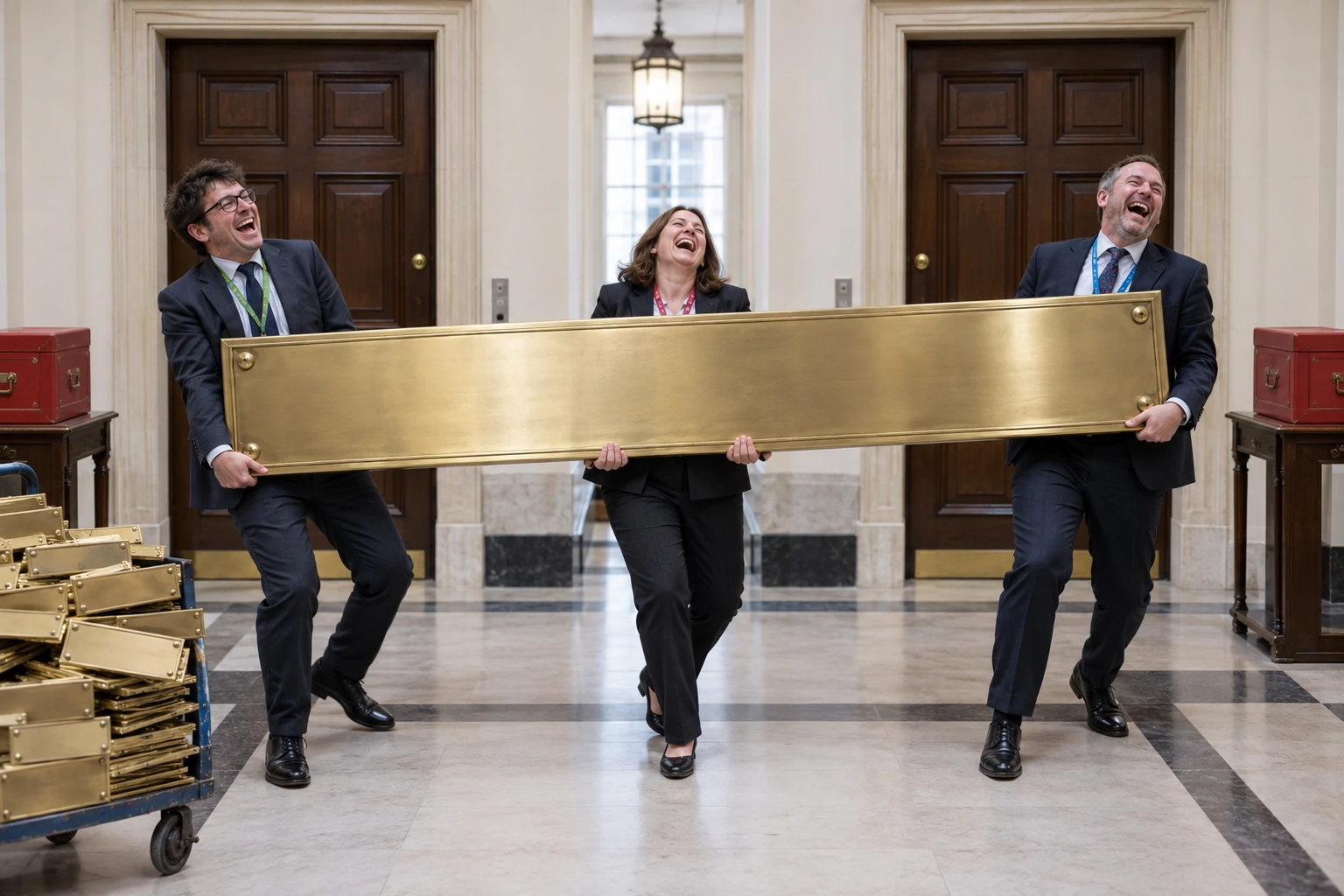
The country therefore received a new arrangement of familiar corridors, desks and problems. The buildings remained in place, although several nameplates were understood to be seeking legal advice about their future.
“This is renewal at operational velocity,” said Crispin, Comptroller of Moving Lanyards. “By lunchtime, every minister will know which building has failed to recognise their pass.”
A reshuffle allows a prime minister to reset priorities and assemble a different team. It also gives Whitehall the rare opportunity to hold a meeting about changing the people attending meetings about change, before issuing a briefing explaining why this counts as progress.
Some ministers took on additional responsibilities. The Office of Simultaneous Hats responded by issuing stronger necks and a diagram explaining which title should enter the room first. The diagram was immediately promoted and is now expected to attend Cabinet, where it will be congratulated for its decisive movement.
Incoming ministers received briefings on budgets, legislation and the location of each department’s tolerable coffee. Policy continued beneath the commotion like a photocopier nobody had unplugged, producing documents about the importance of producing documents while everyone admired the new stationery.
The public wants competent decisions and visible results. Westminster traditionally begins this process by photographing people beside a door and asking television correspondents to identify promotions from walking speed. A brisk entrance can now achieve the political status once reserved for a completed policy.
By evening, the Government described itself as refreshed. The inherited problems agreed to respect the new seating plan, provided nobody asked them to move.
Somewhere, a nameplate has just been appointed to explain why that is a result.
Real story: Prime Minister's Office, 10 Downing Street.