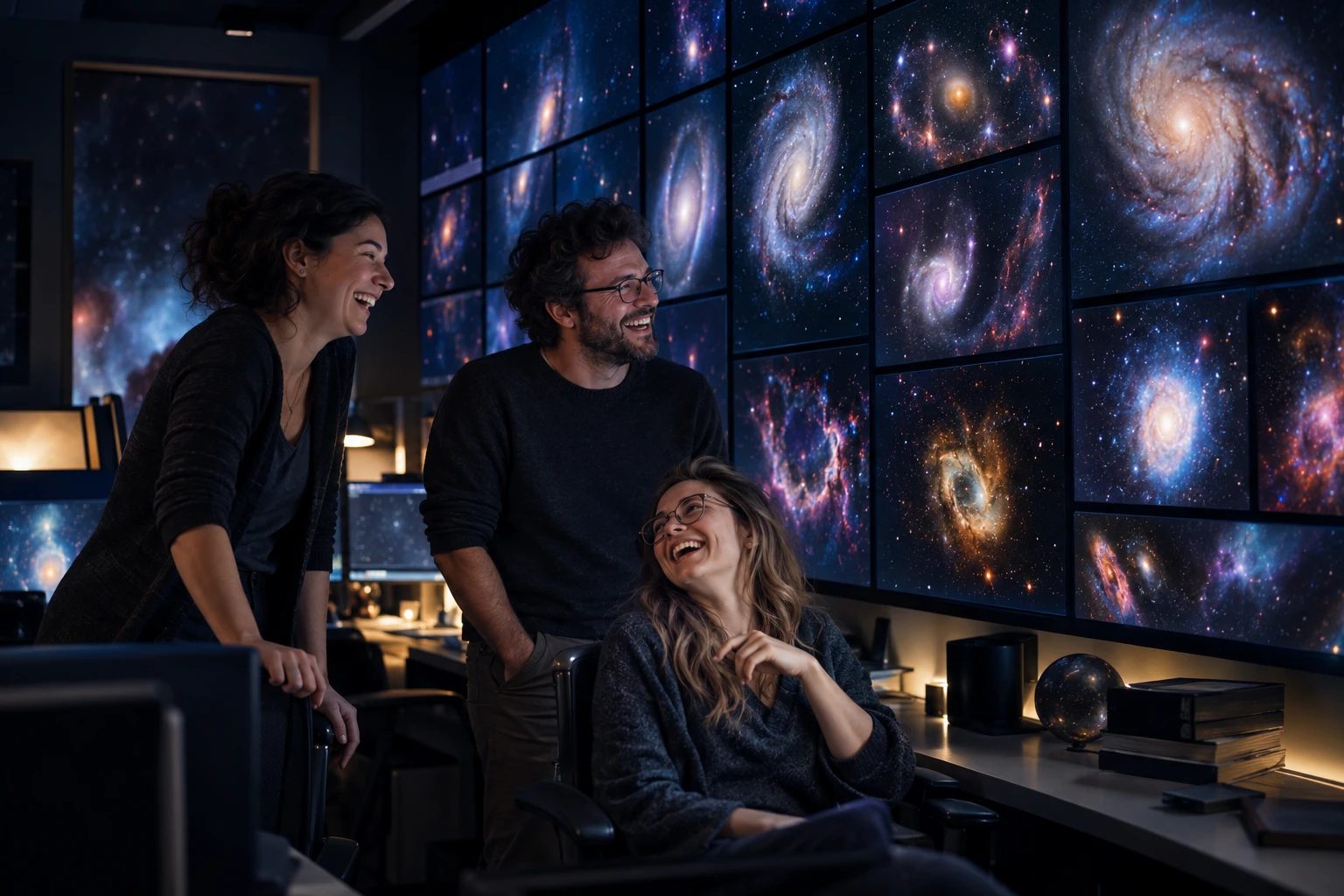
Hubble archive anomalies emerged after an artificial intelligence assisted search examined almost one hundred million image cutouts. ESA Hubble says the method confirmed nearly 1,400 unusual objects, including more than 800 not previously documented. The science is real. A fictional filing cabinet has immediately claimed responsibility for the backlog.
Hubble archive anomalies meet a fictional filing cabinet
The archive holds decades of observations, which makes it valuable and extremely large. The AnomalyMatch method searched the image cutouts in a couple of days, looking for objects that stood apart from ordinary patterns. This is careful research at scale. The imaginary cabinet has called it a routine search for anything filed under mysterious glowing thing.
ESA Hubble says that the confirmed objects include interacting galaxies, gravitational lenses, galaxies with star forming clumps and unusual discs around young stars. These examples help researchers notice rare phenomena that may have been difficult to find through manual inspection alone. The cabinet, by contrast, has suggested putting every interesting galaxy in a folder marked later.
Hubble archive anomalies are not office stationery
The real project uses machine learning to identify promising candidates, after which experts examine the results. That distinction matters. The software does not declare every odd object a discovery on its own. In the fictional office, the printer tried this approach and was quickly removed from the astronomy committee.
More than 800 of the confirmed anomalies had not been documented in the scientific literature. That is a meaningful result from a systematic search of a very large archive. It does not mean that space has been carelessly misfiled. The joke is about our own appetite for drawers, labels and administrative explanations.
In the end, the archive remains a scientific resource and the unusual objects remain real subjects for study. The filing cabinet remains invented. It has nevertheless requested a telescope pass and a better set of labels.
Source: ESA Hubble.