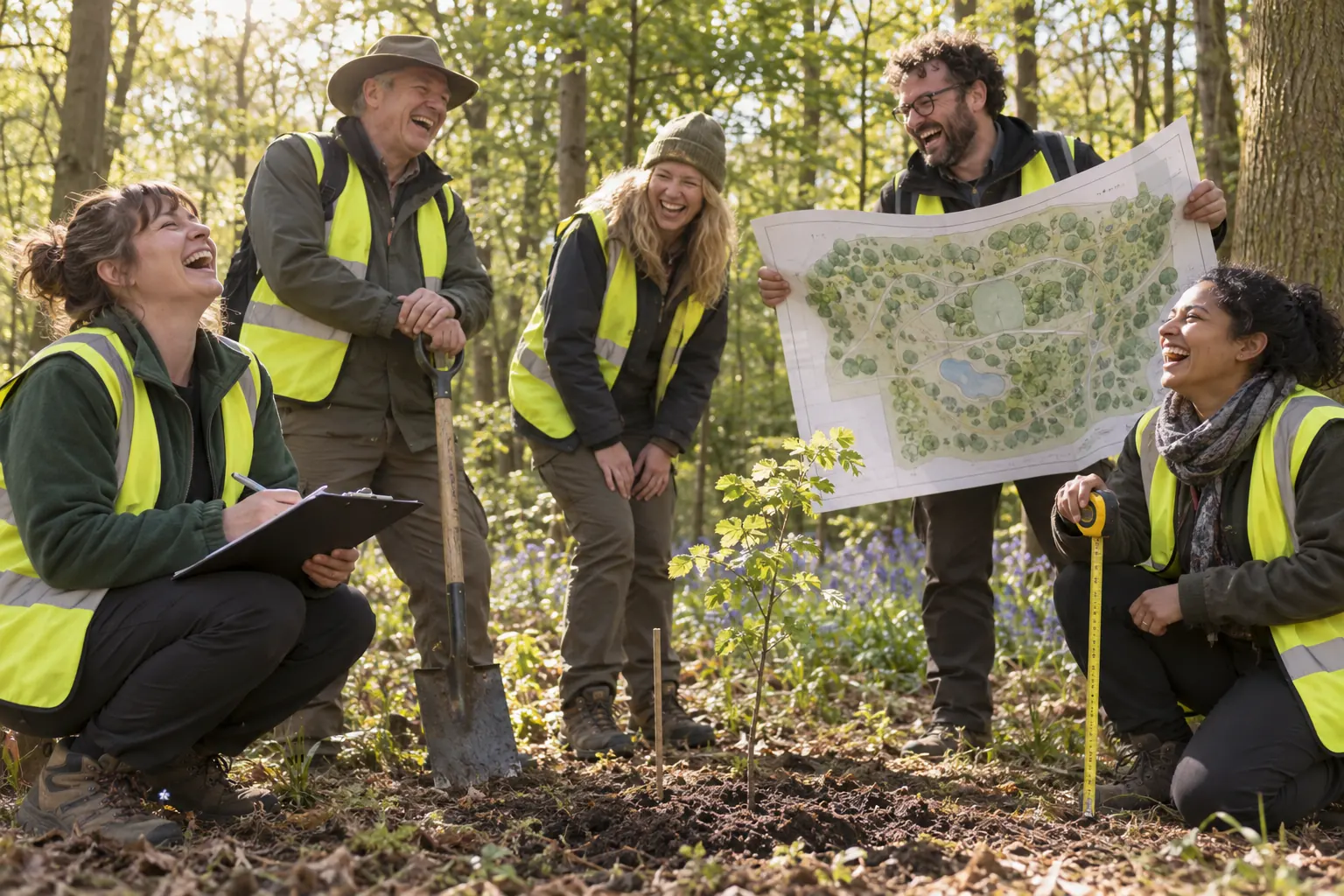
The Forestry Commission has issued trees and woodland guidance for local authorities, bringing structure to a sector that has somehow survived millions of years without a project timeline.
The guidance covers planning, protecting, planting and caring for woodland. Trees welcomed the clarity. They had previously relied on sunlight, rain and the occasional councillor saying they looked “very much part of the community”.
Councils can now consult timelines, design guidance and funding information before creating woodland. A sapling may receive a landscape character appraisal before it has even decided which way to lean in a breeze.
Denise Birch, who chairs an unofficial committee beneath a large oak, praised the guidance. “At last,” she said, “we can approach a tree with a strategy, a spreadsheet and exactly six people asking who owns the mulch.”
The Forestry Commission also encourages local authorities to use woodland for climate resilience and nature recovery. Nature was pleased to receive the news. It had been attempting resilience for several hundred million years but appreciates a formal reminder.
Funding can support woodland creation and establishment, while the guidance explains the stages involved. Somewhere, a young beech is waiting for the consultation to finish before getting on with the undignified business of becoming a forest.
The resources include advice on woodland creation, urban trees, tree protection, funding and management. Leaves remain available without an appointment, although they are not yet accepting feedback.
Meanwhile, each local authority can compare plans, identify partners and locate funding. The oak remains cautiously supportive. It has seen enough strategies to know that the important thing is eventually getting roots into the ground.
Britain can now face its woodland future with confidence. The trees will grow slowly, the paperwork will grow quickly, and by the time the final approval arrives the forest may be ready to submit its own planning application.
Source: Forestry Commission.