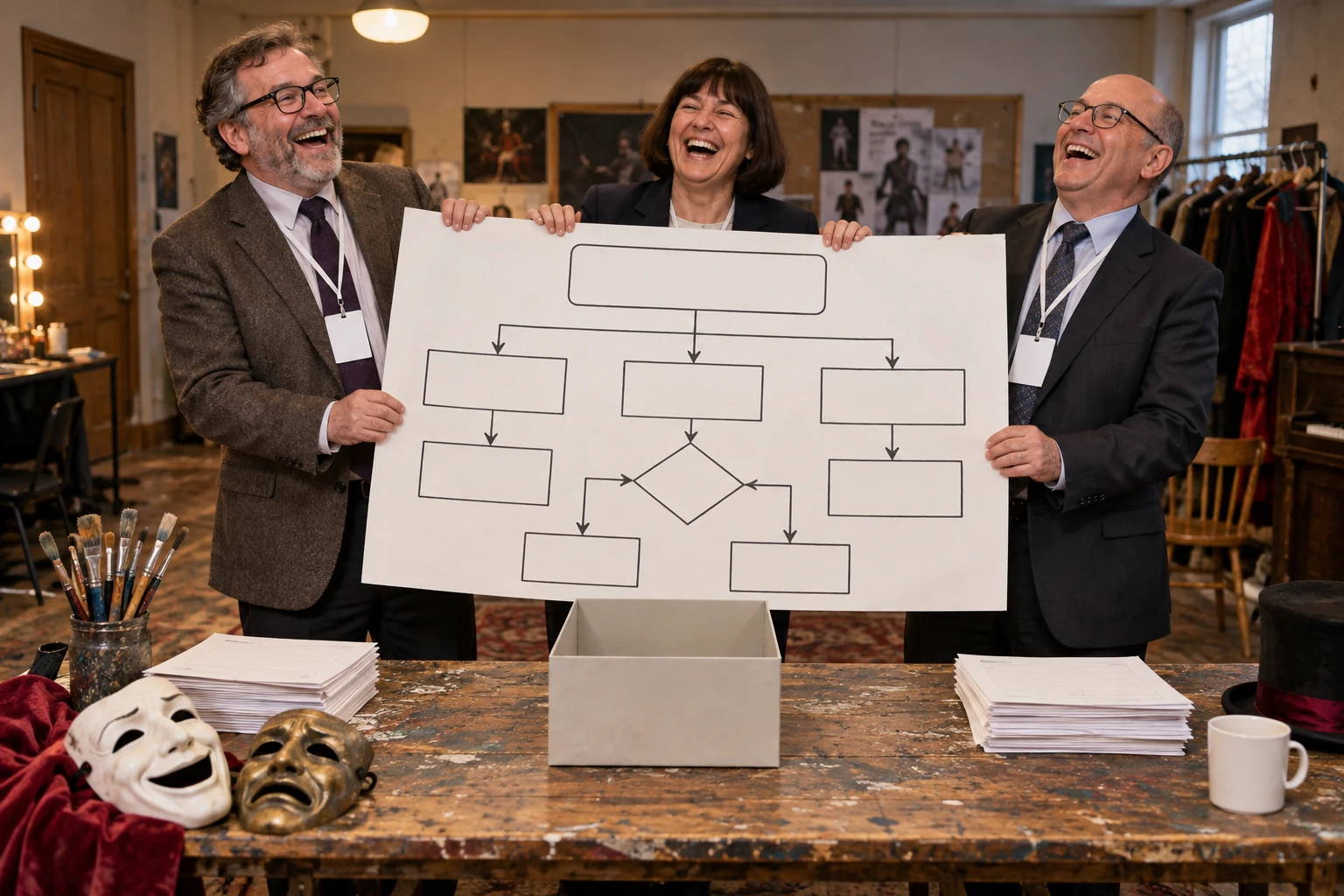
UNESCO has called for culture to be built into sustainable development funding, prompting the fictional Office of Ceremonial Spreadsheets to unveil a diagram explaining where the money might go once somebody has found it.
In July, UNESCO warned that international aid for education could fall by more than a quarter between 2023 and 2027. It also reported that cultural and creative industries represented 3.1% of global GDP in 2022 and supported almost 50 million jobs.
This is a substantial economic contribution, although the fictional funding framework has treated it like a suspiciously large expense claim. Before artists, archivists and performers can receive support, they must apparently demonstrate that their work is innovative, inclusive and capable of fitting inside a box marked outcomes.
At the Office of Ceremonial Spreadsheets, cultural finance envoy Mavis Receipts welcomed UNESCO’s call for culture to be integrated into development funding. “We have connected art to development,” she said. “Both are now waiting outside procurement with the same numbered ticket.”
UNESCO pointed to cultural investment in reconstruction, training and creative industries. In Mosul, it said, heritage work had helped create more than 5,000 jobs. In Yemen, more than 8,000 young people had taken part in rehabilitating cultural heritage. The framework responded by commissioning a sculpture of a pie chart, then asking the artist whether exposure was an acceptable invoice.
Officials have also discovered that culture can generate jobs, strengthen social cohesion and make development money work harder. The next challenge is persuading the funding system that a theatre is not merely a room where people wait for a grant decision.
Deputy Director of Sensible Applause Clive Ticketstub said the new approach would prevent culture being treated as decorative parsley. “We have put it in the main budget sentence,” he said. “It is still waiting for the verb.”
The framework has now awarded itself a pilot grant to explore whether painters, performers and museums would prefer actual support to another panel about unlocking a vibrant ecosystem. The application form is twelve pages long and asks applicants to describe their resilience. It does not ask whether they can afford lunch. The form has been approved for funding, subject to finding an artist willing to draw a cheque.
Real story: UNESCO.