NASA has listed the Crew 12 launch towards the International Space Station, proving that humanity can organise a journey into orbit while remaining vulnerable to the disappearance of one small bag of tea.
The agency’s science page for 13 February listed Crew 12 launch material, including the SpaceX mission to the station. This is a considerable achievement. Somewhere, a room full of specialists has made space travel look routine while an ordinary office is still holding a meeting about who moved the stapler.
The launch represents the triumph of planning, engineering and several thousand carefully reviewed decisions. It also represents the moment when somebody asks whether the emergency supplies include a pen that works. A rocket can be designed to carry people into orbit, but the humble biro remains an uncooperative frontier.
Janet Orbit, a woman who has watched three rocket launches and once repaired a printer by switching it off, believes the mission has lessons for Britain. “Space is the future,” she said. “I just hope somebody checked the cupboard before the cupboard became a scientific incident.”
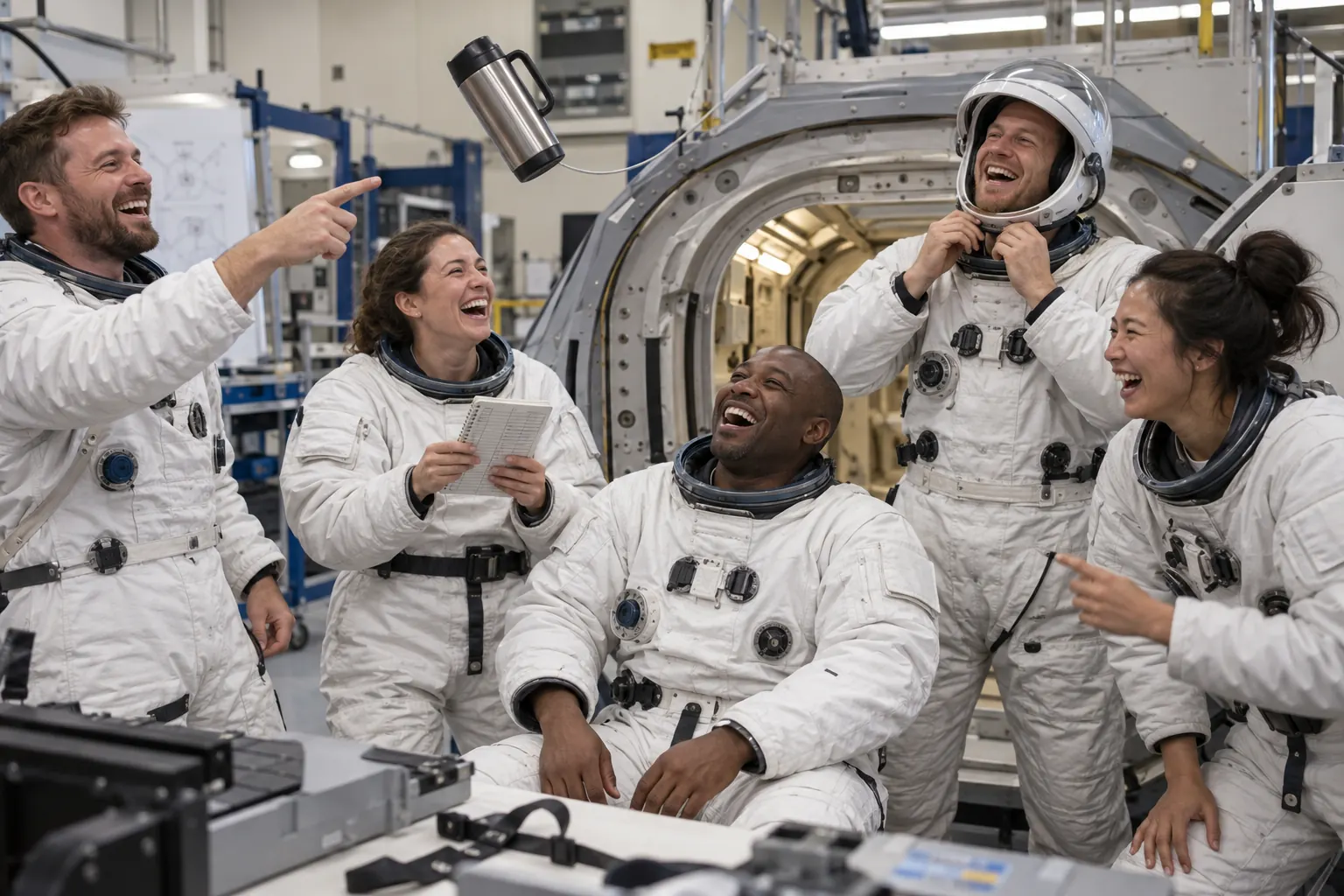
At the International Space Station, loose objects do not politely remain where they were placed. They drift away with the confidence of a colleague who borrowed your charger and has now entered a new phase of personal development.
This gives the crew a chance to study life in microgravity while demonstrating an eternal truth about administration. The more advanced the environment, the more important it becomes to label a snack. A biscuit floating past a camera is research. A biscuit floating past a camera after being marked “DO NOT EAT” is a diplomatic event.
Ground teams will monitor the mission and communicate with the crew. They will follow procedures, cross check systems and maintain the calm tone required whenever an object has gone missing at seventeen thousand miles an hour. The official language will remain reassuring. The private language will involve the question “who had it last?”
The station offers a majestic view of Earth, where borders fade and weather systems become beautiful patterns. It also offers a perfect perspective on human progress. From orbit, the planet looks united, fragile and astonishing. From inside the station, someone is still opening the same drawer for the fourth time.
NASA has put people on a path to the space station. The next breakthrough will be getting the teabags there before they are listed as an independent mission, complete with a launch window, a support team and a small committee refusing to say who lost them.
Source: NASA.