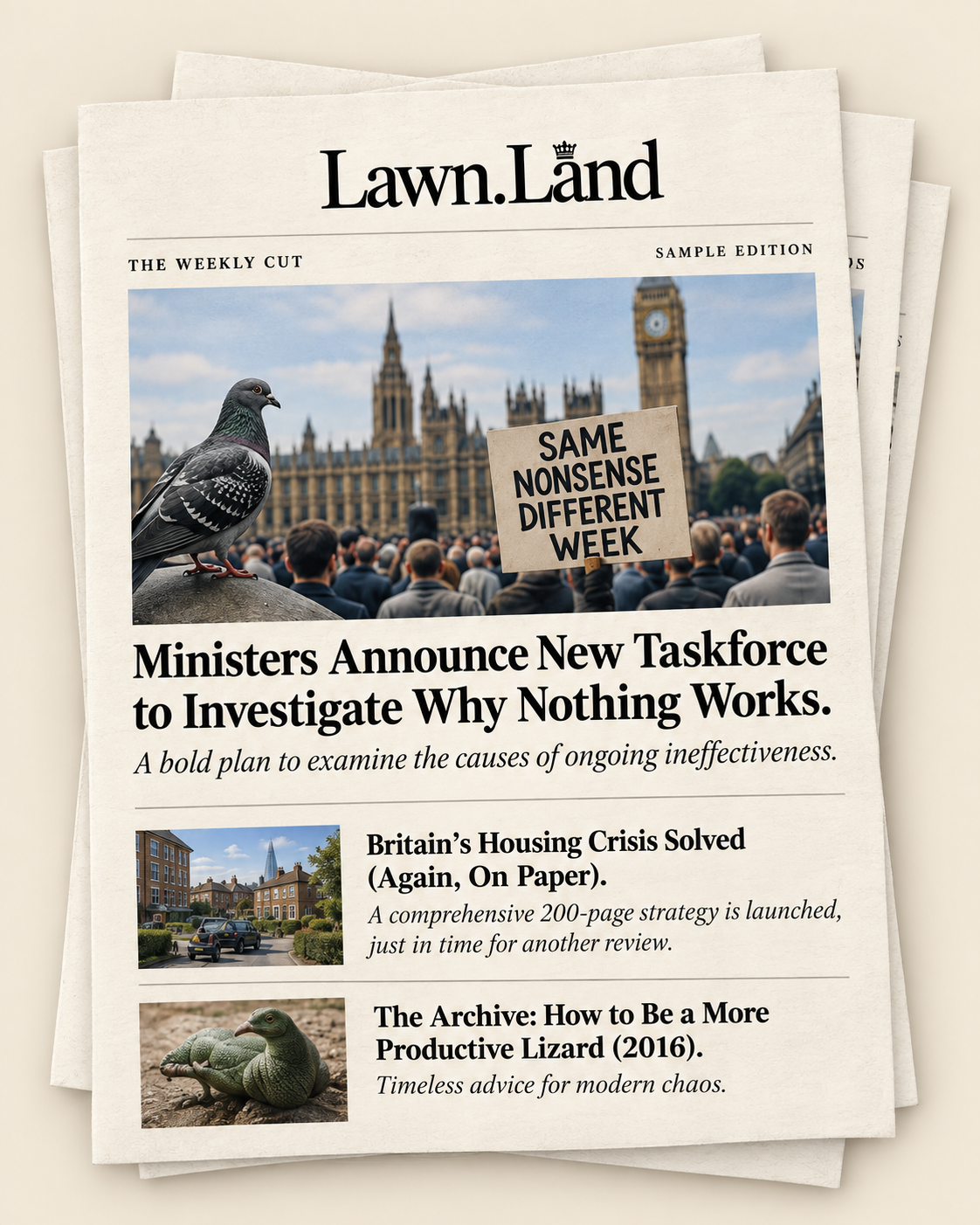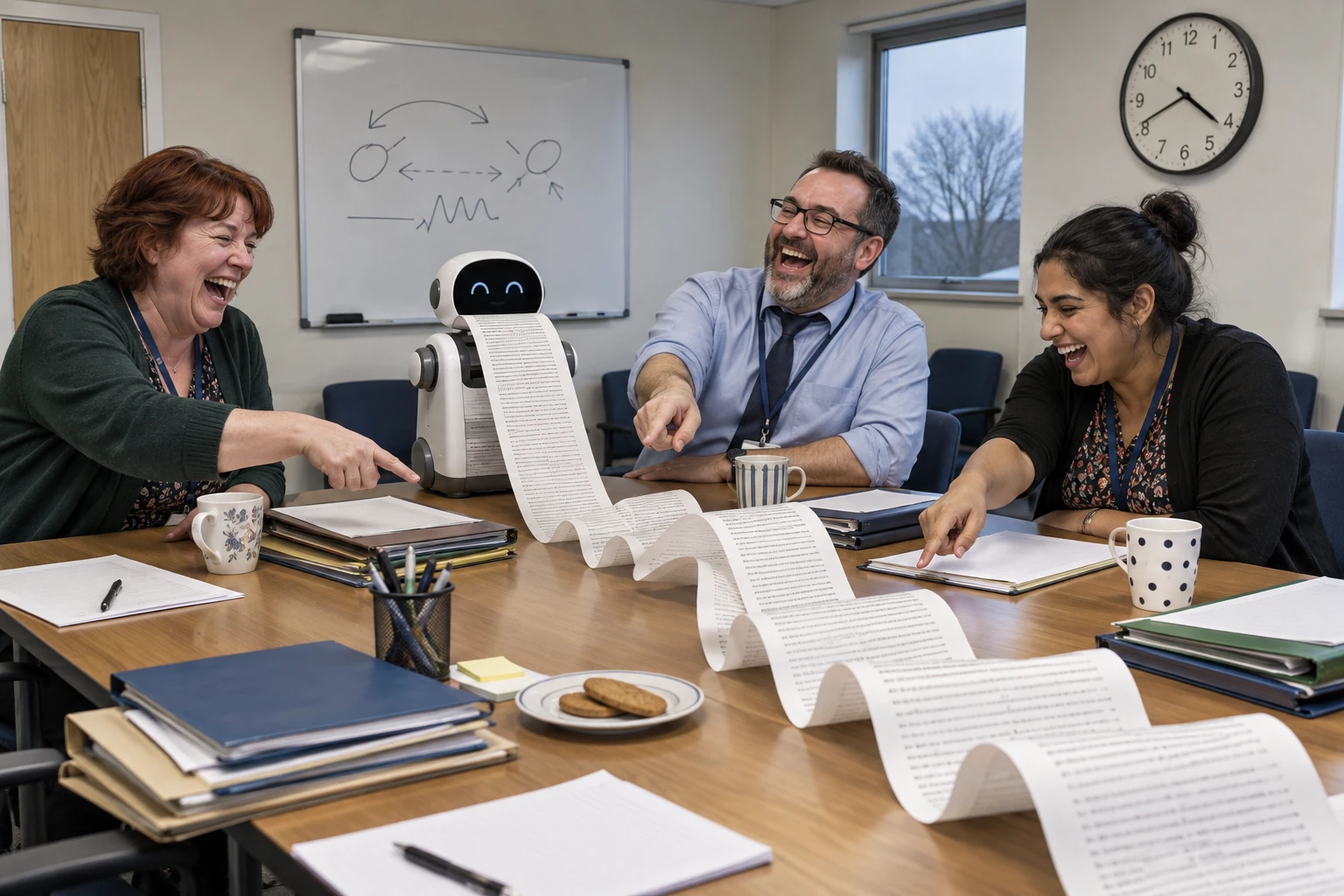
Councils are trialling an AI tool called Minute to take meeting notes, leaving local government with one remaining administrative task: deciding what the meeting was for.
Minute is part of the government’s Humphrey suite, being tested by 25 councils to reduce paperwork in areas including planning and social care. Early central government research claimed officials were saved an average of an hour’s administration for every hour long meeting, a result so efficient that the meeting may soon be the only thing left to administer.
The trial is meant to let council staff concentrate on residents rather than reconstructing a discussion from twelve documents called “final”. It may also help planning officers move decisions along more quickly, allowing the country to build homes at the speed of a committee discovering who has the latest agenda.
At the Institute of Deferred Decisions, minute clerk Felicity Agenda welcomed artificial intelligence. “It has already identified three actions,” she said. “Unfortunately, all three are to locate the previous action, which was itself to locate the previous action.”
Minute can turn meetings into notes and help staff correct and refine the resulting summaries. This should be useful wherever a straightforward decision has become a discussion, a consultation, a revised discussion and a follow up discussion about whether the first discussion should have been recorded as a discussion.
There is still a human role. Council workers must check the notes, correct errors and decide whether “we’ll take that away” describes a genuine commitment or the ceremonial removal of a problem from the room.
Chief Algorithmic Tea Monitor Bernard Semicolon said the system was learning quickly. “It has mastered the phrase ‘any other business’,” he said. “It now recognises that this is the moment when a meeting stops having a purpose but gains a second wind.”
The government says Humphrey could help councils improve services while reducing administrative burdens. The councils are now considering whether an hour saved from note taking counts as a productivity gain if it is immediately spent correcting the machine’s interpretation of “Tuesday”.
Minute’s first recommendation was to hold fewer meetings. The council formed a working group to discuss whether this counted as a meeting, then scheduled a meeting to agree the working group’s membership. The machine recorded the decision as progress and asked who had authorised it to be optimistic.
Real story: Department for Science, Innovation and Technology.