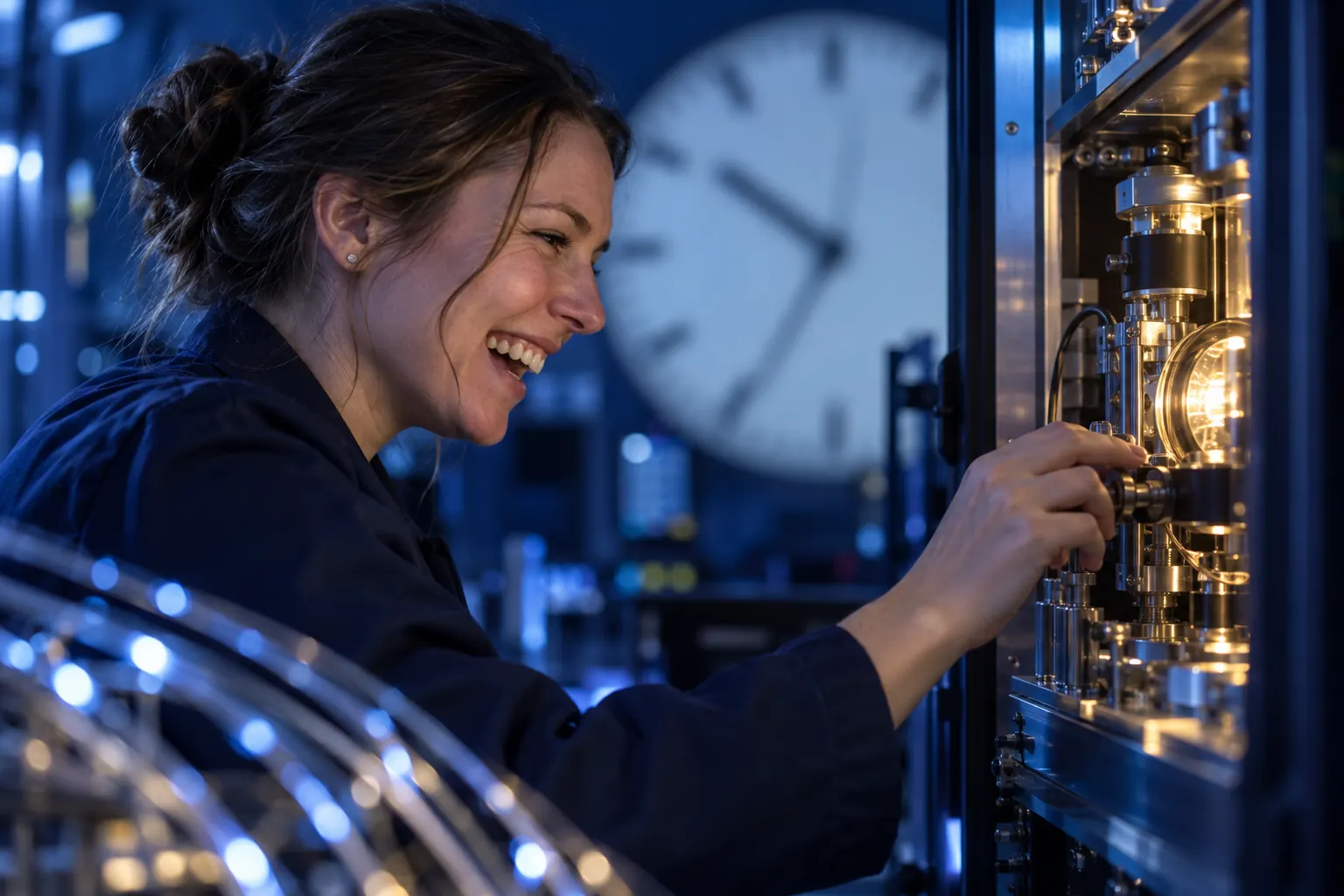
Britain is building a backup timing network so phone calls, bank transactions and transport systems can stop asking satellites whether it is definitely Tuesday.
The £180 million National Timing Centre programme will provide terrestrial timing signals alongside the satellite systems on which modern life quietly depends. It is a sensible response to the discovery that the digital economy has been trusting space to keep its appointments, despite space having no customer service desk.
Led by the National Physical Laboratory, the programme will distribute a resilient signal by fibre, internet and radio. Two dedicated sites will provide alternatives to relying on one location or one method of transmission, giving the national clock the sort of contingency planning usually reserved for ministers explaining why nothing happened on time.
Atomic clocks already help mobile networks coordinate thousands of devices, while accurate timing supports online banking and other critical services. When a payment leaves one account and reaches another, it will therefore have less need to wait for a celestial receptionist to confirm that money is still moving forwards.
The network is also intended to support navigation, communications, radar, transport and emergency services. Britain is protecting the invisible machinery beneath ordinary life, which is reassuring because the visible machinery has mostly been left to produce a noise, issue a consultation and request another budget.
Officials say satellite signals can be disrupted by technical failures, jamming and deliberate attacks. The new system will give vital services a second source of accurate time, rather than making the country stand beneath the sky with its hands cupped around one distant wristwatch while an online form asks whether the outage affected wellbeing.
There is something magnificently British about spending £180 million to ensure the nation knows precisely when everything is going wrong. Once the clocks are connected, every failure can happen at the correct time, be measured to the nanosecond and be blamed on an unusually complicated Tuesday.
The programme is also intended to build specialist skills through opportunities for graduates, apprentices and researchers. The next generation may inherit a country capable of timing every crisis with perfect accuracy, which should make the waiting list feel much more professional. At last, Britain will not merely be late to the future. It will know the exact time it arrived.
Source: Department for Science, Innovation and Technology and National Physical Laboratory.