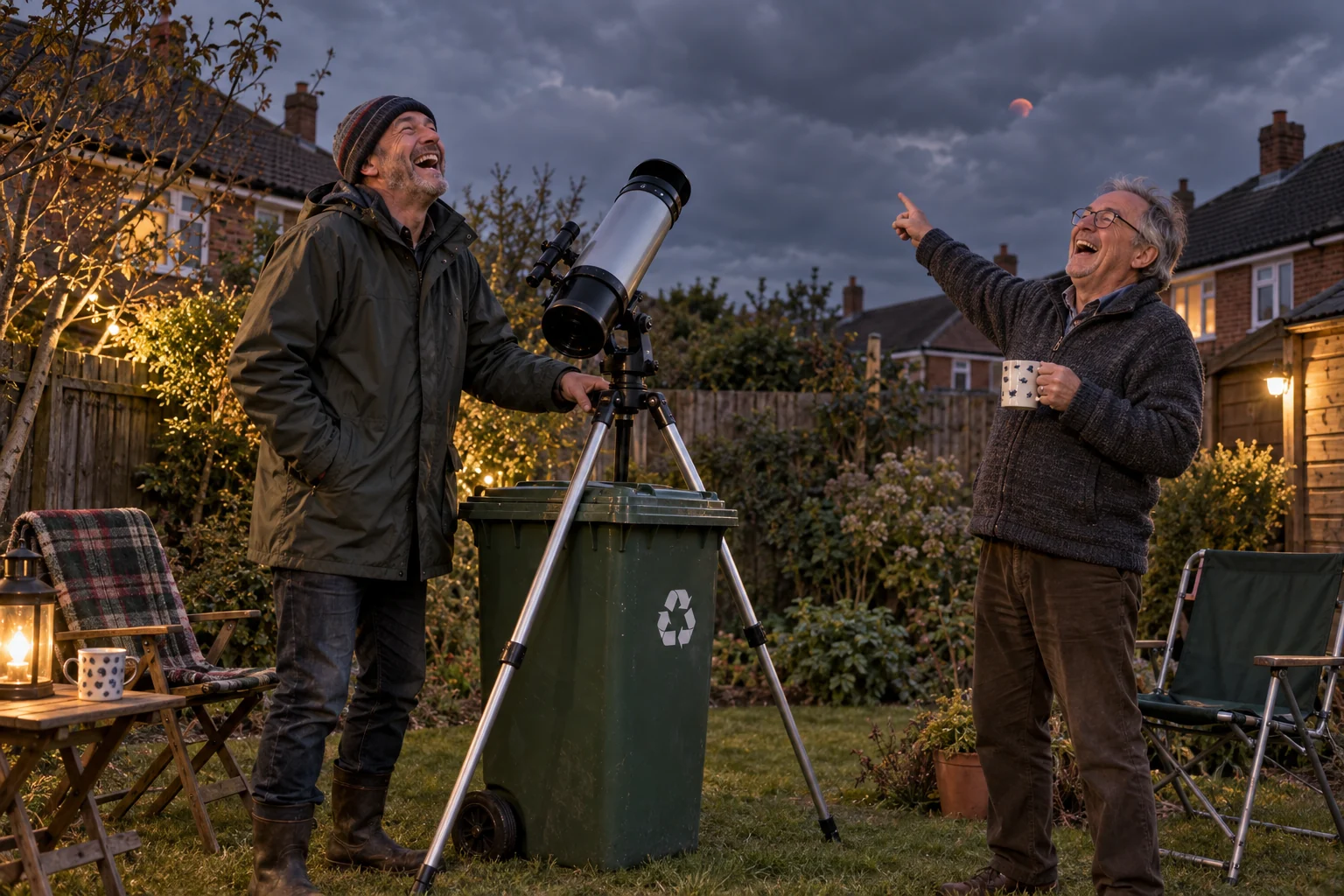
The Blood Moon of 7 September was potentially visible to an estimated 85 per cent of the world’s population, giving billions of people the opportunity to watch the Moon turn coppery red while Derek from Swindon watched a pale orange smudge for nine seconds and decided it was worth moving the recycling bin for.
People across Europe, Africa, Asia and Australia could have seen the total lunar eclipse if clouds, buildings, trees and the traditional British policy of looking at the sky only after the interesting part had finished did not intervene.
The Moon entered Earth’s shadow, producing the colour known as a Blood Moon. The total phase lasted one hour and 22 minutes, which gave the Bureau of Celestial Disappointment ample time to make tea, lose the lens cap and discover that the sky had cleared directly behind the house.
Astronauts aboard the International Space Station photographed the event during its partial phase, about five minutes before totality began. Their image showed the Moon already looking coppery and important. Derek enhanced his own photograph until a streetlamp became Mars and the recycling bin acquired a ring system.
“It was magnificent,” said Dr Luna, Principal Observer of Other People’s Pictures. “I watched the entire thing the following morning on somebody’s phone, which is still more reliable than owning a telescope in Britain.”
A lunar eclipse occurs when the Sun, Earth and Moon line up. Earth’s atmosphere scatters shorter blue wavelengths while allowing more red and orange light through, so the Moon receives the planet’s sunsets at once. Clouds and dust can deepen the colour. British cloud takes a more administrative approach, replacing the Moon with a blank screen and inviting viewers to imagine premium astronomy.
The next total lunar eclipse arrives in March 2026 and will be visible from other parts of the world. The Office of Garden Astronomy has already ordered folding chairs, cocoa and a cloud shaped exactly like regret, although Derek has asked whether the cloud can be moved five minutes to the left.
Derek has now placed his tripod beside the only clear patch of sky. This has blocked the neighbours’ view, trapped the recycling bin beneath the legs and turned one man’s garden furniture into the first astronomical object potentially visible to 85 per cent of the population.
Real story: NASA Earth Observatory.