A BBC licence fee review is considering how to fund the broadcaster after 2027. From April, households will pay £174.50 for a colour licence. Meanwhile, the money covers public broadcasting and regional weather maps. It also funds a small research institute. Its purpose is to prove that any disagreeing viewer has arrived in the wrong tone.
Everyone gets a say after the invoice
The BBC belongs to everyone. That is why everyone pays. However, some viewers want a report that does not treat their view as background noise. The review promises to listen. It will then explain why listening means asking a better question in a studio with softer lighting.
Sir Adrian Very Considered, head of Balanced Reactions, said: “Impartiality is not free. You need eight guests. Seven bring the same thought. A historian explains why the eighth has complicated feelings. Then a presenter calls it a national conversation before anyone notices.”
Choice is judged unsafe
Next, officials tested a subscription model and found the danger at once. Viewers might pay only for programmes they enjoy. That would leave nobody to fund the essential late panel, where six people explain that an ordinary question needs a producer to hold it correctly. Advertising offered hope. The Six O Clock News could begin with a mattress, pause for a car that detects loneliness and end with a meal kit explaining that dinner has failed to examine its privilege.
Meanwhile, questions about sex, women’s rights and language enter the BBC’s Careful Thoughts Unit. Every perspective receives a seat, provided it hands its nouns to reception and agrees not to use them without adult supervision. The panel does not decide if a question is right or wrong. It decides whether the person asking it requires an hour long documentary about tone. Anyone who fails will watch eight contributors agree that disagreement is healthy, provided it uses the approved vocabulary.
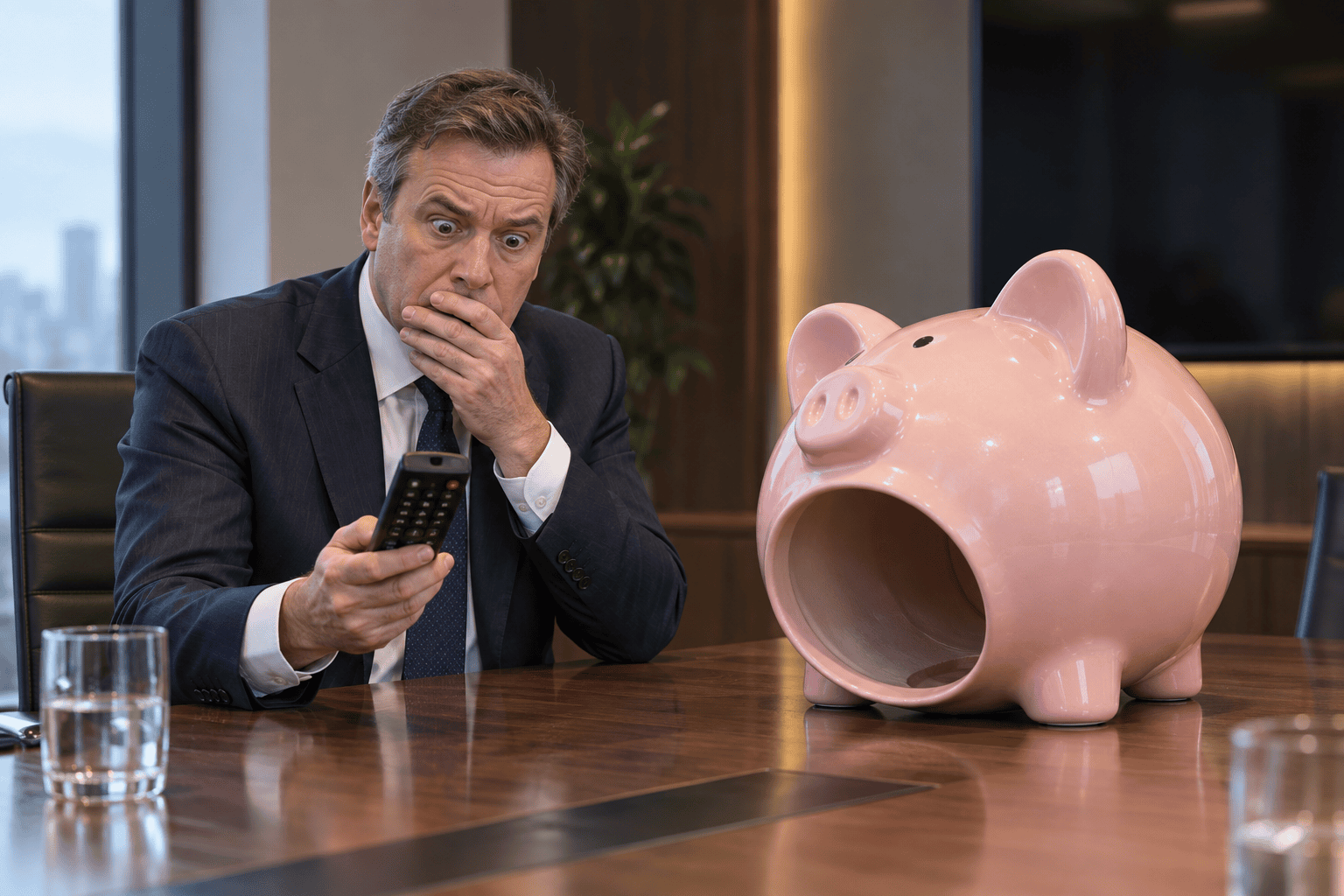
Finally, voluntary donations raised £11.20. That included three loyalty points and a note demanding someone make the dialogue louder. Therefore, the panel prefers compulsory funding. It lets the BBC remain universally available, editorially fearless and entirely free to wonder why the people paying for it have become so exhausting.
The preferred future
Finally, the review will ask the public to choose a fee, a subscription or a modest levy on anyone changing channel during a discussion programme. Officials said the winning model must protect the BBC’s ability to hold power to account. It begins with the one institution that cannot decline the invitation: the household paying £174.50.
Read the real story: the government’s BBC funding announcement.