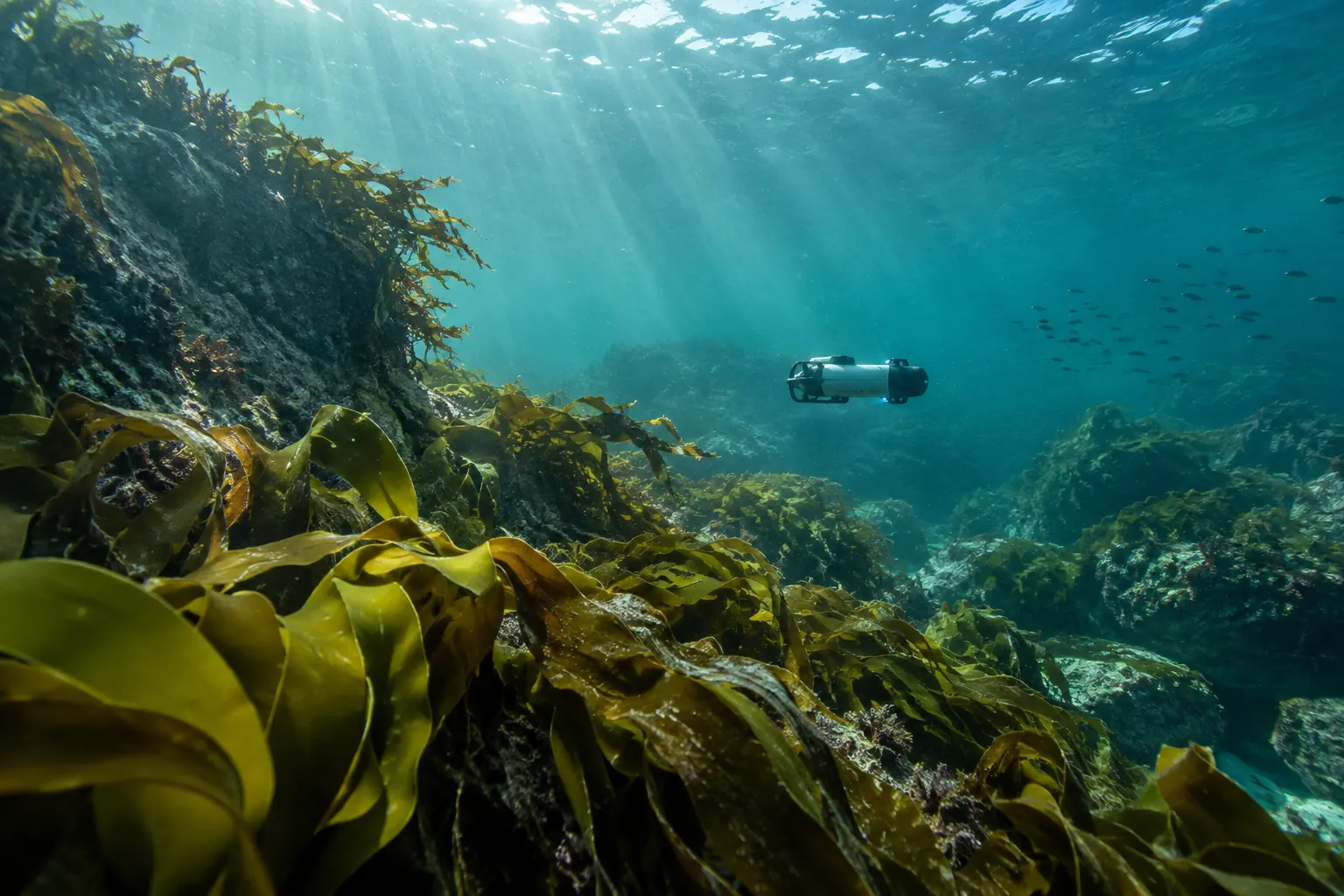
AUKUS has announced a new generation of uncrewed underwater technology, giving the ocean a more advanced way to ignore politicians. On 30 May 2026, AUKUS Defence Ministers announced an inaugural Pillar 2 project involving uncrewed underwater vehicles, payloads and the systems needed to make them useful. The Government said the first capabilities were expected in service by 2027. The kelp has offered a careful nod, then asked whether the testing schedule includes lunch.
The announcement describes a partnership between Australia, the United Kingdom and the United States designed to develop and deploy advanced maritime technology. The project will cover payloads including sensors and weapons systems, while allowing the three countries to integrate equipment across their uncrewed underwater fleets.
This is the sort of defence announcement that arrives wearing a high visibility jacket and carrying a laminated plan. It promises acceleration, transformation and a future in which machines can detect threats beneath the waves without requiring a human to get seasick in a metal tube. The paperwork has apparently been trained to look confident near water.
The Ministry of Defence also said three British companies were among the winners of the 2025 AUKUS Maritime Innovation Challenge. The firms will share £3 million to develop and test systems for commanding, controlling and teaming undersea platforms. Somewhere, a start up founder has just described a torpedo as a scalable solution and asked whether the sea counts as a growth market.
The language is suitably grand. AUKUS is accelerating Pillar 2, while the Royal Navy is preparing for a hybrid force combining crewed and uncrewed platforms. This is a sensible response to a complicated security environment, although it does mean the Navy may soon contain vessels that can attend a meeting without asking where the meeting is, who authorised it or whether the biscuits are classified.
The announcement also said UK and US nuclear powered submarines were expected to begin rotating through HMAS Stirling in Australia from 2027. The timetable is presented as a neat sequence of milestones. The fictional naval planner has coloured them in blue, presumably so nobody mistakes them for promises carved into coral.
There is a serious purpose beneath the jargon. Underwater infrastructure needs protection, new systems need testing and international partnerships need more than photographs of people standing beside flags. Yet the modern defence statement must make every machine sound revolutionary, every investment sound like growth and every deadline sound as calm as a kettle while the kettle is being launched from a submarine.
The uncrewed vessels may eventually patrol the deep. For now, the kelp has been appointed informal oversight and has rejected the first progress report for being insufficiently damp, insufficiently specific and far too confident about 2027.
Source: GOV.UK.