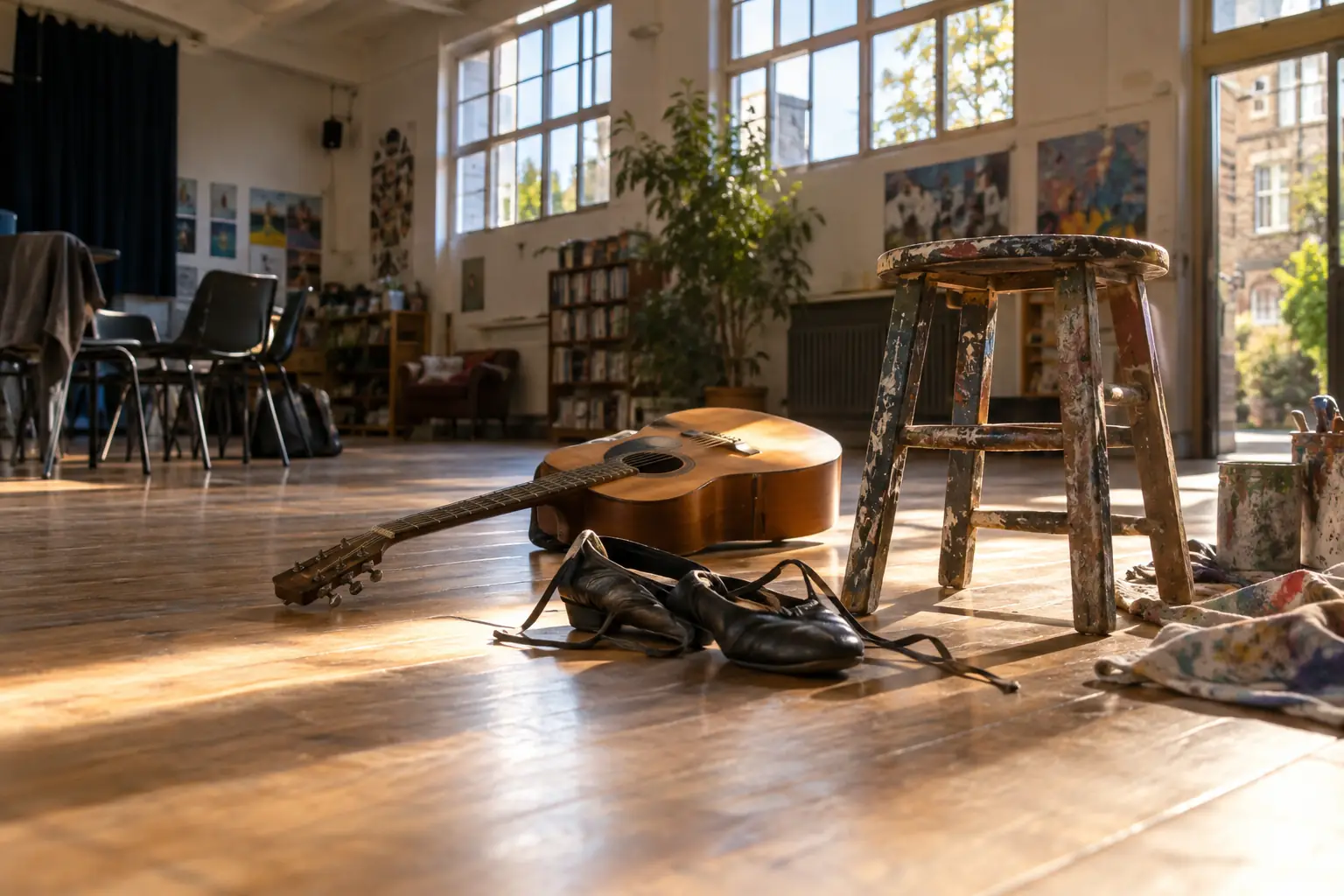
The Government has announced that children should have access to sport, art, nature, civic life and useful skills, giving the nation’s cupboards a brief opportunity to wonder whether they have been providing enough enrichment. The £132.5 million Every Child Can programme will support activities in schools and communities at weekends and during holidays, while 400 schools in the most deprived areas of England are invited into a £22.5 million expansion programme. Somewhere, a paint streaked stool has been informed that sitting quietly is no longer an adequate personal development plan.
The announcement sets out five official categories for enrichment: civic engagement, arts and culture, nature and adventure, life and future skills including STEM, and sport. This is good news for children who enjoy football, music or discovering that a worm is not technically a cucumber. It is also a demanding moment for schools, which must demonstrate that young people are experiencing a rounded life rather than merely moving between lessons with the haunted expression of a filing cabinet.
Ofsted will consider each school’s enrichment offer as part of its assessment of personal development. Parents are also promised school profiles showing what is available. The profile may explain whether a child can join a debating society, engineering club or football team, and whether the nature programme includes actual nature or a laminated photograph of it in a corridor. Somewhere, a spreadsheet is preparing to classify spontaneity as an outcome.
The policy addresses a serious problem. Access to activities remains unequal, with opportunity shaped by where children live and what their school can provide. The Government says the programme is intended to reduce that postcode lottery and help children build confidence, relationships and skills. This is a worthwhile ambition. It is simply unfortunate that the route to a richer childhood appears to pass through a form asking whether the richness has been appropriately evidenced.
There is a familiar administrative danger in turning childhood into a framework. Once every worthwhile experience has a benchmark, a profile and an inspection trail, a child can be enjoying themselves while three adults record the compliance status of the enjoyment. The activity may be spontaneous. The evidence folder will arrive early, wearing sensible shoes and requesting a witness.
Still, giving children more chances to make things, join things and go somewhere beyond a screen is useful policy. The paint streaked stool has chosen woodwork, pending confirmation that its participation can be measured, funded and uploaded before the next holiday begins. It has also asked whether failure to demonstrate measurable joy will affect its Ofsted rating.
Source: GOV.UK.