Britain has submitted 398 bids representing more than 400 towns to the UK Town of Culture competition, proving that local pride is alive, organised and willing to squeeze itself onto a postcard for inspection.
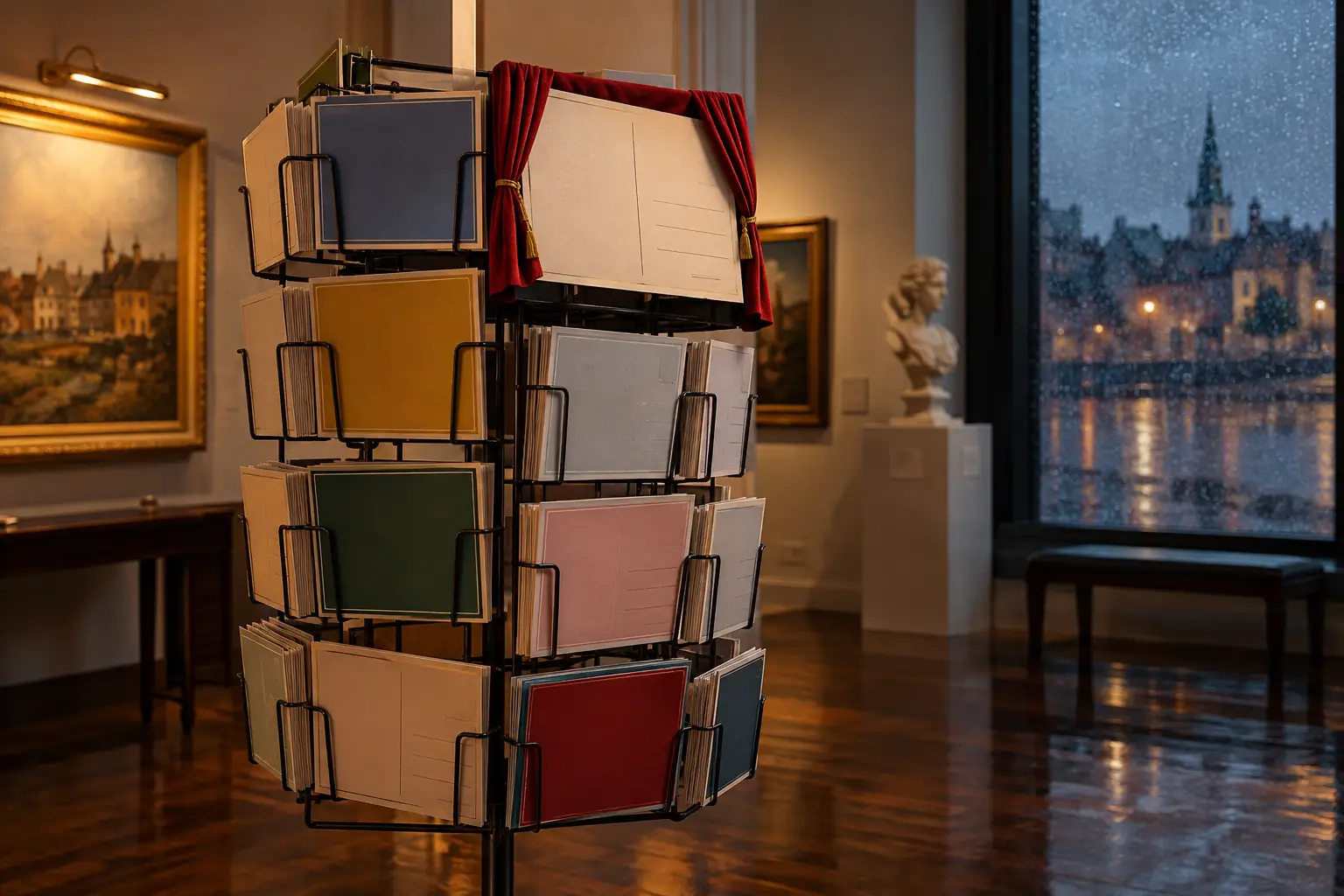
The Department for Culture, Media and Sport announced on 3 July 2026 that bidding towns had been invited to send postcards championing their communities. The postcards were shown in a digital display at the Museum of Liverpool, allowing the nation to admire several hundred visions of civic identity before somebody asked whether the shortlist would be laminated.
The competition aims to encourage local cultural participation and identify a town that will host a season of culture in 2028. It is also intended to leave a lasting legacy, which is welcome news for any town whose previous legacy was a cracked sign beside a retail park and a council document describing it as an opportunity.
There is something touching about the format. A town must explain its history, personality and ambitions in the space normally reserved for “Wish you were here” and an allegation about the weather. The postcard has become a cultural manifesto, a planning document and a polite request not to be overlooked by the people who control the important envelopes.
Officials presented the display as evidence of local pride and a shared national story. The postcard accepted this warmly, then checked whether “shared” meant everybody received a paragraph or whether one especially confident town had already reserved the national archive.
The government says that entering can benefit communities whether or not they win. This gives the competition a pleasingly modern structure. Every town can receive the prestige of participation, while one receives the actual season of culture and the others receive a commemorative feeling that may be attached to a future funding application.
That is the contradiction at the heart of the exercise. Britain is asking its towns to prove they have a distinctive cultural voice through a format small enough to be filed, displayed and preserved. The country wants local character, provided it arrives in the correct dimensions and does not exceed the approved area for enthusiasm.
Still, 398 bids are difficult to dismiss as administrative enthusiasm. They suggest that towns have plenty to say about themselves and are willing to say it through whatever channel is currently accepting submissions. The winning town gets the spotlight in 2028. The others can at least know that, for one glorious afternoon, their postcard outranked a government spreadsheet, which is the closest most civic objects get to celebrity before being catalogued as evidence that the public once had feelings.
Source: GOV.UK.